

Maddy summaryHR 1194, the "Fighting Presidential Budget Waste Act," requires the President and the Office of Management and Budget (OMB) to consider findings from the most recent GAO report on reducing government waste when preparing the annual federal budget. The bill specifically directs them to review the GAO report titled "Additional Opportunities to Reduce Fragmentation, Overlap, and Duplication and Achieve Billions of Dollars in Financial Benefits" (or a successor report). This mandate applies to all budget submissions under Section 1105 of Title 5, U.S. Code. The law does not create new spending or programs but changes the budget preparation process by requiring federal officials to factor in GAO recommendations for cost savings.
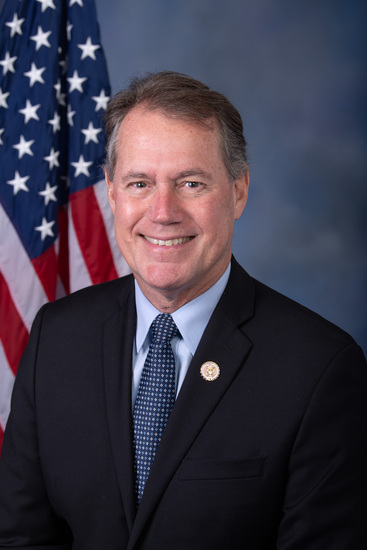
Rep. Ed Case
Sponsored bills
Maddy summaryThe COMPOST Act (HR 651) makes composting a recognized conservation practice under federal farm programs, directly affecting farmers, local governments, and community organizations. It creates a new $200 million annual grant and loan program (2024-2033) to fund projects like composting facility construction, food waste collection systems, and onsite composting programs. Priority is given to projects serving low-income communities, supporting minority-owned businesses, and using distributed infrastructure (e.g., home, farm, or community-scale composting). The bill requires projects to demonstrate waste processing capacity, high-quality compost production, and environmental justice considerations.
Safe and Quiet Skies Act of 2023 This bill sets forth requirements for commercial air tour flights. Among other requirements, the bill prohibits tour flights within a half mile of military installations, national cemeteries, national wilderness areas, national parks, and national wildlife refuges; prohibits tour flights from operating at an altitude of less than 1,500 feet; requires tour flights over occupied areas (e.g., residential, commercial, and recreational areas) to be no louder than 55dbA; and allows states and localities to impose additional requirements that are stricter than the minimum federal requirements.
Maddy summaryHR 724, the Arctic Refuge Protection Act, repeals the existing oil and gas program for the Arctic National Wildlife Refuge in Alaska and designates approximately 1.56 million acres of the refuge's coastal plain as federal wilderness. This bill directly affects the Arctic Refuge by permanently prohibiting oil and gas leasing and development in that specific area. The key mechanism is adding the designated land to the National Wilderness Preservation System under the Wilderness Act, requiring it to be managed for its natural conditions. This change legally protects the area from future fossil fuel extraction activities.
Boundary Waters Wilderness Protection and Pollution Prevention Act This bill withdraws approximately 234,328 acres of federal land and waters in a specified area in the Rainy River Watershed of Superior National Forest in Minnesota from entry, appropriation, and disposal under the public land laws; location, entry, and patent under the mining laws; and operation of the mineral leasing, mineral materials, and geothermal leasing laws. The area is adjacent to the Boundary Waters Canoe Area Wilderness and the Boundary Waters Canoe Area Wilderness Mining Protection Area. Land or interest in land within such area that is acquired by the United States shall be immediately withdrawn in accordance with this bill. The Forest Service is authorized to permit the removal of sand, granite, iron ore, and taconite from national forest system lands within such area if the removal is not detrimental to the water quality, air quality, and health of forest habitat within the Rainy River Watershed.
Land Restoration and Resiliency Act of 2023 This bill directs the U.S. Fish and Wildlife Service to enter into cooperative agreements with the National Fish and Wildlife Foundation to establish the Community Resilience and Restoration Fund at the foundation, for purposes including to improve community safety in the face of climactic extremes through conservation and protection of restoration and resilience lands; protect, conserve, and restore restoration and resilience lands in order to help communities respond and adapt to natural threats, including wildfire, drought, extreme heat, and other threats posed or exacerbated by the impacts of global climate; and protect and enhance the biodiversity of wildlife populations across restoration and resilience lands. The bill defines restoration and resilience lands as fish, wildlife, and plant habitats, and other important natural areas in the United States, on public lands, private land (after obtaining proper consent from the landowner), or land of Indian tribes, including grasslands, shrublands, prairies, chaparral lands, forest lands, deserts, and riparian or wetland areas within or adjacent to these ecosystems. To the extent amounts are available in the fund, the foundation shall award grants to eligible entities (e.g., a federal agency, a unit of local government, an Indian tribe, or a nonprofit organization) through a competitive grant process to carry out eligible projects and activities.
Maddy summaryThis bill prohibits the federal government from issuing oil and gas leases for exploration, development, or production on the outer Continental Shelf off the coasts of California, Oregon, and Washington. It amends the Outer Continental Shelf Lands Act to specifically block the Secretary of the Interior from authorizing such leasing in those coastal areas. The direct effect is on the Department of the Interior, which would no longer be permitted to conduct lease sales in these regions. The bill does not create new programs or funding but changes existing leasing authority.
IHS Contract Support Cost Amendment Act This bill allows tribes to receive contract support costs for activities that would otherwise be carried out by the Department of the Interior or the Department of Health and Human Services for direct operation of a program, but for which the costs are not fully covered by the amount of funds required by the Indian Self-Determination and Education Assistance Act of 1975.
Maddy summaryHR 439, the Public Land Search and Rescue Act, creates a federal grant program to fund remote search and rescue operations on public lands managed by the Departments of Interior or Agriculture. The program provides 75% federal funding for eligible state or local agencies to purchase or maintain specialized equipment, cover maintenance costs, or reimburse agencies conducting these operations. Grants prioritize areas with high visitor-to-resident ratios, focusing on locating and assisting people lost or stranded in remote locations. The bill directly supports search and rescue teams operating on public lands by providing resources for equipment and operational costs.
Maddy summaryHR 210, the "Stamp Out Invasive Species Act," creates a special semipostal stamp sold at post offices. When purchased, the stamp includes an extra 25% charge on the standard postage rate, with all proceeds going to combat invasive species. The funds will be split equally between the Department of the Interior and the Department of Agriculture for their existing programs, distributed twice yearly over a two-year period starting after the bill's enactment. This mechanism directly involves the public (via stamp purchases) and federal agencies managing invasive species efforts.