

Maddy summaryHR 3680, the Stop Mental Health Stigma in Our Communities Act, targets mental health disparities affecting Asian American, Native Hawaiian, and Pacific Islander (AANHPI) communities. It requires the Health and Human Services Secretary to develop a national outreach strategy (Section 4) to create culturally appropriate mental health resources and reduce stigma, with annual reports on outcomes. The bill also mandates two studies: one on AANHPI youth mental health and suicide rates (Section 5), and another on AANHPI mental health workforce shortages (Section 6), both requiring disaggregated data by race, language, and other factors. Funding of $3 million annually (2024-2028) supports the strategy, while $1.5 million each funds the studies.
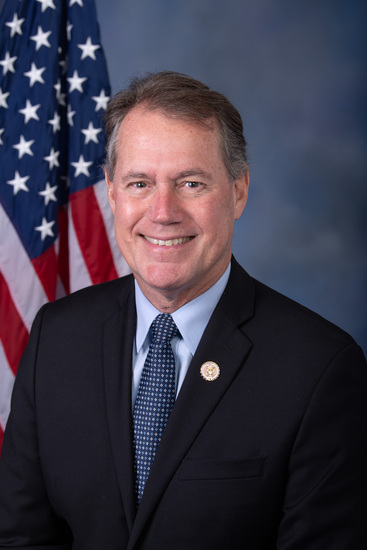
Rep. Ed Case
Sponsored bills
Maddy summaryThis resolution (HRES 443) is a symbolic gesture by the U.S. House of Representatives supporting National Poppy Day, observed on the Friday before Memorial Day. It formally endorses the tradition of wearing red poppies to honor veterans who died serving in the U.S. Armed Forces, referencing the poppy’s historical symbolism from World War I. The resolution encourages all U.S. citizens, residents, and visitors to wear a poppy that day as a sign of appreciation for military service. It does not create new laws, programs, or obligations - it is purely a statement of recognition.
Maddy summaryThis bill changes the quarterly deadlines for individual estimated income tax payments. It moves the June 15 payment date to July 15 and the September 15 date to October 15, as specified in the IRS Code. These changes apply to tax years beginning after the bill becomes law. The bill directly affects individual taxpayers who make quarterly estimated tax payments.
Maddy summaryThis bill creates a new tax credit for expenses related to "qualified access technology for the blind" under the Internal Revenue Code. It allows taxpayers to claim a credit of up to $2,000 per year (adjusted for inflation) for costs paid for hardware, software, or IT that converts visual information into formats usable by blind individuals, covering the taxpayer, their spouse, or a dependent who is blind. The credit is limited to $2,000 over any three consecutive tax years per blind individual and expires after 2028. It directly affects blind individuals and their families who purchase qualifying assistive technology. The credit cannot be claimed for expenses already covered by other tax deductions or credits.
Maddy summaryThis bill amends the Older Americans Act to better serve LGBTQI older adults (defined as lesbian, gay, bisexual, transgender, queer, intersex individuals, and those living with HIV) by adding specific definitions and creating new support structures. It establishes an Office of LGBTQI Inclusion within the Administration on Aging, led by a Director and Assistant Director, to coordinate services, advocate for this community, and collect data on their challenges. The bill also creates a National Resource Center on LGBTQI Aging to provide training and resources to organizations serving LGBTQI older adults and requires data collection on discrimination against them in long-term care settings. These changes aim to improve access to culturally competent services and address the unique needs of LGBTQI older adults through concrete policy updates.
Maddy summaryHRES 439 is a non-binding resolution expressing the House of Representatives' support for keeping the U.S. Postal Service (USPS) as an independent federal agency, not subject to privatization. It highlights USPS's constitutional role, self-sustaining nature (relying on service revenue, not taxpayer funds), and its importance to rural communities, e-commerce, and over 600,000 employees. The resolution urges Congress to take action to preserve USPS's independence, emphasizing that privatization could raise prices, reduce services, and harm the nation's mail infrastructure. As a procedural resolution, it does not change law but formally states the House's position.
Wildfire Grid Resiliency Act This bill requires the Office of Cybersecurity, Energy Security, and Emergency Response of the Department of Energy (DOE) to carry out a Resilience Accelerator Demonstration Program. Under the program, the office must make awards to DOE's National Laboratories for projects that demonstrate innovative technologies to improve the electric grid's resilience to wildfires, such as technologies for monitoring vegetation management or enhancing the safety of first responders who respond to electric grid emergencies.
Maddy summaryHR 3606 (FLUENT Act) creates a federal grant program to expand family literacy services for English language learner families, targeting caregivers with limited English proficiency. It authorizes $50 million annually (2024-2028) for grants up to $1 million each to organizations providing research-based programs that include interactive caregiver-child literacy activities, adult education, and school collaboration. The program requires grantees to improve children's English language skills, primary language literacy, and caregivers' ability to support education, with measurable outcomes tracked across seven key areas. It prioritizes "hardest-to-reach" families and mandates services for children under age 8 with caregivers aged 16+.
Maddy summaryThis bill requires that AM radio receivers be included as standard equipment in all new motor vehicles (such as cars and trucks) sold in the United States, with a rule to be issued by the Department of Transportation within one year. The rule must ensure AM radio is easily accessible on the dashboard and allows manufacturers to use digital AM radio technology instead of traditional AM. During the one-year period between the bill's enactment and the rule's effective date, manufacturers must clearly label vehicles without AM radio. The bill also directs a study to evaluate whether an alternative system could deliver emergency alerts as reliably as AM radio across the country, especially during crises.
Maddy summaryHCONRES 46, the "Fiscal State of the Nation Resolution," requires the House and Senate Budget Committees to hold an annual joint hearing within 45 days of the Treasury's submission of the federal government's audited financial statement. At this hearing, the Comptroller General will present an objective, nonpartisan analysis of the government's financial condition, including deficits, surpluses, and long-term fiscal projections, as required by the Government Accountability Office's standards. The hearing must be open to the public and allow all members of Congress to participate, regardless of committee membership. This resolution ensures Congress receives regular, factual reviews of federal finances without political bias.