

Maddy summaryThis bill establishes an Office for Gender Equity within the Department of Education to support schools and institutions in fully implementing Title IX. It provides training, technical assistance, and grants to help educational entities address gender discrimination, with specific focus on students facing multiple forms of discrimination including race, ethnicity, disability, and sexual orientation. The bill authorizes $160 million annually for fiscal years 2024-2028, with at least $140 million dedicated to grant programs for schools to improve gender equity in athletics, academics, and campus safety. The Department must collect data on Title IX coordinators and develop best practices for reducing sex discrimination across all educational levels. The bill does not modify Title IX itself but aims to strengthen its implementation through coordinated support and resources.
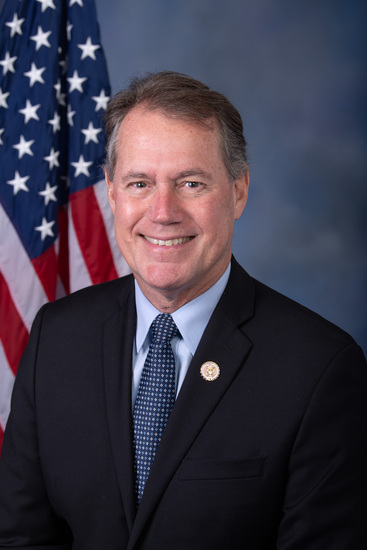
Rep. Ed Case
Sponsored bills
Maddy summaryHR 4335, the VA Loan Informed Disclosure Act of 2023, requires mortgage lenders to include specific information about VA home loan programs in standard mortgage disclosures. The bill amends the National Housing Act to mandate that lenders provide details on VA loans (guaranteed under Title 38) alongside other loan options, including assumptions about prevailing interest rates. This change directly affects lenders processing VA-guaranteed mortgages, ensuring borrowers receive clearer comparisons between VA loans and other financing. The law does not require lenders to verify borrower eligibility for VA loans, only to include the specified disclosure language.
Maddy summaryThe PRIDE Act of 2023 amends the Internal Revenue Code to replace gender-specific terms like "husband and wife" with gender-neutral language such as "married couple" or "spouses" across numerous tax code sections. This bill affects all legally married couples who file federal tax returns by updating language in over 30 sections of the tax code related to filing status, deductions, credits, and other tax matters. The bill is a language update that makes the tax code more inclusive without changing existing tax treatment for married couples. It does not alter tax rates, benefits, or policies, but ensures all provisions apply equally regardless of gender.
Maddy summaryThis bill establishes a National Commission on Critical Supply Chains to study vulnerabilities in U.S. supply chains for critical products. The Commission would examine dependencies on foreign sources for items including medical supplies, rare earth materials, semiconductors, defense components, and food products. It would identify risks to national security, economic competitiveness, and public health if these supply chains were disrupted. The Commission would produce annual reports with recommendations for Congress to strengthen domestic manufacturing and supply chain resilience. The Commission would operate for 10 years, with an annual budget of $6 million.
Maddy summaryHR 3698, the Feed Hungry Veterans Act of 2023, amends the Food and Nutrition Act of 2008 to expand eligibility for SNAP (Supplemental Nutrition Assistance Program) benefits to more veterans. It adds four new categories of veterans who can qualify: those with a "catastrophically disabled" status under military disability law, veterans under 65 receiving a pension under specific veteran benefits law, and those meeting existing high-disability rating thresholds. This change directly affects veterans who previously did not meet the program’s eligibility criteria but now qualify under these expanded definitions. The bill takes effect on October 1, 2023, making these eligibility changes operational for SNAP enrollment.
Promoting American Competition in Aquaculture Research Act This bill amends certain limitations on the use of Department of Agriculture (USDA) funding for indirect costs for aquaculture assistance programs. The bill also reauthorizes USDA aquaculture assistance programs through FY2028, which includes research and extension programs.
Maddy summaryThe LGBTQI+ and Women's History Education Act of 2023 would provide $2 million annually for five years to develop educational resources about women's and LGBTQI+ history for K-12 classrooms. The bill directs the Smithsonian's National Museum of American History to create inclusive teaching materials that address historical gaps where women and LGBTQI+ individuals, particularly those of color and with disabilities, have been underrepresented. These resources would include digital content, print materials, and professional development for teachers to help implement more comprehensive curricula. The bill aims to address findings showing only 13% of named historical figures in textbooks are women and that LGBTQI+ history is often omitted or marginalized in school curricula. The program would require annual reports to Congress on how funds are used, with the program set to sunset in 2028.
Maddy summaryHJRES 76 proposes renaming the Robert E. Lee Memorial in Arlington National Cemetery to the "Arlington House National Historic Site." This procedural bill would replace all official references to the memorial with the new name and repeal two prior resolutions (1955 and 1972) that established the memorial. The change affects how the site is identified in federal laws, documents, and records but does not alter its management or historical significance. The bill focuses solely on the official designation, not on policy changes or historical interpretation.
Maddy summaryThis bill improves the VA Work-Study program for veterans and active-duty military members by expanding eligible work opportunities to include roles with state/local governments and nonprofits that support veterans. It establishes a higher minimum wage standard, requiring payments to meet the highest of federal, state, or local minimum wage rates. The bill also requires electronic time tracking for participants and annual public reporting on program data, including participant demographics, wages, hours worked, and participating schools. These changes apply to work-study payments made on or after January 1, 2026.
Maddy summaryThis bill establishes the John Lewis Civil Rights Fellowship Program within the Fulbright exchange system to honor civil rights leader John Lewis and advance U.S. foreign policy through global civil rights education. It creates a new fellowship for U.S. early- to mid-career professionals, selecting at least 25 annually for 10-month programs to conduct research or intern with approved organizations in countries participating in Fulbright exchanges. Fellows must complete a work plan, attend an orientation in Washington, DC, and present findings at an annual summit, with the State Department covering costs for travel, lodging, and expenses. The program requires annual reports on participant demographics and program effectiveness, and expires seven years after enactment.