

Maddy summaryThis bill requires private firearm transfers between individuals to go through a licensed dealer who must conduct a background check. It applies to most private sales but includes exceptions for transfers between family members (like parents and children), law enforcement, emergencies preventing harm, and temporary loans at shooting ranges or for hunting. Dealers must provide background check notices in both English and Spanish. The law aims to prevent prohibited individuals from obtaining firearms through private transactions while maintaining existing state authority on firearm laws.
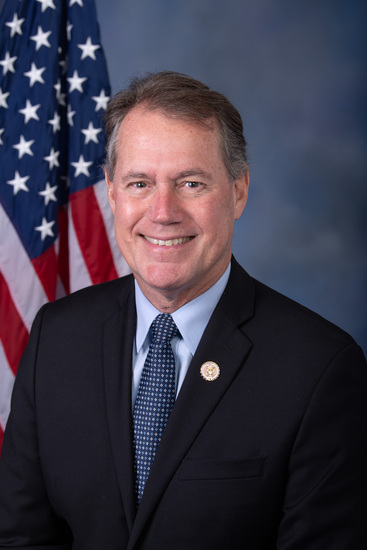
Rep. Ed Case
Sponsored bills
Maddy summaryHR 3868, the Enhanced Background Checks Act of 2025, modifies federal firearm background check procedures to address delays. It requires federal firearms licensees to wait 10 business days after a background check query if the system doesn’t immediately flag a transfer, unless the buyer submits an electronic petition confirming they aren’t prohibited from owning firearms. The petition process includes a 10-day response deadline from the Attorney General, with licensees allowed to proceed if the system remains silent after 10 days. The bill also mandates detailed annual reports from the FBI on petition delays and GAO reports on implementation, focusing on how these changes affect firearm transfers to prohibited individuals.
Maddy summaryHRES 483 is a House resolution recognizing the 250th anniversary of the U.S. Army's founding on June 14, 1775. It expresses appreciation for the Army's service over 250 years, honors soldiers' valor and core values, and calls for public observance through ceremonies and activities. The resolution has no policy impact or funding provisions - it is purely commemorative. It was introduced by 30 bipartisan House members and referred to the Armed Services Committee.
Maddy summaryThis bill modifies the legal definition of "franchise fee" in the Communications Act of 1934. It changes Section 622(g)(1) to clarify that the term "means" other monetary assessments, not just specific types of fees. This adjustment directly affects cable and broadband providers who pay franchise fees to local governments for operating in communities. The change is purely definitional and does not alter existing fee structures or create new protections for community television.
Maddy summaryThe Elder Pride Protection Act of 2025 establishes a federal task force (the ELDER Task Force) within the Department of Justice to address elder abuse targeting LGBTQI+ individuals. The task force, created within 90 days of the bill’s passage, will study the rise in such abuse, develop national best practices for law enforcement, and create educational materials for prevention and response. It will coordinate efforts across local, state, and federal agencies and submit a report to Congress within one year. The bill directly affects older LGBTQI+ adults (aged 60+) facing abuse, which includes physical, sexual, emotional, or financial harm, but does not create new funding or penalties.
Maddy summaryThis bill, HR 3610 (Parity for Native Hawaiian Veterans Act of 2025), directly affects Native Hawaiian veterans who receive care through Native Hawaiian health care systems. It requires the VA to reimburse these health systems for costs of care provided to eligible veterans, regardless of how the care is delivered (directly, referred, or contracted), and exempts Native Hawaiian veterans from certain cost-sharing requirements under VA medical programs. Key provisions include amending VA housing loan rules to align with Native Hawaiian definitions and adding Section 1703H for reimbursement, plus modifying Section 1730A(b)(3) to explicitly include Native Hawaiians as exempt from cost-sharing. The law aims to ensure equal access to VA benefits by removing financial barriers and standardizing eligibility for Native Hawaiian veterans.
Maddy summaryThis bill establishes U.S. policy that sea level rise driven by climate change should not cause Pacific island nations to lose UN membership or their maritime rights under international law. It requires the State Department to submit a report within 120 days detailing U.S. diplomatic efforts to encourage other countries and international organizations to preserve maritime boundaries affected by rising seas. The report must assess cooperation with nations like the Pacific Islands Forum, identify barriers to policy adoption, and list countries supporting this approach. The bill directly supports small island nations' economic security by aiming to protect their existing ocean resource rights under the U.N. Convention on the Law of the Sea.
Maddy summaryThis bill directs the Department of Defense to study providing apartment or dormitory housing for civilian workers at four specific naval shipyards: Norfolk (VA), Pearl Harbor (HI), Portsmouth (ME), and Puget Sound (WA). The study must assess costs, recruitment/retention benefits, feasibility at each location, operational impacts, and rent deduction options. It requires a report to Congress within 18 months, but does not authorize or implement housing. The bill affects civilian shipyard workers at these facilities by triggering a federal review of potential housing solutions.
Maddy summaryHR 3757, the Pride In Mental Health Act of 2025, provides $20 million annually (2026-2030) to fund grants for mental health services targeting LGBTQ+ youth, including nonbinary, intersex, and Two Spirit youth, and their families/caregivers. The bill mandates grantees to provide trauma-informed care, cultural competency training, school bullying prevention guidelines, and evidence-based practices while explicitly prohibiting the use of funds for conversion therapy or its promotion. It also requires the federal government to restore mental health reports on LGBTQ+ youth, conduct a national survey measuring mental health distress, and produce a report on mental health services for LGBTQ+ youth in foster care. The law directly affects these youth populations by expanding access to tailored mental health resources and data collection, with funding administered through the Substance Abuse and Mental Health Administration.
Maddy summaryThis bill (HCONRES 24) is a procedural resolution authorizing the use of Emancipation Hall in the Capitol Visitor Center for a single event on June 8, 2025, to celebrate the birthday of King Kamehameha I. It does not create new laws or affect any individuals or policies; it simply permits the Capitol Visitor Center to host this specific cultural event. The Architect of the Capitol will oversee physical preparations for the event as needed.