Delivering Elderly Lunches and Increasing Volunteer Engagement and Reimbursements Act of 2022 or the DELIVER Act of 2022 This bill increases the standard charitable mileage rate for the delivery of meals to elderly, disabled, frail, and at-risk individuals. The rate shall be equal to the standard business mileage rate (58.5 cents per mile in 2022).
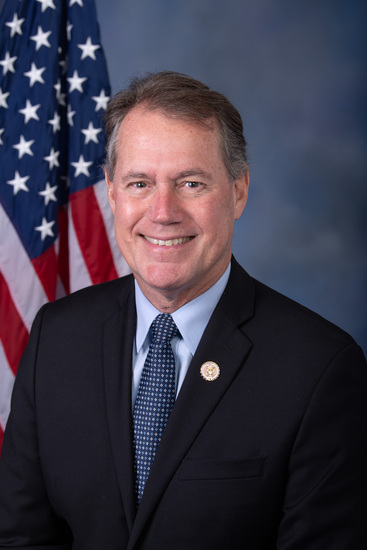
Rep. Ed Case
Sponsored bills
Fraud and Scam Reduction Act This bill expands activities to address mail, telephone, and internet fraud, particularly such scams targeting older adults. The bill establishes a Senior Scams Prevention Advisory Group, which must create model educational materials to educate employees of retailers, financial-services companies, and wire-transfer companies on how to identify and prevent scams that affect older adults. Further, the Federal Trade Commission (FTC) must establish an advisory office in the Bureau of Consumer Protection to assist the FTC in monitoring scams targeting older adults, educating consumers, and receiving complaints.
Maddy summaryHR 7837, the National Guard Promotion Improvement Act of 2022, addresses delays in Federal recognition of promotions for Army and Air National Guard reserve officers. It requires an independent study to review the promotion process and identify ways to reduce delays, mandates backdating promotions for officers affected by delays exceeding 60 days (unless caused by the officer), and establishes annual reporting requirements on processing times. The bill directly affects reserve commissioned officers in the Army and Air National Guard who face extended waits for Federal promotion approval. Key provisions include the study on best practices and IT solutions, automatic promotion date adjustments for eligible officers, and detailed annual reports tracking delay metrics to Congress.
This concurrent resolution expresses the sense of Congress that the President use existing authorities under the Defense Production Act of 1950 to ensure the supply and equitable distribution of infant formula. That act confers upon the President a broad set of authorities to influence domestic industry in order to provide essential materials and goods needed for the national defense.
Native American Language Resource Center Act of 2021 This bill authorizes the Department of Education to make a grant to or enter into a contract with an eligible entity (e.g., an institution of higher education) to establish, operate, and staff a Native American language resource and training center. The center must serve as a resource to improve the capacity to teach and learn Native American languages.
Helicopter Safety and Noise Management Act This bill establishes a commission comprised of the Federal Aviation Administration, members of local and state government, and helicopter noise and safety advocates to develop a helicopter usage management plan to substantially reduce the number of nonessential civil rotorcraft (i.e., a helicopter) that can operate in certain airspace at any given time. The plan shall not apply any limitation or requirement to the operation of a civil rotorcraft for purposes of public health and safety, including (1) law enforcement, (2) emergency response, (3) disaster response, (4) medical services, (5) scientific research, and (6) official purposes by a news organization.
Multinational Species Conservation Funds Semipostal Stamp Reauthorization Act of 2021 This bill directs the U.S. Postal Service to sell each copy of the Multinational Species Conservation Fund Semipostal Stamp and notify Congress when all copies have been sold.
Community Services Block Grant Modernization Act of 2022 This bill reauthorizes the Community Services Block Grant program through FY2032 and otherwise modifies the program. The program supports various antipoverty activities, primarily through formula-based allotments to states, Indian tribes, and territories. In particular, the bill makes changes to the program's administration and leadership; performance measurement; and allotments to states and territories. The bill also expands eligibility for services and activities funded by the program to 200% of the federal poverty line (FPL). Under current law, eligibility is generally set at the FPL.
Rights for the Transportation Security Administration Workforce Act of 2022 or the Rights for the TSA Workforce Act of 2022 This bill modifies the workplace rights, protections, and benefits applicable to Transportation Security Administration (TSA) personnel. Specifically, the bill by December 31, 2022, eliminates personnel authorities of the Department of Homeland Security (DHS) and the Department of Transportation governing the conditions of employment for TSA employees, thus making TSA employees subject to the personnel management system applicable to other federal employees; sets forth transition rules that protect the pay rates, leave rights, and other rights of TSA employees; and requires DHS to consult with the exclusive representative of TSA screening employees to carry out the conversion of those positions. The bill also permits the TSA to consult with organizations representing federal air marshals to address concerns, including mental health and suicide rates; directs the TSA to ensure its employees are provided proper guidance regarding prevention and protections against COVID-19; requires the TSA to provide a one-time bonus payment of $3,000 to each TSA employee carrying out duties that require substantial contact with the public during the COVID-19 national emergency; and requires the Government Accountability Office to report on implementation of the bill, TSA recruitment efforts, and specified TSA personnel policies.

Maddy summaryHRES 1110 is a non-binding resolution passed by the U.S. House of Representatives on May 12, 2022, to recognize and mourn the 1,000,000 Americans who died from COVID-19. It formally honors the deceased and extends condolences to their families and loved ones without creating new laws or policies. The resolution does not directly affect any specific group or alter existing legislation, as it serves solely as a commemorative expression of national grief. Its key mechanism is the House’s formal acknowledgment of the pandemic’s human toll, referencing the milestone of one million deaths.