

This bill extends authorization through FY2027 and expands veteran eligibility for certain Department of Veterans Affairs programs for homeless or seriously mentally ill veterans, including (1) outreach services; (2) care, treatment, and rehabilitative services; and (3) therapeutic transitional housing assistance. The bill also extends through FY2027 a program to provide additional services for homeless veterans at certain centers.
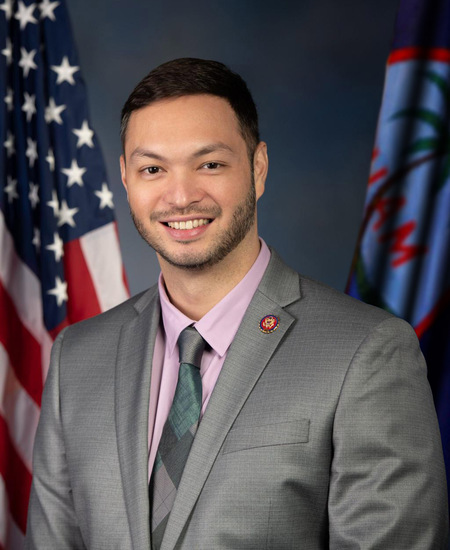
Rep. Michael F. Q. San Nicolas
Sponsored bills
Maddy summaryHR 301 would amend U.S. law to officially designate "Lift Every Voice and Sing" as the national hymn of the United States. This change would add the song's full composition (words and music) to Title 36 of the U.S. Code, replacing the current designation of "The Star-Spangled Banner" as the sole national anthem for formal recognition purposes. The bill directly affects federal law and official government ceremonies where the national hymn is performed, though it does not alter the status of "The Star-Spangled Banner" as the national anthem. The policy change is purely procedural, establishing a new official designation without impacting any other laws or rights.
Stay Cool Act This bill addresses risks associated with extreme heat, including through grants and activities that support (1) public preparedness and response to heat emergencies, (2) community-based interventions (e.g., cooling centers), (3) air conditioning and other cooling mechanisms in federally assisted housing, and (4) urban green spaces and vegetation.
Military Spouse Entrepreneur Reimbursement Act This bill authorizes the military department concerned to reimburse certain business costs (e.g., equipment removal or relocation) incurred by the spouse of a member of the Armed Forces when the member is reassigned or moved to a new duty station.
Keep Infant Formula Safe and On the Shelves Act of 2022 This bill requires the Food and Drug Administration (FDA) to periodically inspect infant formula manufacturing facilities and addresses related issues. The FDA must periodically conduct inspections, including unannounced inspections, of infant formula manufacturer facilities. If the FDA makes a notable regulatory finding at such a facility, the manufacturer must undergo a comprehensive food safety audit that includes a root cause analysis, enhanced testing, and comprehensive environmental samples. A manufacturer of infant formula or essential medical food must notify the FDA no later than five business days after becoming aware of circumstances that could lead to a shortage of the relevant product in the United States. Further, the FDA must create and annually update a list of U.S. manufacturing facilities that could be converted to manufacture infant formula during a shortage. In the event of a shortage, the FDA may require infant formula manufacturers to provide certain information, such as the quantity of formula in a manufacturer's inventory. The bill also establishes under statute that food, including infant formula, is a critical material essential to the national defense and therefore subject to authorities under the Defense Production Act of 1950. (Such authorities authorize the President to take various actions, such as requiring businesses to prioritize certain government contracts and incentivizing the domestic industrial base to expand the production of critical materials.) The Occupational Safety and Health Administration must issue a fact sheet and provide technical assistance to infant formula manufacturers to promote compliance with occupational health and safety standards.
This joint resolution directs the President to remove U.S. Armed Forces from hostilities against the Houthis in Yemen within 30 days of the enactment of this joint resolution unless Congress authorizes a later withdrawal date, issues a declaration of war, or specifically authorizes the use of the Armed Forces. Prohibited activities include sharing intelligence or providing logistical support to enable offensive strikes by the coalition led by Saudi Arabia. This joint resolution shall not affect any military operations directed at Al Qaeda or associated forces.
Relief for Restaurants and other Hard Hit Small Businesses Act of 2022 This bill addresses support for restaurants, arts and entertainment venues, and small businesses impacted by the COVID-19 pandemic. The bill provides an additional $42 billion in FY2021 for the Restaurant Revitalization Fund and gives priority to previous applicants who have not received a grant. The Small Business Administration (SBA) must provide to applicants an explanation for denied applications, establish a reconsideration process for denied applications, and institute an audit and oversight plan with respect to grant recipients. Additionally, the bill establishes the Hard Hit Industries Award Program for small businesses that suffered a pandemic-related revenue loss of 40% or more. Aggregate grant amounts are capped at $1 million. Funds may be used for expenses including mortgage, rent, and utility payments and payroll. SBA must prioritize entities that have experienced significant pandemic-related revenue loss, with first priority going to those that experienced a loss of at least 80%, and second priority going to those that experienced a loss of at least 60%. Finally, the bill extends to March 11, 2023 (or a later date as determined by the SBA), the time frame during which Shuttered Venue Operators Grant recipients may use grant funds to cover their expenses.
Maddy summaryHR 7837, the National Guard Promotion Improvement Act of 2022, addresses delays in Federal recognition of promotions for Army and Air National Guard reserve officers. It requires an independent study to review the promotion process and identify ways to reduce delays, mandates backdating promotions for officers affected by delays exceeding 60 days (unless caused by the officer), and establishes annual reporting requirements on processing times. The bill directly affects reserve commissioned officers in the Army and Air National Guard who face extended waits for Federal promotion approval. Key provisions include the study on best practices and IT solutions, automatic promotion date adjustments for eligible officers, and detailed annual reports tracking delay metrics to Congress.
Coordinating Substance Use and Homelessness Care Act of 2022 This bill requires the Department of Housing and Urban Development to award competitive grants to improve coordination of health care and homelessness services for individuals who are homeless, have significant behavioral health issues (e.g., substance use disorders), and voluntarily seek assistance. Entities eligible for these grants include local and tribal governments, public housing agencies that administer housing choice vouchers, and certain nonprofits.
Rights for the Transportation Security Administration Workforce Act of 2022 or the Rights for the TSA Workforce Act of 2022 This bill modifies the workplace rights, protections, and benefits applicable to Transportation Security Administration (TSA) personnel. Specifically, the bill by December 31, 2022, eliminates personnel authorities of the Department of Homeland Security (DHS) and the Department of Transportation governing the conditions of employment for TSA employees, thus making TSA employees subject to the personnel management system applicable to other federal employees; sets forth transition rules that protect the pay rates, leave rights, and other rights of TSA employees; and requires DHS to consult with the exclusive representative of TSA screening employees to carry out the conversion of those positions. The bill also permits the TSA to consult with organizations representing federal air marshals to address concerns, including mental health and suicide rates; directs the TSA to ensure its employees are provided proper guidance regarding prevention and protections against COVID-19; requires the TSA to provide a one-time bonus payment of $3,000 to each TSA employee carrying out duties that require substantial contact with the public during the COVID-19 national emergency; and requires the Government Accountability Office to report on implementation of the bill, TSA recruitment efforts, and specified TSA personnel policies.