

Maddy summaryHR 7455 amends the Emergency Food Assistance Act of 1983 to allow certain eligible states to receive their federal food assistance funds as cash instead of physical commodities. This change would let states directly purchase food from commercial markets using these funds, rather than receiving commodities through the federal system. The bill affects states that meet the definition of "eligible State" under the 2018 Farm Bill (Agriculture Improvement Act of 2018). The key provision replaces the current process where the federal government buys and distributes food with a system where states use cash for direct procurement.
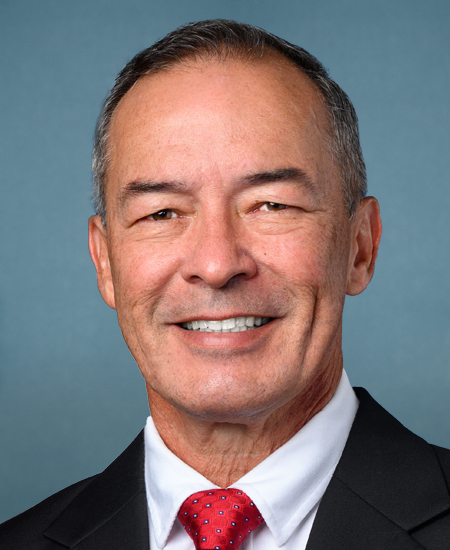
Rep. James C. Moylan
Sponsored bills
Maddy summaryThe Streamline Upgrades for Veterans Act requires the Department of Defense to submit a report detailing how long it takes to review discharge cases involving post-traumatic stress disorder or traumatic brain injury. This report must include data on processing times, staffing levels, and recommendations to speed up these reviews, with the executive summary made available to the public. Additionally, the bill temporarily prevents the reduction of personnel assigned to the agencies that handle these specific discharge reviews until December 31, 2030. The legislation aims to improve transparency and efficiency in the review process for veterans seeking to overturn unfavorable discharge decisions.
Maddy summaryThe VALOR Act (HR 7598) ensures veterans with pending disability claims don't pay unnecessary housing loan fees. It requires the VA to refund or credit fees paid by veterans who later have their disability claims approved. Specifically, if a veteran pays a housing loan fee before their disability claim is decided and the claim is approved after payment, the VA must reimburse the fee amount. This directly affects veterans applying for VA-guaranteed home loans while awaiting disability compensation decisions. The bill creates a clear, automatic reimbursement process without requiring veterans to file separate claims for refunds.
Territorial Student Access to Higher Education Act This bill requires public institutions of higher education that participate in federal student aid programs to charge no more than in-state tuition and fee rates to students who are residents of Guam, the Northern Mariana Islands, American Samoa, or the U.S. Virgin Islands, provided they are also U.S. nationals.
Maddy summaryThis bill, the Supplemental Security Income Restoration Act of 2026, updates eligibility rules and benefit amounts for the Supplemental Security Income (SSI) program, which provides financial assistance to low-income elderly, blind, and disabled individuals. Key changes include raising income and resource limits to help more people qualify, adjusting benefit calculations to better reflect poverty guidelines, and extending the program to U.S. territories like Puerto Rico and Guam. The legislation also removes certain financial penalties, excludes retirement accounts and tribal welfare payments from eligibility calculations, and clarifies how state tax credits are treated when determining income.
Maddy summaryThis bill, known as the Lowering Student Loans Act, would set the interest rate for new and existing Federal student loans at 2 percent starting July 1, 2026. It directly affects borrowers of Federal Direct Stafford Loans, Unsubsidized Stafford Loans, PLUS Loans, and Consolidation Loans by fixing their interest rates at this lower percentage for the duration of the loan. The legislation requires the government to notify borrowers 90 days before the change takes place and allows them to opt out of the rate adjustment within 90 days of receiving notice. Loan servicers would also be notified of the adjustments, and a complaint resolution process would be established to handle any errors or delays related to the rate changes.
Enhancing Detection of Human Trafficking Act This bill requires the Department of Labor to provide training and education to its employees on how to effectively assist law enforcement in detecting human trafficking. The bill directs Labor to determine which employees should receive the training and education based on their official duties. Further, it requires the training and education to include information that is appropriate for the employees' location or environment; that reflects current trends and best practices for the location or environment; and that is relevant to detecting human trafficking, identifying suspected victims, and referring potential cases to the Department of Justice and other appropriate authorities.
Maddy summaryThis bill amends Guam's Organic Act to allow the Government of Guam to transfer certain excess public lands back to original owners or their heirs without needing to prove the transfer serves a "public purpose." It requires Guam to create a formal process for these restorations within 180 days of enactment and report it to Congress. The bill also mandates national security reviews for any subsequent sale of such restored land to foreign individuals (excluding heirs of the original owner). This directly affects landowners in Guam whose property was historically transferred to the government, enabling them to reclaim ownership under specific conditions.
Maddy summaryHR 7672, the Parity for Pacific Radiation Survivors Act, expands eligibility under the Radiation Exposure Compensation Act (RECA) for individuals exposed to radiation from Pacific nuclear tests. It adds Guam to the list of covered territories for claims and clarifies specific time periods for physical presence (e.g., July 1946-November 1992 or April-November 1962) or military cleanup participation (Enewetak Atoll, May 1977-May 1980). The bill also adds renal disease to the list of covered conditions and updates disease terminology to include "renal" alongside other illnesses. These changes directly affect Pacific Islanders, military personnel, and survivors who participated in or were exposed during specific nuclear testing periods. The amendments adjust existing RECA criteria to ensure broader access to compensation for qualifying radiation exposure claims.
Maddy summaryThis bill allows reserve service members to be reimbursed for renting a car when traveling over 150 miles for required training or duty. It expands existing travel allowances to cover actual vehicle rental costs during the full training period plus one additional travel day before or after. The policy directly affects reserve members who incur these expenses for mandatory military activities. The Department of Defense must update travel regulations within 180 days of the bill's passage to implement these changes.