

Maddy summaryHRES 64 is a non-binding House resolution affirming the U.S.-South Korea alliance. It highlights historical ties (dating to 1882), economic partnerships (including 2023 trade data), and security cooperation (like the 1953 Mutual Defense Treaty), while celebrating Korean American contributions to U.S. society. The resolution formally supports strengthening security, economic, and cultural ties between the two nations and notes the 2025 anniversary of Korean liberation. It does not create new laws or funding, but serves as a symbolic statement of congressional support for the alliance.
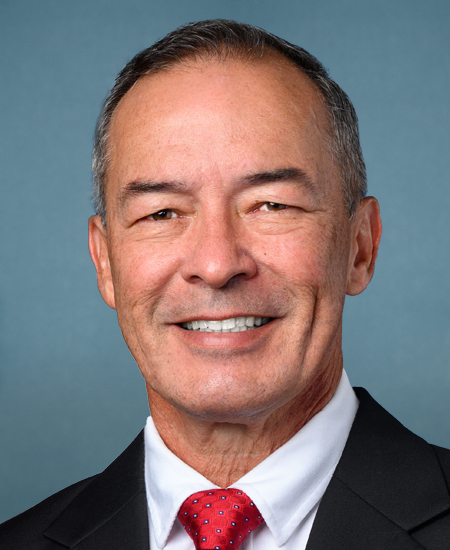
Rep. James C. Moylan
Sponsored bills
Maddy summaryThis resolution expresses support for designating the week of May 3 through May 9, 2026, as "National Small Business Week." It aims to honor the contributions of small businesses and entrepreneurs across the United States, acknowledging their role in supporting millions of jobs. The bill does not create new laws or regulations but serves as a formal statement of appreciation from the House of Representatives.
Maddy summaryH.R. 1243 is a House resolution that formally recognizes May as Asian American, Native Hawaiian, and Pacific Islander Heritage Month to celebrate the contributions of these communities to U.S. history. The bill highlights the diverse populations, historical milestones, and significant achievements of Asian Americans, Native Hawaiians, and Pacific Islanders in government, the military, and society. It also acknowledges the ongoing challenges faced by these groups, including a rise in hate crimes and historical discrimination. As a commemorative resolution, the measure does not create new laws or funding but serves to express official congressional appreciation and awareness.
Maddy summaryThe USTDA Modernization Act of 2026 updates the rules for the United States Trade and Development Agency to allow it to use up to 15% of its annual funds for projects in high-income countries that support U.S. economic and national security interests. This change expands the agency's scope beyond emerging markets to include activities in developed nations focused on energy, critical minerals, transportation, and telecommunications sectors. The bill also increases the number of senior officials the agency can appoint to five and grants the authority to hire personal services contractors without classifying them as federal employees. To ensure transparency regarding these new hiring practices, the agency director must submit an annual report to Congress detailing the number of contractors, their roles, and associated costs.
Maddy summaryThis resolution expresses support for designating April 2026 as National Native Plant Month to highlight the importance of indigenous plant species. The measure recognizes that native plants are essential for healthy ecosystems, helping to clean air, filter water, and support wildlife habitats. It also notes the decline of over 200 native plant species due to habitat loss and other environmental challenges. As a symbolic gesture, the bill does not create new laws or funding but serves to raise awareness about conserving these plants.
Maddy summaryThe Clean Energy Workforce Act authorizes $100 million to help schools and colleges train students for jobs in clean energy, renewable energy, and climate change fields. The funding supports two main programs: grants for partnerships between schools and local businesses to create or expand educational courses that prepare students for these industries, and grants for educational facilities to become more energy-efficient and use renewable power. To ensure quality, the bill requires a review committee of educators and industry experts to evaluate grant applications, with priority given to programs that reach underserved students and share their methods with other schools.
Maddy summaryThis bill requires the Department of Veterans Affairs to set a standard for how quickly veterans receive appointments after being referred for care, whether at VA facilities or through community providers. The VA Secretary must publish this standard in the Federal Register and report to Congress quarterly on how many referrals meet the timing requirement, broken down by service type and medical center performance. Each report must also include a ranking of VA medical centers from best to worst in meeting the standard, with data available to the public on a VA website. The VA must update the standard as scheduling processes change and include annual progress reports on steps taken to improve care timeliness.
Maddy summaryThis House Resolution commends the Holy See for its enduring diplomatic relationship with Taiwan and affirms the U.S. Congress's support for preserving these ties. It also recognizes Taiwan's commitment to religious freedom, contrasting it with actions by the People's Republic of China. The resolution encourages expanded engagement between Taiwan and the Holy See, specifically through increased high-level visits by clergy and church officials.
Maddy summaryThis bill, known as the Protecting Consumers from Deceptive AI Act, aims to combat the spread of misleading deepfakes by requiring clear labeling for content created or significantly altered by artificial intelligence. It mandates that developers of AI applications embed machine-readable watermarks and metadata into audio and visual files to identify their AI origins, while also requiring online platforms to display this information to users. To support these efforts, the legislation directs the National Institute of Standards and Technology to form task forces that will develop technical standards for content verification and establish guidelines for privacy and interoperability. Enforcement of these labeling requirements will be handled by the Federal Trade Commission, which can penalize violations as unfair or deceptive practices and may approve self-regulatory guidelines to help companies achieve compliance.
Maddy summaryHR 6331, the ADVERSARIES Act, amends export control definitions to clarify which entities face restrictions. It specifically expands the definition of "entity" to include Chinese military companies listed under the 2021 National Defense Authorization Act, entities on Commerce Department lists (Supplements 4 and 7 to Part 744), and their 50%+ owned subsidiaries or affiliates. This change directly affects U.S. exporters and researchers who must now comply with export controls when dealing with these designated entities. The bill does not create new restrictions but formally incorporates existing lists into the legal definition under the Export Control Reform Act. It ensures U.S. export rules explicitly cover these specific strategic entities and their affiliates.