

Maddy summaryThis bill amends the definition of "humanitarian and civic assistance" under military law to explicitly include "the hardening of existing infrastructure in support of disaster mitigation." It directly affects military units conducting civic assistance projects and communities receiving infrastructure upgrades. The key provision expands existing programs to allow military personnel to strengthen buildings and systems (like flood barriers or earthquake-resistant structures) as part of disaster prevention efforts. This change modifies how military humanitarian work is defined but does not create new programs or funding.
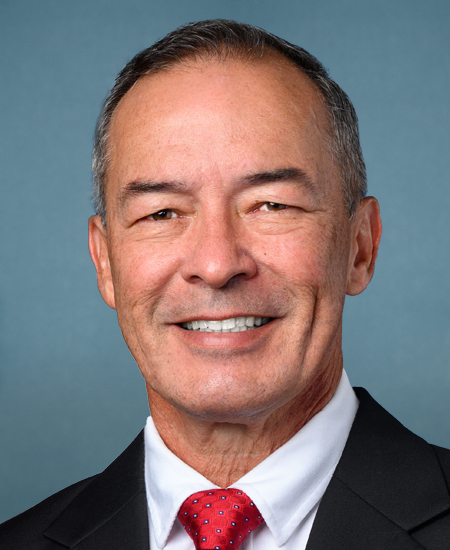
Rep. James C. Moylan
Sponsored bills
Supporting Equity for Aquaculture and Seafood Act or the SEAS Act This bill directs the Department of Agriculture (USDA) to increase support for aquaculture grants and assistance. (Aquaculture is the controlled breeding, rearing, and harvesting of fish, shellfish, and sea vegetables.) Specifically, the bill directs USDA to give aquaculture producers the same consideration as animal agriculture producers in awarding grants or other assistance. Further, USDA must ensure adequate and fair funding levels for aquaculture producers under USDA programs. USDA must also provide its staff with specific education and trainings on aquaculture. USDA must submit to Congress (1) an annual report that includes information on USDA seafood and aquaculture purchases and grants, and (2) a report on USDA's role in supporting aquaculture and the seafood industry. USDA must make competitive grants (e.g., to regional aquaculture centers or nonprofit organizations) to develop next generation technology to reduce pollution and fuel usage in the seafood and aquaculture industries. Further, Agriculture and Food Research Initiative program grants must address methods of increasing the survival rate and adaptability of shellfish, including resistance to heat, disease, salinity, and acidification. In addition, the federal crop insurance program (FCIP) must research and develop a policy to insure aquaculture products and the Federal Crop Insurance Corporation (the agency that finances FCIP operations) must establish a policy to insure aquaculture products.
Maddy summaryThe AQUAA Act establishes a regulatory framework for sustainable offshore aquaculture in U.S. waters, creating "aquaculture opportunity areas" in the exclusive economic zone. It requires aquaculture management plans for these areas and sets up a permitting process for offshore facilities, including environmental monitoring and contingency planning requirements. The bill includes provisions for research and development grants to support sustainable aquaculture technology, economic development programs for coastal communities, and protections for marine ecosystems and wild fish stocks. It directly affects offshore aquaculture operators, coastal communities, and federal agencies responsible for regulation, including the Department of Commerce and National Oceanic and Atmospheric Administration. The act aims to expand domestic seafood production through sustainable offshore aquaculture while supporting job creation in the seafood industry.
Maddy summaryThis bill establishes a USDA initiative (2024-2028) to prioritize funding for childcare improvements in rural and agricultural communities. It directs existing USDA programs - like the Essential Community Facilities program and RISE grants - to give priority to projects addressing childcare availability, quality, or cost in farming-dependent counties (using 2015 ERS county codes). Qualified applicants must be licensed childcare providers meeting state health/safety standards. The USDA must evaluate funded projects and report on impacts within three years.
This resolution condemns Iran for the 1988 massacre of political prisoners. It also urges the Biden Administration and U.S. allies to publicly condemn the massacre and to pressure Iran to provide information to the families of the victims.
Maddy summaryThe Healthy Babies Act of 2023 requires the U.S. Department of Agriculture to update the WIC program's food regulations within one year to include infant food combinations and dinners in the approved supplemental foods list. This change directly affects low-income infants and young children enrolled in WIC by expanding the types of foods they can receive through the program. The bill mandates a specific regulatory update without altering WIC's funding, eligibility rules, or existing food categories. It applies to the Child Nutrition Act of 1966, which governs the WIC program's food provisions.
Maddy summaryHR 5063 modifies the timeframe for a tax credit that helps small businesses in Puerto Rico and U.S. territories secure federal contracts. It shortens the credit period from 4 years starting immediately after enactment to 3 years beginning 90 days after the bill's passage. This adjustment reduces the total duration of the credit by one year for eligible businesses. The bill directly affects small businesses in Puerto Rico and designated U.S. territories that contract with the federal government.
Maddy summaryHR 5001 establishes a Special Advisor for Insular Areas within each U.S. Executive department (excluding the Department of the Interior). These advisors, to be appointed within 6 months of the bill's enactment, serve as the primary departmental advisors on issues affecting insular areas - defined as U.S. territories (Puerto Rico, Guam, American Samoa, Northern Mariana Islands, U.S. Virgin Islands) and Freely Associated States (Marshall Islands, Micronesia, Palau). Their duties include assessing how department policies impact these regions, guiding relevant programs, liaising with local stakeholders, and coordinating with the Department of the Interior's Insular Affairs office. The bill also mandates regular interdepartmental meetings to address major policy matters affecting insular areas.
Maddy summaryHR 3933, the TAP Promotion Act, requires standardized presentations about Veterans Affairs (VA) benefits during military transition counseling for service members separating from the armed forces. These presentations must be approved by the VA, delivered by authorized veterans service organizations (VSOs), and include information on how VSOs assist with VA claims - without encouraging membership in specific organizations. The bill mandates a one-hour limit per presentation and requires the VA to submit annual reports to Congress detailing which VSOs presented, attendance numbers, and recommendations for improvement. This policy directly affects service members preparing for civilian life and the VSOs providing these transition resources.
Maddy summaryThis bill ensures veterans enrolled in their final semester of education under the Post-9/11 GI Bill receive the full monthly housing stipend, treating them as more than half-time for that period. It requires the Department of Veterans Affairs to provide 180 days' notice with justification before implementing rule changes affecting veterans' education benefits, allowing time for review by students and institutions. Additionally, the bill permits multi-year waivers for educational institutions regarding accreditation requirements and adjusts the notice period for risk-based surveys from one to two business days. These changes directly affect veterans using GI Bill benefits, educational institutions, and the VA in managing education programs.