

Pay Our Border Patrol and Customs Agents Act This bill provides FY2024 appropriations for the salaries and expenses of certain U.S. Customs and Border Protection (CBP) employees who are required to work during a lapse in appropriations (i.e., government shutdown) in FY2024. Specifically, the bill provides appropriations to CBP for the salaries and expenses of agents of the U.S. Border Patrol and officers of the Office of Field Operations who are excepted from furlough (i.e., required to work) during a lapse in discretionary appropriations in FY2024.
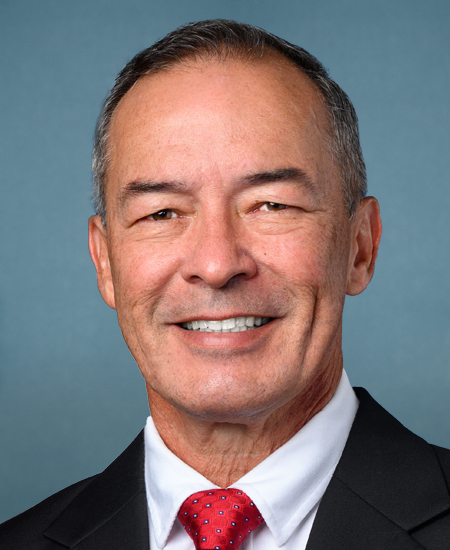
Rep. James C. Moylan
Sponsored bills
Maddy summaryThis bill designates the Guam and Western Pacific USDA Rural Development Office as the official representative for USDA Rural Development services in Guam, the Commonwealth of the Northern Mariana Islands, American Samoa, and the Freely Associated States (the Republic of the Marshall Islands, Palau, and the Federated States of Micronesia). Within 90 days of enactment, the Secretary of Agriculture must formally establish this office and grant it the same authorities and responsibilities as a state-level USDA Rural Development office. This change directly affects residents and local governments in these Pacific regions by creating a dedicated point of contact for federal rural development programs like loans and grants.
Maddy summaryThis bill extends the funding period for the Distance Learning and Telemedicine Program from 2023 to 2028. It directly affects rural communities by ensuring continued access to telehealth services and educational programs through this existing federal initiative. The key provision is a simple amendment to the program's authorization date in existing law, without creating new requirements or altering the program's scope. The change ensures uninterrupted support for rural healthcare and education providers relying on this funding.
Maddy summaryThe Veteran Medical Exams for Distant Areas Act (HR 5470) amends the 2020 Veterans Health Care and Benefits Improvement Act to adjust two specific deadlines for Department of Veterans Affairs (VA) medical disability examination procedures. It postpones one deadline from three years after the 2020 Act's enactment to September 1, 2028, and changes another deadline from the day before the 2020 Act's enactment to January 4, 2021. These are administrative timing adjustments affecting how VA schedules examinations for veterans, particularly those in remote areas as referenced in the bill's title. The bill does not alter the substance of medical exam requirements but modifies implementation timelines.
Maddy summaryHR 5191, the Renewable Energy for U.S. Territories Act, establishes a federal grant program administered by the Secretary of Agriculture to fund renewable energy projects in U.S. territories (Puerto Rico, Guam, U.S. Virgin Islands, American Samoa, and Northern Mariana Islands). Covered entities - defined as eligible not-for-profit organizations - can use grants to develop renewable energy systems, improve energy efficiency, build storage or microgrids, or train local residents, but cannot fund fossil fuel or nuclear projects. The bill also mandates a GAO study on renewable energy potential in territories, focusing on grid modifications, microgrid expansion, and energy resiliency, with findings to be reported to Congress. This program aims to directly support territorial energy infrastructure upgrades and workforce development through concrete funding mechanisms.
Maddy summaryHRES 709 is a symbolic resolution designating September 2023 as "National Cholesterol Education Month" and September 30, 2023, as "LDL-C Awareness Day." It encourages all U.S. residents - particularly underserved communities disproportionately affected by cardiovascular disease (including people of color and rural populations) - to know their LDL cholesterol levels. The resolution highlights that high LDL-C is a key preventable risk factor for heart attacks and strokes, citing low testing rates (e.g., only 27% of heart attack patients get tested post-hospitalization). It does not create new laws or funding but aims to raise awareness about the importance of LDL-C screening and management.
Maddy summaryHRES 714 is a formal recognition resolution celebrating Hispanic Restaurant Week (September 22-October 3, 2023) and acknowledging the economic contributions of Hispanic restaurant owners and employees to the U.S. restaurant industry. It highlights statistics showing Hispanic individuals own a significant share of restaurants and workforce participation in the sector, but does not create new policies, funding, or regulations. This resolution is purely ceremonial, expressing congressional appreciation without any legislative impact.
Maddy summaryHRES 684 is a symbolic congressional resolution passed by the U.S. House of Representatives on September 14, 2023, condemning New Mexico Governor Michelle Lujan Grisham's emergency order that temporarily suspended open and concealed carry firearm rights for 30 days. The resolution asserts the order violated the Second Amendment, citing Supreme Court precedents (Heller, McDonald, Bruen) and noting a federal judge had already blocked the order's firearm restrictions. It does not change any laws or impose legal consequences - it is solely a formal expression of disapproval from Congress. The resolution directly addresses the Governor's actions but has no effect on New Mexico's laws or citizens' rights.
Maddy summaryHR 5630, the TITLE Act, requires all U.S. government agencies to stop using the term "Chinese Taipei" and instead use "Taiwan" in official communications and websites, with limited exceptions for historical context or formal document titles. The bill mandates that agencies update their websites within 14 days of enactment to reflect this terminology change. It directly affects federal agencies' public communications, aiming to affirm Taiwan's distinct status separate from China. The bill's purpose is to align U.S. nomenclature with Congress's view that Taiwan's sovereignty should be resolved peacefully, respecting the wishes of Taiwan's people.
Maddy summaryThis bill establishes a $2 million grant for Guam's emergency management agency to purchase new island-wide alarm systems and create a dedicated emergency broadcasting center. The funding, subject to congressional appropriations, directly supports Guam Homeland Security and the Office of Civil Defense in modernizing their public alert infrastructure. The key provision is providing specific financial resources to replace outdated systems and build a centralized facility for emergency communications across Guam.