

Maddy summaryHR 8336 amends the Transition Assistance Program (TAP) to create a dedicated counseling pathway specifically for members of the reserve components of the Armed Forces. The bill adds language to Section 1142(c)(1) of Title 10, requiring military departments to include this reserve-focused pathway within TAP services. This change directly affects reserve service members transitioning from military to civilian life by providing tailored counseling resources. The bill modifies an existing program structure without creating new benefits or funding.
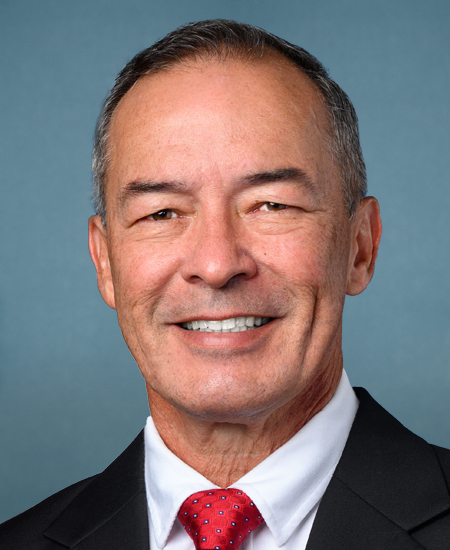
Rep. James C. Moylan
Sponsored bills
Maddy summaryHRES 1197 is a non-binding House resolution recognizing the contributions of elementary and secondary school teachers. It formally thanks teachers for their role in building civic, cultural, and economic well-being, aligning with National Teacher Appreciation Week (May 6-10, 2024). The resolution encourages students, parents, school leaders, and officials to acknowledge teachers during this week. It does not create new programs, allocate funding, or impose obligations on schools or educators. As a symbolic gesture, it directly addresses the teaching profession without altering any laws or policies.
Maddy summaryHR 764, the "Trust the Science Act," requires the Secretary of the Interior to reissue a specific 2020 rule removing gray wolves from the endangered species list within 60 days of the bill's enactment. This directly affects gray wolf populations by changing their federal conservation status. The bill's key provision mandates that this reissuance cannot be challenged in court, eliminating judicial review of the decision. The bill focuses solely on procedural implementation of a prior rule, not broader scientific policy.
Maddy summaryThis bill updates legal definitions in customs law to replace the outdated "four leagues" standard with current international law boundaries. It clarifies that U.S. customs enforcement applies to waters within the U.S. territorial sea (up to 12 nautical miles, as defined in Presidential Proclamation 5928) and contiguous zone (up to 24 nautical miles, as defined in Proclamation 7219). The change directly affects U.S. Customs and Border Protection's maritime enforcement operations but does not alter the actual geographic scope of enforcement areas. The bill amends the Tariff Act of 1930 and the Anti-Smuggling Act to align their language with existing international law standards.
Maddy summaryThe Wounded Warrior Workforce Enhancement Act creates federal grants to expand training programs for orthotics and prosthetics specialists. It provides $1-1.5 million per grant to eligible colleges to establish or grow master's programs, with priority given to institutions partnering with VA or military medical facilities. Covered veterans (those with limb loss or mobility impairments) receive admission and financial aid preference in these programs. A separate $5 million grant funds a Center of Excellence to research and improve orthotics/prosthetics education for veterans, service members, and civilians. The bill authorizes $15 million for program grants and $5 million for the Center in fiscal year 2025.
Maddy summaryHR 8167, the Wounded Warrior Research Enhancement Act, authorizes $30 million in fiscal year 2025 funding to improve limb replacement devices and care for military personnel, veterans, and civilians who have experienced combat-related amputations, traumatic brain injuries, or other serious physical injuries. The bill directs the Defense and Veterans Affairs Secretaries to award competitive, peer-reviewed research grants focused on preventing amputations, determining optimal treatment timing, developing better materials and technologies, and addressing aging-related challenges with prosthetics. These grants aim to enhance clinical care and quality of life for individuals with limb loss by advancing evidence-based solutions. The law requires annual reports to Congress detailing research progress and priorities.
Maddy summaryHR 4389, the Migratory Birds of the Americas Conservation Enhancements Act of 2023, amends the Neotropical Migratory Bird Conservation Act to increase federal funding for conservation projects from 25% to 33.3% of eligible costs. It extends the authorization period for funding through 2028 and requires the Secretary to submit a report to Congress on collaboration efforts with partners. This bill directly affects conservation organizations, state governments, and local groups that receive federal funds to protect migratory birds traveling between the U.S. and the Neotropics (Central and South America, Caribbean). The changes provide more stable financial support and accountability for existing bird conservation programs.
Maddy summaryHR 7898, the Veterans Housing Stability Act of 2024, creates a new "Partial Claim Program" to prevent foreclosure for veterans with VA-guaranteed housing loans. The program allows the VA Secretary to purchase up to 30% of a defaulted loan's balance, requiring veterans to repay the amount as a noninterest-bearing loan secured by the property. It also grants the Secretary authority to impose foreclosure moratoriums during national emergencies (up to 180 days with congressional notice) and establishes civil penalties for loan holders making false claims. The bill directly affects veterans with VA-guaranteed loans facing default and modifies foreclosure procedures to prioritize loss mitigation.
Maddy summaryHR 8061, the Crime Victims Fund Stabilization Act of 2024, ensures stable funding for the Crime Victims Fund by directing certain False Claims Act collections into it from 2024 through 2029. Specifically, it adds a provision requiring that amounts collected under the False Claims Act (excluding whistleblower rewards and government reimbursement for damages) be deposited into the fund during this period. This directly affects crime victims who rely on the fund for services like counseling and emergency aid, as it prevents potential shortfalls in funding. The bill makes a concrete policy change by redirecting specific federal civil penalties into the fund, rather than altering the fund's existing purposes or eligibility rules.
Maddy summaryHR 6046, the Standing Against Houthi Aggression Act, requires the Secretary of State to designate Ansarallah (the Houthis) as a Foreign Terrorist Organization within 90 days of enactment and mandates the President to impose sanctions under existing authorities (Executive Orders 13224 and 13780) against Ansarallah and its members, agents, or affiliates. The bill directly affects Ansarallah and any foreign entities linked to it by triggering U.S. sanctions. Key provisions set strict 90-day deadlines for both the designation and sanctions implementation. The law focuses on reversing a prior designation revocation and enforcing existing legal mechanisms against the group.