

Maddy summaryThis bill requires the Secretary of Commerce to standardize and publish geospatial data about public ocean and waterway access rules on a public website within 4 years. It mandates detailed information on where fishing is restricted, waterway closures, speed limits, allowed vessel types (like motorboats or kayaks), and fishing method rules. The data will include geographic boundaries of protected areas, seasonal closures, and navigation details like depth charts. This directly affects recreational users (boaters, anglers) and commercial operators who need clear, up-to-date access information for Federal waterways and fishing areas. The bill does not change existing fishing regulations but makes compliance information more accessible.
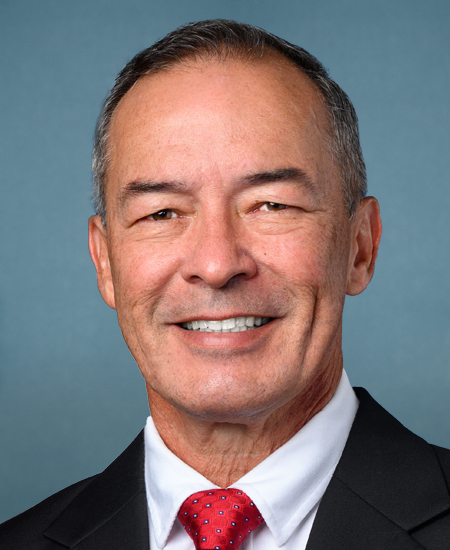
Rep. James C. Moylan
Sponsored bills
Maddy summaryHR 6841 creates a new Coastal and Estuarine Resilience and Restoration Program under the Coastal Zone Management Act, authorizing the Secretary of Commerce to protect and restore coastal and estuarine areas. The program prioritizes lands with ecological, recreational, or community value that face development threats or climate impacts, with special focus on low-income communities and climate mitigation. It requires non-governmental organizations applying for grants to demonstrate public access or ecological protection, and includes $47 million annually (2024-2028) for these efforts. This directly affects coastal states, local communities, and conservation groups managing vulnerable coastal lands.
Maddy summaryHR 8824, the U.S.-European Nuclear Energy Cooperation Act of 2024, requires the U.S. State Department to develop a strategy within 120 days to strengthen cooperation with European nations on nuclear energy and reduce reliance on Russian nuclear technology. The strategy must analyze reactor types, fuel cycles, and U.S. funding to replace Russian supply chains in uranium mining, enrichment, and reactor construction by 2030. It directly affects European countries (including Ukraine, Czech Republic, and others) dependent on Russian-designed nuclear plants and fuel, aiming to counter Russian influence following Russia’s invasion of Ukraine and occupation of the Zaporizhzhia plant. The bill authorizes $30 million annually (2025-2029) for U.S. engagement to support European nuclear capacity building and counter Russian disinformation in the sector.
Maddy summaryHR 8786, the Pacific Island Flight Alternatives Act of 2024 (PIFAA), aims to reduce air travel costs between Guam, the Northern Mariana Islands, and Hawaii by expanding access to foreign carriers. The bill amends U.S. code to allow flights operated by Japanese, Philippine, and South Korean airlines (designated as "authorized Pacific aircraft") to connect Guam or the Northern Mariana Islands directly to the U.S. mainland without disrupting international journey rules. This change directly affects travelers and cargo moving between these Pacific territories and the U.S., addressing current reliance on limited foreign carriers for these routes. The policy enables more direct service from these allied nations’ airlines, potentially increasing competition and lowering prices.
Maddy summaryThe No Passport Fees for Heroes’ Families Act waives passport fees for spouses, domestic partners, children, parents, grandparents, and siblings traveling abroad to visit a military service member in a hospital or medical facility. This change, added through an amendment to the Passport Act, removes the standard fee requirement for these specific family members during medical visits. It directly affects military families needing international travel to support a service member in a medical setting overseas. The policy provides immediate financial relief for these travel scenarios without altering broader passport regulations.
Maddy summaryHR 8770, the Cybersecurity Clinics Grant Program Act, establishes a federal grant program to fund cybersecurity education at eligible institutions including junior/community colleges, HBCUs, HSIs, and other minority-serving colleges. The program requires grantees to develop hands-on workshops for students and communities, create practical cybersecurity curricula, and build student career pathways into the cybersecurity workforce. It directly supports under-resourced organizations like small businesses, local governments, and critical infrastructure providers by helping them improve their cyber defenses. The grant program will be administered by CISA and FEMA, with annual reports tracking fund use and graduate workforce placements.
Maddy summaryHR 537 authorizes a Congressional Gold Medal to honor 60 diplomats who saved Jewish lives during the Holocaust by issuing visas and passports against their governments' orders, risking expulsion and personal danger. The medal will be presented to the next of kin of these diplomats, alongside representatives from their home countries, and permanently displayed at the United States Holocaust Memorial Museum. The bill also permits the sale of bronze duplicates to cover production costs, with proceeds going to the U.S. Mint. This legislation recognizes the diplomats' humanitarian actions without creating new government programs or altering existing laws.
Maddy summaryHRES 1290 is a symbolic resolution recognizing June 12, 2024, as "Philippines Independence Day" to commemorate the 126th anniversary of the Philippines' independence from Spain on June 12, 1898. It honors the historical significance of this date and reaffirms the longstanding U.S.-Philippines relationship, including support for Filipino American contributions and cooperation. The resolution has no legal effect or policy changes - it is purely a commemorative gesture by the U.S. House of Representatives.
Maddy summaryThe Do or Dye Act bans specific artificial food color additives from use in food products. It deems Red No. 40, Yellow No. 5, Yellow No. 6, and any substantially similar dyes "unsafe" under federal law, making any food containing them adulterated. This directly affects food manufacturers and producers who currently use these dyes in products like candies, beverages, and processed foods. The bill changes the legal status of these additives, requiring manufacturers to reformulate products to comply with the new ban.
Maddy summaryHR 8688, the Stop Spoonfuls of Fake Sugar Act of 2024, would amend the Federal Food, Drug, and Cosmetic Act to classify human food containing high-fructose corn syrup as "adulterated" and therefore prohibited from sale. This would directly affect food manufacturers and retailers selling products with high-fructose corn syrup, requiring them to reformulate or remove this ingredient. The key provision adds a new subsection (j) to Section 402, making any human food containing high-fructose corn syrup illegal for sale, with the rule taking effect one year after the bill becomes law. The bill focuses on a specific ingredient change in food safety regulation, not broader dietary policy.