

Maddy summaryHR 7015, the CAREERS Act, expands federal funding for workforce training programs to better serve rural communities. It modifies eligibility to include career and technical education schools and requires training programs to align with specific rural industry sectors like broadband, healthcare, agriculture, manufacturing, and water services. The bill mandates grantees to report on employment outcomes for participants and addresses rural workforce challenges such as worker displacement and youth migration. This directly affects rural workforce development boards, training providers, and workers in designated rural industries seeking job skills and career pathways.
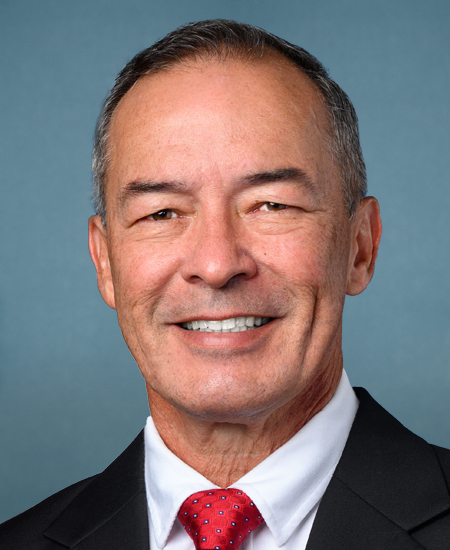
Rep. James C. Moylan
Sponsored bills
Maddy summaryThis bill amends a provision in U.S. law (49 U.S. Code § 41731) to expand eligibility for essential air service (EAS) subsidies. It adds Guam and the Northern Mariana Islands to the list of territories already covered under the exception, alongside Alaska and Hawaii. The change directly affects air carriers providing essential air service to these territories, ensuring they qualify for the same EAS program benefits as Alaska and Hawaii. This is a technical adjustment to the eligibility criteria, not a new policy.
Maddy summaryHR 9050 creates a new grant program under the U.S. Code to help veterans living in highly rural areas access medical care. The bill authorizes $3 million annually (2025-2030) for grants up to $50,000 each to state veterans agencies or recognized veterans service organizations. These grants can cover transportation costs for veterans traveling to Department of Veterans Affairs medical facilities, with "highly rural" defined as areas with fewer than seven people per square mile or specific U.S. territories like Guam or Puerto Rico (excluding San Juan). The program requires no matching funds from grant recipients and directly benefits veterans in remote locations who face transportation barriers to care.
Maddy summaryHRES 1412 is a formal congressional resolution condemning the People’s Republic of China Coast Guard for specific actions against multiple nations. It cites recent incidents, including harassment of Malaysian oil projects, an attack on Philippine soldiers, standoffs near Japan’s Senkaku Islands, and the interception of a Taiwanese fishing vessel. The resolution demands China respect international maritime law, calls for global condemnation of its actions, and urges the U.S. to strengthen alliances with partners like Japan and the Philippines while holding Chinese officials accountable. As a symbolic resolution (not a binding law), it expresses U.S. policy stance but does not impose new legal requirements.
Maddy summaryHR 9243, the Aviation Medication Transparency Act of 2024, requires the Federal Aviation Administration (FAA) to create and maintain a publicly accessible online list of medications safe for pilots and air traffic controllers (airmen) to take while holding medical certifications. The list must be developed with input from pilots, controllers, and other stakeholders, include "Do Not Issue" medications, specify duty limitations for new medications, and be distributed when airmen first apply for certification. The FAA must publish the initial list within one year of the bill's enactment and update it annually thereafter. This law directly affects airmen seeking or holding medical certifications by providing clear, accessible information about medication safety for aviation duties.
Maddy summaryThe SWIM Act of 2024 creates a new tax deduction for basic water safety and swimming instruction expenses. It allows taxpayers to deduct up to $500 per year ($1,000 for joint returns or heads of household) for qualifying lessons focused on water safety and competency - not competitive swimming. Expenses include lesson fees and up to $100 per item for necessary equipment. The deduction applies to expenses paid for individuals participating in these specific safety-focused programs. This change affects taxpayers with children or dependents enrolled in approved basic swimming and water safety courses.
Maddy summaryThis bill amends federal law to change how enlisted service time counts toward total service for military officers who completed Service Reserve Officer Training Corps (SROTC). It allows officers to count their enlisted service toward their total service time using the date the bill is enacted, instead of the previous cutoff date of August 1, 1979. The change directly affects officers who completed SROTC and are now serving as officers, particularly those whose enlisted service ended after 1979. This adjustment simplifies the process for these officers to qualify for certain benefits tied to their total service duration.
Maddy summaryHR 9274, the SHAWL Act, establishes two new Smithsonian museums: the National Museum of the American Latino and the American Women’s History Museum. It authorizes both museums to be located within the National Mall’s "Reserve" area, overriding prior restrictions, and requires federal agencies managing potential sites to transfer jurisdiction to the Smithsonian after notifying congressional committees. The bill mandates that both museums accurately represent diverse cultures, histories, and viewpoints within Latino and women’s communities through exhibits and programs, requiring input from a broad range of community experts. It also requires the Smithsonian to submit biennial reports to Congress detailing compliance with these representation requirements.
Maddy summaryThe Sustaining America's Fisheries for the Future Act of 2024 aims to improve the long-term health of U.S. fisheries by addressing climate change impacts, supporting fishing communities, and modernizing management practices. The bill requires federal agencies to incorporate climate science into fishery management decisions and mandates regular vulnerability assessments of fish stocks to environmental changes. It establishes new grant programs to help coastal communities preserve working waterfronts and improve data collection systems through electronic monitoring technologies. The legislation also strengthens transparency by requiring more detailed reporting on fishery management council activities and expanding tribal representation on regional councils. Additionally, the bill creates a standardized national program to track and reduce bycatch across all fisheries while updating international fisheries management agreements.
Maddy summaryThis bill increases funding for replacing insecure communication networks from $1.9 billion to $4.98 billion and allocates $3.08 billion for fiscal year 2024. It overhauls the Affordable Connectivity Program (ACP) by requiring all providers to use the National Verifier for eligibility checks, ending eligibility based on providers' own low-income programs, and removing device subsidies. The bill also mandates new antifraud controls, requires providers to certify households won't face early termination fees, and demands a report on program effectiveness within one year. These changes directly affect low-income households receiving subsidized broadband and internet service providers participating in the ACP.