

Maddy summaryHR 9516, the Military Families National Parks Access Enhancement Act, amends the Federal Lands Recreation Enhancement Act to expand eligibility for free lifetime national park passes to include immediate family members (such as spouses, children, or parents) of service members who died in the line of duty and whose death qualifies for a death gratuity under federal law. This change directly affects military families who have lost a loved one in active service, providing them with lifelong access to national parks at no cost. The Secretary of the Interior will determine who qualifies as immediate family under this provision. The bill creates a specific policy change by adding this group to the existing list of pass recipients.
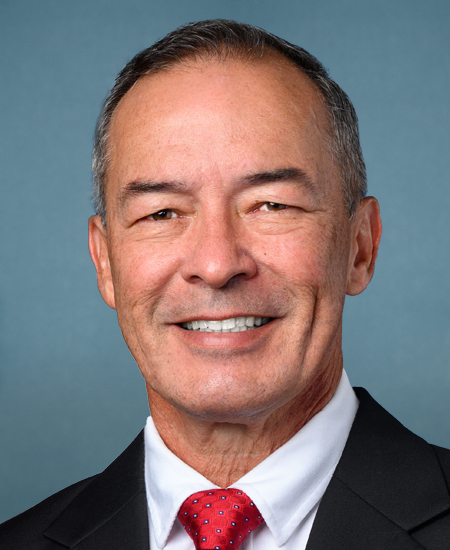
Rep. James C. Moylan
Sponsored bills
Maddy summaryThe America's Wildlife Habitat Conservation Act creates new funding mechanisms to support wildlife habitat conservation across the United States. It establishes a $300 million annual subaccount for states, territories, and the District of Columbia to restore habitat for species listed as threatened or endangered under federal or state law, and to prevent species from needing such listings, with at least 15% of funds dedicated to endangered species recovery. The bill also creates a $20 million annual account specifically for tribal wildlife conservation programs. Funds must be used for habitat restoration, species conservation, invasive species management, and must be tracked through annual reporting requirements to demonstrate effectiveness.
Maddy summaryThe MVP Act requires federal land management agencies to assess and improve accessibility at outdoor recreation facilities for military servicemembers and veterans. Within 5-7 years, agencies must conduct comprehensive assessments of trails and facilities, make accessibility information publicly available online, and develop at least 3 new accessible trails in each region of relevant agencies. The bill also establishes Military Veterans Outdoor Recreation Liaisons to coordinate implementation, mandates educational materials about accessible opportunities, and requires a national strategy to increase veteran visits to federal recreational lands. These provisions aim to improve physical accessibility and information availability for veterans seeking outdoor recreation opportunities on federal lands.
Maddy summaryThis bill requires federal agencies to assess whether energy policies and rules disproportionately affect at-risk communities, including low-income, minority, rural, elderly, and Native American communities. Agencies must conduct studies before actions like leasing federal land or issuing new energy rules, and include an "energy poverty statement" certifying the policy won't cause energy poverty. Within one year, the Comptroller General and OMB must jointly report to Congress on how current policies impact these communities and recommend solutions to reduce energy poverty. The law aims to prevent energy poverty by mandating concrete evaluations of policy impacts on vulnerable groups.
Maddy summaryHR 4235 creates a 4-year federal pilot program to test new wildfire prevention and response technologies. It requires federal agencies managing public lands (like the Forest Service and FEMA) to partner with private companies, nonprofits, or universities to test innovations in areas like early detection systems, communication tools, and safety equipment during real wildfire activities. The program prioritizes emerging technologies such as AI, 5G networks, and remote sensing, with agencies reporting annually on tested technologies, costs, and recommendations for wider adoption. The pilot aims to evaluate how these technologies can improve wildfire mitigation efforts across federal land management. The program expires four years after its establishment.
Maddy summaryThe Proven Forest Management Act of 2022 streamlines forest management activities on National Forest System land, primarily focusing on reducing wildfire risk through fuel reduction projects. It requires the Secretary of Agriculture (managing National Forests) to coordinate with local governments and communities when planning projects, while mandating multiple ecosystem benefits like reducing forest fuels, improving water quality, and maintaining biodiversity - unless costs are deemed excessive. A key provision allows projects under 10,000 acres (with up to 3,000 acres of mechanical thinning) to bypass certain environmental reviews under the National Environmental Policy Act (NEPA), provided they align with local input and forest plans. This directly affects federal land managers and communities near National Forests by accelerating wildfire risk mitigation while maintaining ecological standards.
Maddy summaryHR 10128, the Court Improvement Equity Act, requires federal grants to be allocated directly to state supreme courts (highest courts) in jurisdictions that apply and do not operate an existing child welfare court program under part E of the Social Security Act. The bill mandates that these courts use the grant funds to assess and improve court processes specifically related to child safety, permanency, and well-being. It explicitly includes U.S. territories (Guam, American Samoa, and the Northern Mariana Islands) as eligible "States" for these grants. Grantees must provide expenditure information to the federal Secretary upon request.
Maddy summaryThe Supporting Territorial Safety Net Hospitals Act establishes specific Medicare payment rules for hospitals in U.S. territories (Northern Mariana Islands, American Samoa, Guam, and the Virgin Islands) that serve as safety net providers. It increases inpatient payments to 101% of reasonable costs (up from standard rates) and provides similar increased outpatient payments, with an option for hospitals to choose between payment structures. The bill also makes these hospitals eligible for the 340B drug pricing program, eliminates Medicare sequestration (automatic spending cuts) for them, and reverses previous cuts to bad debt reimbursement. These changes ensure territorial safety net hospitals receive comparable financial support to critical access hospitals under Medicare.
Maddy summaryHR 7442 directs the Government Accountability Office (GAO) to study whether Medicare could cover medical services provided in the Philippines for beneficiaries already enrolled in Medicare Part B or Part C. The study must analyze potential cost savings compared to U.S. care (2025-2034) and identify required legislative/administrative changes to expand coverage. This bill only authorizes a study and does not change current Medicare benefits or eligibility.
Maddy summaryThe EASE Act of 2024 requires the Centers for Medicare & Medicaid Services (CMS) to test a new model improving access to specialty health care for Medicare and Medicaid beneficiaries in rural or underserved areas. It mandates CMS to partner with selected provider networks - comprising at least 50 community health clinics, nonprofits with proven community health work, and commitment to research - to deliver specialty care via telehealth and remote technology, coordinated with patients’ primary care providers. This model directly affects Medicare Part A/B beneficiaries and Medicaid enrollees living in designated underserved regions. The bill establishes specific criteria for network selection and defines "eligible individuals" based on coverage type and geographic location.