

Maddy summaryThis bill amends the Defense Base Act to specifically exclude Guam from its coverage. It changes the law's definition so that Guam is no longer considered a "Territory or possession outside the continental United States" under the Act. As a result, workers in Guam who might have been covered by the Act for defense-related injuries will no longer fall under its provisions. The key change is a definitional update in the statute, directly affecting Guam's legal status under this specific federal workers' compensation law.
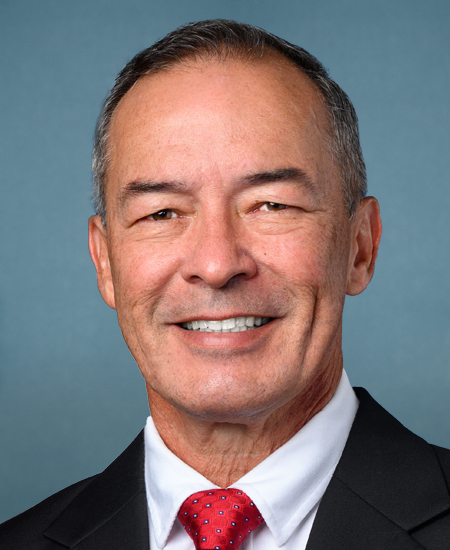
Rep. James C. Moylan
Sponsored bills
Maddy summaryThis resolution expresses the House of Representatives' position that Congress should take steps to prevent the privatization of the United States Postal Service (USPS), ensuring it remains a federal independent agency. It highlights USPS’s constitutional role, self-sustaining nature (relying on service revenue, not taxpayer funds), and critical functions - serving 168 million addresses daily, supporting rural communities, and underpinning e-commerce. The resolution opposes privatization, noting it would raise prices, reduce services, and harm the $1.9 trillion mailing industry. As a non-binding resolution, it reflects the House’s stance but does not create new law or policy.
Maddy summaryHRES 73 is a non-binding House resolution condemning Belarus' January 2025 fraudulent presidential election and President Lukashenka’s authoritarian rule. It calls for free and fair elections with international monitoring, demands the immediate release of over 1,200 political prisoners, and supports continued U.S. aid to Belarusian democratic opposition groups. The resolution also condemns Belarus’ support for Russia’s invasion of Ukraine, including hosting Russian weapons and facilitating the abduction of Ukrainian children. As a statement of congressional position, it urges sanctions against regime officials but does not create new legal requirements.
Maddy summaryThe GORAC Act of 2025 requires the government's watchdog office (Comptroller General) to conduct a comprehensive evaluation of federal agencies and programs every 10 years, starting within one year of the bill's enactment. A non-Federal auditor will identify duplicative, wasteful, or outdated programs - recommending consolidation of agencies with identical functions or elimination of those that wasted funds, completed their purpose, or failed to meet goals. Any savings from these changes must be used to reduce the national debt, and affected federal employees must be offered relocation assistance within government positions. The bill applies broadly to most federal agencies and programs (excluding military installations and pure entitlement programs), with Congress required to consider implementation bills based on the auditor's recommendations within 15 days of submission.
Maddy summaryThis bill authorizes the posthumous presentation of a Congressional Gold Medal to honor Colonel Young Oak Kim, a Korean American military leader and community advocate who died in 1994. It directs the Treasury Secretary to design and strike the medal, which will be displayed at the Smithsonian Institution, particularly at the National Portrait Gallery. The bill does not create new policies or affect any legal rights; it is purely a commemorative gesture recognizing Kim’s military service (including the Distinguished Service Cross and leadership in the 100th Infantry Battalion/442nd Regimental Combat Team) and his civic work founding community centers in Los Angeles. The medal is symbolic, with no financial or legal impact on any individuals or programs.
Maddy summaryHR 733 requires the President to review U.S. sanctions against 48 specific Hong Kong officials within 180 days of the bill's enactment. The review must determine if these officials - such as top government leaders (e.g., Chief Executive John Lee) and judicial figures (e.g., Chief Justice Andrew Cheung) - still meet criteria under four existing sanctions laws. The President must submit a detailed justification to congressional committees, including the Foreign Relations and Financial Services committees. This bill mandates a formal review process but does not alter current sanctions or guarantee any changes. The focus is solely on evaluating whether existing sanctions remain appropriate.
Supporting Accurate Views of Emergency Services Act of 2025 or the 911 SAVES Act This bill requires the Office of Management and Budget to categorize public safety telecommunicators as a protective service occupation under the Standard Occupational Classification system no later than 30 days after the enactment of this bill. (The Standard Occupational Classification system is a federal statistical standard used by federal agencies to classify workers into occupational categories for the purpose of collecting, calculating, or disseminating data.)
Beaches Environmental Assessment and Coastal Health Act of 2025 or the BEACH Act of 2025 This bill reauthorizes through FY2029 and expands an existing program of the Environmental Protection Agency (EPA) that awards grants to states and local governments to (1) monitor the water quality of coastal recreational waters adjacent to beaches or similar points of access that are used by the public; and (2) notify the public, local governments, and the EPA when the water is not safe for recreational activities. Specifically, the bill expands the program to allow the EPA to award grants for identifying sources of contamination (i.e., pathogens) for coastal recreation waters. It also allows grants to be used for monitoring and notification of contamination in (1) shallow waters upstream from recreational waters, and (2) recreational waters on beaches.
Maddy summaryHR 593 exempts certain health profession loan repayments and scholarship payments from federal income tax. It applies to individuals participating in Public Health Service Act programs (like sections 338B, 846, and 338K) and state programs designed to increase healthcare access in underserved areas. The bill also includes scholarships under the Native Hawaiian Health Care Improvement Act in this tax exclusion. These changes take effect for payments received after the bill's enactment date.
Maddy summaryThe BLUE Pacific Act establishes a comprehensive U.S. strategy for engagement with Pacific Island nations, requiring the President to submit a detailed "Strategy for Pacific Islands Partnership" every four years to Congress. The bill authorizes $270 million annually from 2026 through 2033 to fund programs addressing public health, education, economic development, climate resilience, and security capacity building across 13 Pacific Island countries. Key provisions include creating a senior official to manage U.S. relations with the Freely Associated States (Marshall Islands, Federated States of Micronesia, and Palau), establishing an Ambassador's Self-Help Small Grants Program, and requiring coordination with regional organizations like the Pacific Islands Forum. The legislation also mandates annual reports on implementation progress, security challenges, diplomatic presence, and alignment with regional development goals. This comprehensive approach aims to strengthen U.S. partnerships with Pacific Island nations while supporting their priorities in areas such as disaster resilience, climate adaptation, and economic growth.