

Maddy summaryThis bill allows the U.S. President to terminate special trade restrictions on Uzbekistan, extending normal trade relations (most-favored-nation treatment) to Uzbekistan's products. It requires the President to certify that Uzbekistan is a World Trade Organization member before implementing this change. Once implemented, Uzbekistan's exports to the U.S. would no longer face the higher tariffs or quotas typically applied under Title IV of the 1974 Trade Act. This directly affects U.S. importers of Uzbek goods and Uzbek exporters seeking fairer market access.
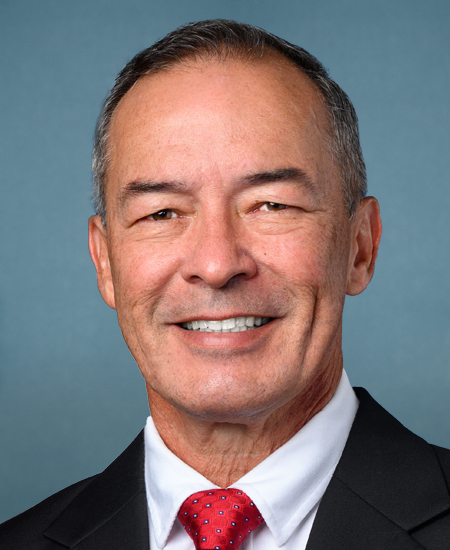
Rep. James C. Moylan
Sponsored bills
Maddy summaryHR 2296, the National Weather Service Communications Improvement Act, requires the National Weather Service (NWS) to replace its internal instant messaging system (NWSChat) with a commercial cloud-based solution by October 1, 2027. The new system must accommodate future growth, support increased users, be user-friendly, and resemble common commercial platforms. Funding up to $3 million annually from 2026-2029 will cover this upgrade, sourced from existing NWS operational budgets. This bill directly affects NWS personnel who rely on internal communications for weather forecasting and warnings.
Maddy summaryThe WING Act of 2025 establishes a research program within the National Weather Service to address physical obstructions - like wind turbines and buildings - that block weather radar signals. The program requires testing technologies such as phased array radar, data replacement from commercial sources, and improved signal processing to maintain accurate storm detection and forecasting. It directly affects weather forecasting systems and communities relying on timely radar data for severe weather warnings. The initiative must report annually to Congress and conclude by September 2030, with a final recommendation due by 2030.
Maddy summaryHRES 233 is a non-binding resolution supporting the designation of April 2025 as "National Native Plant Month" in the United States. It recognizes native plants - species naturally adapted to specific U.S. regions - as essential for healthy ecosystems, biodiversity, and environmental resilience, highlighting their role in supporting wildlife and sustainable habitats. The resolution does not create new laws or funding but aims to raise public awareness about the ecological and economic benefits of native plants. It directly affects public awareness and educational efforts, encouraging communities to promote native plant conservation. The resolution was introduced by Representatives Case, Neguse, Joyce, Soto, Moylan, and Tokuda and referred to the Committee on Natural Resources.
Maddy summaryThis bill amends a federal aviation law to include Guam and the Northern Mariana Islands in the list of locations exempt from certain Essential Air Service (EAS) eligibility requirements. Previously, only Alaska and Hawaii were exempt; the change explicitly adds these two U.S. territories to the statutory list. As a result, airlines serving Guam and the Northern Mariana Islands will no longer need to meet specific EAS standards that apply to other locations under this provision. The bill makes a technical adjustment to existing law without creating new policy or altering service obligations.
Maddy summaryHR 2200 requires the Coast Guard to retain enlisted members who have completed 18-20 years of service but are otherwise scheduled for separation or discharge. It directly affects Regular Coast Guard enlisted members and Reserve members serving in active status with 18-19 years of service (or 19-20 years) who face involuntary separation or denied reenlistment. The bill mandates retention until the member reaches 20 years of service or for up to two years (for 18-19 years) or one year (for 19-20 years) after their scheduled separation date, whichever comes first. This applies to members not separated for physical disability or cause, ensuring they can complete their service to qualify for retirement benefits.
Maddy summaryThis bill amends the PACT Act to correct an oversight affecting veterans who served in Guam. It specifically adds the period from August 15, 1958, to July 31, 1980, to the eligibility window for veterans who served in Guam (or its territorial waters) and developed diseases linked to herbicide exposure. The change ensures veterans who served in Guam during that specific timeframe are included in the presumption of service connection for such conditions. This directly impacts veterans who served in Guam between 1958 and 1980, who were previously excluded from the PACT Act's benefits due to the original language. The provision updates the legal text to accurately reflect Guam's historical status during that period.
Maddy summaryHR 2150, the TRACE Act, requires the National Missing and Unidentified Persons System to add a data field indicating whether a missing person’s last known location or unidentified remains were confirmed or suspected to be on Federal land (such as national parks or military bases), including specific location details. This affects federal land management agencies like the National Park Service and U.S. Forest Service, which must provide this data. The bill mandates an annual report to Congress starting in 2025, detailing the number of cases involving Federal land, broken down by agency. The key change is adding standardized tracking for federal land connections to improve data collection and reporting on missing persons cases.
Homes for Every Local Protector, Educator, and Responder Act of 2025 or the HELPER Act of 2025 This bill establishes a program administered by the Department of Housing and Urban Development to provide mortgage assistance to law enforcement officers, elementary and secondary school teachers, firefighters, or other first responders. Specifically, these individuals may be eligible for a first-time mortgage on a primary family residence with no down payment. Instead, the mortgage is subject to a one-time, up-front mortgage insurance premium.
Metastatic Breast Cancer Access to Care Act This bill expedites payment of Social Security Disability Insurance (SSDI) benefits and eligibility for Medicare coverage for those with metastatic breast cancer (i.e., breast cancer that has spread to other sites in the body). Specifically, the bill eliminates the 5-month waiting period for SSDI benefits and the subsequent 24-month waiting period for Medicare coverage for individuals with metastatic breast cancer. Under current law, individuals generally must wait 5 months after the onset of disability to begin receiving SSDI benefits and an additional 24 months to become eligible for Medicare.