

Maddy summaryHRES 754 is a non-binding resolution expressing the House of Representatives' opposition to proposed "punitive natural gas taxes" on U.S. businesses, families, and workers. It cites claims that such taxes would raise average energy bills by 17%, reduce GDP by $9 billion, and eliminate 90,000 jobs, while disproportionately harming low-income households. The resolution argues that opposing these taxes supports U.S. energy security, national security, and continued leadership in reducing emissions through domestic natural gas production. As a procedural resolution, it does not create law but formally states the House's position against this policy approach.
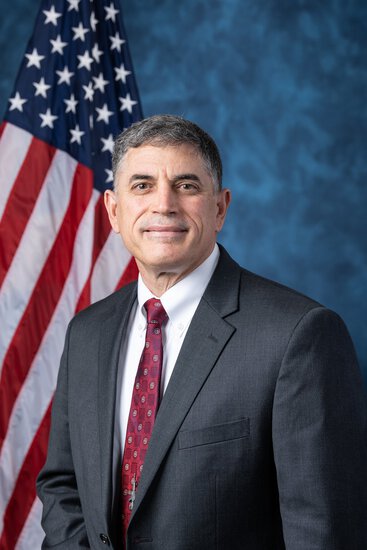
Rep. Andrew S. Clyde
Sponsored bills
This bill prohibits the use of federal funds to require a member of the Armed Forces to receive a COVID-19 vaccination. The bill also prohibits adverse action (e.g., punishment) being taken against a member of the Armed Forces because the member refuses to receive a COVID-19 vaccination.
Stop Appropriations for Obsequy Costs Act or the Stop AOC Act This bill prohibits the use of federal funds for financial assistance to an individual or household for funeral expenses if the eligibility for such assistance is derived from a cause of death related to COVID-19.
JAB Act or the Justice for All Businesses Act This bill restricts the Department of Labor from engaging in rulemaking to require that employers mandate COVID-19 vaccination or testing of employees. Specifically, Labor may not use any funds to draft, promulgate, or enforce such a rule. Additionally, Labor may not assess civil monetary or criminal penalties for violations.
This resolution recognizes the rights of parents to engage in the development and implementation of decisions impacting their children's school environment, curriculum, health, and well-being practices. It also condemns designating parents as domestic terrorists.
Safeguarding Children's Privacy in Schools Act This bill revises the standards for parental consent with respect to the online collection, use, and disclosure of the personal information of a child. First, it revises the definition of verifiable parental consent to require websites and online services to obtain consent by a parent before collecting a child's personal information. Currently, websites and online services must make a reasonable effort to ensure that a parent authorizes the collection, use, and disclosure of such personal information before collecting it. The bill also prohibits elementary and secondary school employees from acting as the agent of a child enrolled in such school for the purpose of providing verifiable parental consent.
This resolution recognizes and appreciates the dedication and devotion demonstrated by the men and women of law enforcement. It also condemns calls to defund, disband, dismantle, or abolish the police.
Second Amendment For Every Registrable Voter Act or the SAFER Voter Act This bill reduces the minimum age—from 21 years to 18 years—at which an individual may obtain a handgun from a federally licensed gun dealer, manufacturer, importer, or collector.
Fifth Amendment Integrity Restoration Act of 2021 or the FAIR Act This bill revises federal laws governing civil asset forfeiture. Specifically, the bill makes various changes to the general rules governing civil forfeiture proceedings. Among the changes, the bill requires counsel for an indigent property owner regardless of whether the owner requests counsel, raises the evidentiary standard from preponderance of the evidence to clear and convincing evidence, and sets forth factors courts must consider in determining whether a forfeiture of facilitating property is excessive. Additionally, the bill eliminates statutory authority for equitable sharing and directs forfeiture proceeds to be deposited into the general fund of the Treasury instead of the Department of Justice Assets Forfeiture Fund. Finally, the bill makes changes with respect to the civil forfeiture of money involved in structuring offenses (i.e., structuring currency transactions to evade currency reporting requirements). Among the changes, the bill specifies an evidentiary standard of knowingly for structuring offenses, and requires a prompt probable cause hearing following the seizure of money involved in a structuring offense.
Competition in Professional Baseball Act This bill removes the limited exemption from the antitrust laws for professional baseball clubs. For purposes of this bill, the term antitrust laws means laws to protect against unlawful restraints and monopolies (Clayton Act) and to protect against unfair methods of competition (Federal Trade Commission Act).