

Protect Children's Innocence Act This bill places restrictions on the provision of gender affirming care. Gender affirming care includes performing surgery, administering medication, or performing other procedures for the purpose of changing the body of an individual to correspond to a sex that differs from the individual's biological sex. Specifically, the bill makes it a felony to perform any gender affirming care on a minor and it permits a minor on whom such care is performed to bring a civil action against each individual who provided the care. Additionally, the bill prohibits the use of federal funds for gender affirming care or for health insurance that covers such care. Such care may not be provided in a federal health care facility or by a federal employee. The bill also prohibits qualified health plans from including coverage for gender affirming care. Further, plans that include coverage for such care are not eligible for federal subsidies. Finally, the bill prohibits institutions of higher education from offering instruction in gender affirming care. It also makes any non-U.S. national ( alien under federal law) who performs gender affirming care on a minor deportable and inadmissible to the United States. The restrictions under this bill do not apply to the provision of care under certain circumstances such as when an individual does not have normal sex chromosome structure, sex steroid hormone production, or sex steroid hormone action.
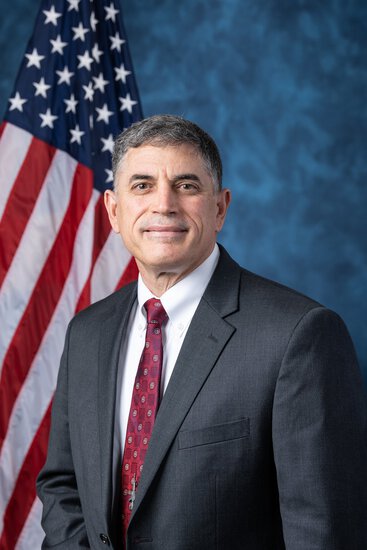
Rep. Andrew S. Clyde
Sponsored bills
Promoting Free and Fair Elections Act This bill prohibits federal agencies from using funds made available for salaries and expenses to solicit or enter into agreements with nongovernmental organizations to conduct voter registration or voter mobilization activities on the agency's property or website. The bill also requires federal agencies to delay carrying out certain activities pursuant to Executive Order 14019 (which established requirements for expanding access to voter registration and election information) until various conditions are met, such as the agency submitting reports to Congress.
Shall Not Be Infringed Act This bill repeals the Bipartisan Safer Communities Act, which was signed into law on June 25, 2022. The act makes various changes to federal firearms laws, including to expand background check requirements, broaden the scope of existing restrictions, and establish new criminal offenses. The act also reauthorizes, funds, and supports various programs, grants, and activities to promote access to behavioral and mental health services, enhance school safety and security initiatives, and address gun violence in communities.
Maddy summaryThis bill prohibits federal funding for any activities related to Executive Order 14074 (issued May 25, 2022), which aimed to improve policing and criminal justice practices. It directly affects federal agencies that would otherwise implement the executive order's requirements using taxpayer dollars. The key provision blocks all federal funds from being used to carry out the order's provisions, effectively halting its implementation through budgetary means. The bill does not alter the executive order itself but prevents its federal financial support.
No More Phones Act This bill prohibits federal agencies from using taxpayer funding to provide cellular devices to individuals who cross the southern border without lawful authorization.
Maddy summaryHR 7415 would repeal the 1990 Gun-Free School Zones Act, which prohibited firearms within 1,000 feet of school grounds. It removes specific references to school zones from federal gun law provisions in Title 18 of the U.S. Code. This change would eliminate the federal prohibition on firearms in designated school zones, altering the scope of existing gun law enforcement. The bill does not create new safety measures but modifies how federal gun laws apply to school areas.
Countering Russian Influence in our Politics Act of 2022 This bill requires tax-exempt organizations that receive any thing of value from a Russian foreign principal (e.g., Russia's government or a Russian national) to register as an agent of a foreign principal, with certain exceptions. Such an organization must periodically report to the Department of Justice certain information relating to its relationships to the relevant Russian foreign principals. The bill also imposes additional reporting requirements on a tax-exempt organization that has (1) received any thing of value from a Russian foreign principal since February 1, 2014; and (2) engaged in political activities to discourage the U.S. production of oil, petroleum products, natural gas, or critical minerals.
No Retaining Every Gun In a System That Restricts Your Rights Act This bill modifies the retention requirements for firearm transaction records of federal firearms licensees (FFLs) that go out of business. Current law generally requires FFLs that go out of business to deliver their firearm transaction records to the Bureau of Alcohol, Tobacco, Firearms and Explosives (ATF). This bill removes the requirement for FFLs that go out of business to deliver their firearm transaction records to the ATF. Further, the bill requires the ATF to destroy all out-of-business records it has collected from FFLs.
Sanctioning Tyrannical and Oppressive People within the Chinese Communist Party Act or the STOP CCP Act This bill imposes visa- and property-blocking sanctions on any person who is or was a member of any National Communist Party Congress of China, as well as any adult family member of such a person. The President may waive the sanctions for renewable periods of 30 days by certifying to Congress that China's government and the Chinese Communist Party have ceased (1) any acts of genocide against the Uyghur Muslim population; (2) all threats, military exercises, and aggression toward Taiwan; (3) undermining the autonomy of Hong Kong; and (4) any efforts to steal the intellectual property of U.S. persons. The certification must also be publicly available on a federal government website.
Illegal Immigrant Payoff Prohibition Act This bill prohibits the payment of a settlement to an alien for a civil action brought against the United States in connection with the alien's inadmissibility to, or unlawful presence in, the United States.