

Maddy summaryThis bill designates the U.S. Postal Service facility at 119 Main Street in Plains, Georgia, as the "Jimmy and Rosalynn Carter Post Office." It requires all federal references in laws, documents, or records to use this new name instead of the previous designation. The bill directly affects the postal facility and federal administrative records, but does not alter postal services, funding, or operations. This is a ceremonial naming resolution honoring former President Jimmy Carter and his wife, Rosalynn Carter.
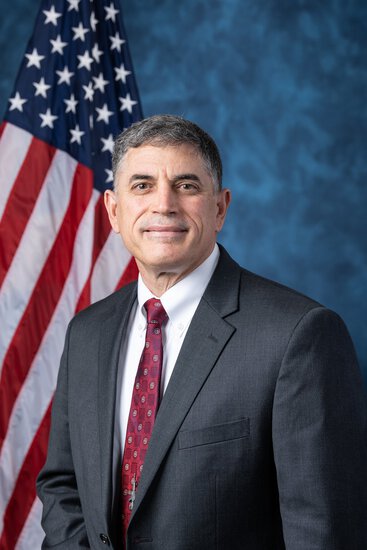
Rep. Andrew S. Clyde
Sponsored bills
Maddy summaryThis bill designates the U.S. Postal Service facility at 151 Highway 74 South in Peachtree City, Georgia, as the "SFC Shawn McCloskey Post Office." It requires all federal references to this location - including in laws, maps, regulations, and official documents - to be updated to the new name. This is a ceremonial naming resolution with no impact on postal services, operations, or funding.
Maddy summaryHR 81, the Travel Mask Mandate Repeal Act of 2025, repeals the federal requirement for face masks on airplanes, buses, trains, and in transportation hubs. It specifically targets the January 29, 2021, CDC order under 42 U.S.C. §264 and related TSA directives (like EA 1546-21-01A), making them legally unenforceable. The bill prohibits any federal agency from imposing mask mandates for travelers using conveyances or transportation hubs. This directly affects travelers using air, land, or sea transportation within the U.S. and the federal agencies managing those systems.
Maddy summaryHJRES 11 proposes a constitutional amendment requiring the federal government to maintain a balanced budget by ensuring annual spending does not exceed revenue, with specific spending limits tied to gross domestic product (GDP). It mandates that every federal agency and department must justify each line item in its budget request, including how funding supports its mission and its impact on GDP, and provide a reduced funding alternative for critical functions. The amendment includes exceptions for declared wars, military conflicts, or major natural disasters, requiring a two-thirds congressional vote for waivers. This would directly affect all federal agencies by imposing new budget justification requirements and spending caps, though it remains a proposed amendment awaiting state ratification.
Maddy summaryThis bill (HR 190) would require the expedited removal of individuals who entered the U.S. illegally on or after January 20, 2021, regardless of whether they claimed asylum or feared persecution. It directly affects noncitizens who entered without inspection after that date, removing standard asylum processing for them. The key provision mandates faster deportation without court hearings for this group, except for current U.S. military members as of January 1, 2025. The bill changes immigration enforcement procedures by bypassing asylum eligibility checks for a specific cohort of recent arrivals. It does not address broader immigration policy or provide new pathways for legal status.
Maddy summaryThe FairTax Act of 2025 would repeal federal income tax, payroll taxes (Social Security and Medicare), and estate and gift taxes, replacing them with a national sales tax. It would impose a 23% tax on the final consumption of goods and services in 2027, with rates adjusting based on federal tax rates. The bill includes a monthly rebate for qualifying families based on the poverty level to offset the tax burden on lower-income households. It would establish a cooperative tax administration system between federal and state governments, with states collecting the tax under certain conditions. The tax would sunset if the 16th Amendment (which allows for income taxes) is not repealed within 7 years of enactment.
Maddy summaryHR 137, the TCJA Permanency Act, makes permanent many tax provisions from the 2017 Tax Cuts and Jobs Act. It permanently increases the standard deduction for individual taxpayers, modifies income tax brackets, and makes permanent the child tax credit increase. The bill also permanently limits deductions for state and local taxes, mortgage interest, and miscellaneous itemized deductions. These changes affect most individual taxpayers who file federal income tax returns.
Maddy summaryThe Abortion Is Not Health Care Act of 2025 would amend the federal tax code to exclude abortion expenses from deductible medical costs on income tax returns. Specifically, it adds a provision stating that amounts paid for abortions cannot be included in the medical expense deduction under Section 213 of the Internal Revenue Code. This change would directly affect taxpayers who previously claimed abortion costs as deductible medical expenses. The provision would apply to taxable years beginning after the bill's enactment date.
Maddy summaryHR 45 (FIND Act) requires federal government contractors to certify they do not discriminate against firearm businesses (including manufacturers, dealers, and trade associations) in their policies or practices. The bill mandates that contractors and subcontractors (for contracts over 10% of the prime contract value) certify they have no discriminatory policies and will not adopt them during the contract term. Violations could lead to contract termination and potential debarment. This applies to all federal procurement contracts awarded after the bill's enactment, excluding sole-source contracts. The law aims to ensure firearm businesses are treated equally in government contracting without restricting legitimate business criteria like creditworthiness or legal compliance.
Maddy summaryThis bill names the U.S. Postal Service facility at 15 South Valdosta Road in Lakeland, Georgia, as the "Nell Patten Roquemore Post Office." It updates all official U.S. government references - such as maps, documents, and records - to use this new name for the location. The bill does not create new policies or affect services; it only changes the facility's official designation. The name honors Nell Patten Roquemore, though the bill itself does not detail her contributions.