

Maddy summaryHR 1866, the GUARD Act, prevents federal funding under the Child Abuse Prevention and Treatment Act from being awarded to any state that discriminates against parents or guardians who oppose gender-affirming medical, social, or legal changes for minors. The bill requires states to avoid adverse actions against such parents if they believe a minor's gender identity claims conflict with their biological sex at birth, regardless of medical diagnoses. States violating this provision could face legal action by affected parents to halt funding and recover funds. The law directly affects parents opposing gender-affirming care for minors and alters federal grant enforcement for child welfare programs.
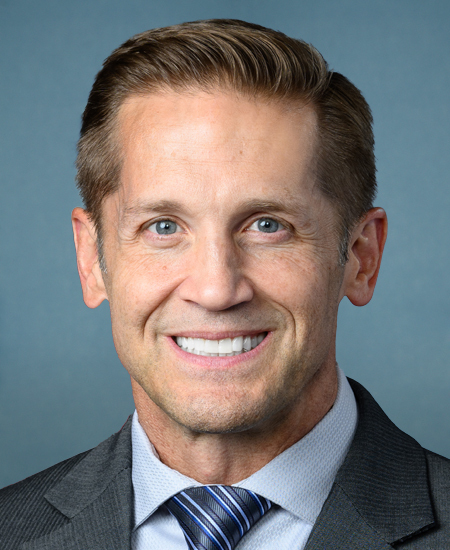
Rep. Richard McCormick
Sponsored bills
Maddy summaryHR 874 modifies how the VA pays for community care provided to veterans under its Community Care Program. It requires the VA to set location-specific payment rates for care delivered at specific facilities (like inpatient hospitals, outpatient departments, or physician offices), regardless of where the provider is headquartered. The bill also mandates that providers include a geographically specific national provider ID code in payment claims and directs the VA to pay the lowest applicable rate if multiple rates apply. These changes take effect January 1, 2026.
Maddy summaryHRES 153 is a ceremonial resolution expressing condolences to the families and loved ones of the 67 victims who died in two aviation incidents: American Eagle Flight 5342 and U.S. Army flight PAT 25, which crashed near Washington, D.C.'s Reagan National Airport on January 29, 2025. It specifically honors the victims - many connected to Wichita, Kansas (known as the "Air Capital of the World") - and extends sympathies to affected communities including Wichita, Kansas, and the National Capital Region. The resolution also commends first responders who aided in the recovery efforts. As a non-binding expression of sympathy with no policy changes, it does not affect laws or regulations.
Maddy summaryHR 1772 designates English as the official language of the United States federal government, requiring all official government functions (like laws, regulations, and public proceedings) to be conducted in English. It directly affects federal agencies, naturalization processes (mandating English ceremonies and language standards for new citizens), and government communications. Key exceptions include language teaching, disability education, national security needs, census activities, and protections for Native American languages under existing law. The bill does not restrict the use of other languages in private settings or ban bilingual services for essential government functions. It amends U.S. Code to establish these requirements, with implementation set for 180 days after enactment.
Maddy summaryHR 1818, the Aviation Workforce Development Act, expands tax-advantaged 529 college savings plans to cover costs for aviation maintenance and commercial pilot training. It allows families to use 529 funds for tuition, fees, books, and equipment at qualifying schools - specifically aviation maintenance technician programs under FAA Part 147 rules or commercial pilot courses at FAA-certified flight schools (Part 61 or Part 141). The bill directly affects students pursuing these aviation careers by making their training more affordable through existing tax-advantaged savings accounts. The change applies to distributions made after the law's enactment date.
Maddy summaryThe PLUS for Veterans Act of 2025 regulates how agents and attorneys can represent veterans in claims for benefits with the Department of Veterans Affairs. It establishes new requirements for these representatives, including application processes, conditional recognition periods while verification occurs, and caps on fees (limiting them to $12,500 or 5 times the monthly benefit increase). The bill reinstates penalties for unauthorized fee charging, including fines up to $50,000 and bars from representation for repeat violations. This legislation directly affects veterans seeking benefits, their representatives, and the Department of Veterans Affairs in handling claims. The bill also preempts state laws that conflict with these new federal regulations.
Maddy summaryHRES 166 is a non-binding House resolution expressing U.S. support for the Iranian people's desire for a democratic, secular, and nonnuclear republic. It condemns the Iranian regime's terrorism, regional proxy wars, internal suppression of ethnic and religious minorities, and human rights abuses - including executions and repression of women-led protests. The resolution calls for holding the regime accountable through sanctions, supports the Ten-Point Plan for Iran’s democratic transition, and urges protection for Iranian political refugees in Albania. It does not create new laws but affirms U.S. policy alignment with Iranian protesters' demands.
Maddy summaryThis bill awards a Congressional Gold Medal to the 761st Tank Battalion (known as the "Black Panthers"), the first predominantly Black armored unit in World War II's European Theater. It recognizes their combat service from 1944-1946, including key roles in the Battle of the Bulge and breaking the Siegfried Line, despite facing racial prejudice during and after the war. The medal will be displayed at the National Museum of African American History and Culture, with bronze duplicates available for sale to cover costs. The bill commemorates the battalion's 130,000 enemy casualties inflicted, 50% casualty rate, and their 1978 Presidential Unit Citation. It does not create new laws or affect current policies.
Maddy summaryThe Repeal CFPB Act would end the Consumer Financial Protection Bureau (CFPB) by repealing the 2010 law that created it. It would restore all financial regulations that existed before the CFPB was established, reverting to the system in place prior to 2010. This change would directly affect how consumer financial products - like credit cards, mortgages, and loans - are regulated, shifting oversight back to pre-2010 rules.
Maddy summaryHR 1622 reclassifies uranium as a critical mineral under federal law, overriding existing exclusions. It retroactively includes uranium on the 2022 critical minerals list published by the U.S. Geological Survey and mandates its inclusion in all future lists under the Energy Act of 2020. This change directly affects federal programs managing critical mineral supply chains, such as defense stockpiling and domestic production incentives. The bill does not create new funding or regulations but alters uranium's regulatory status to prioritize its role in national energy security.