USPS Fairness Act This bill repeals the requirement that the U.S. Postal Service annually prepay future retirement health benefits.
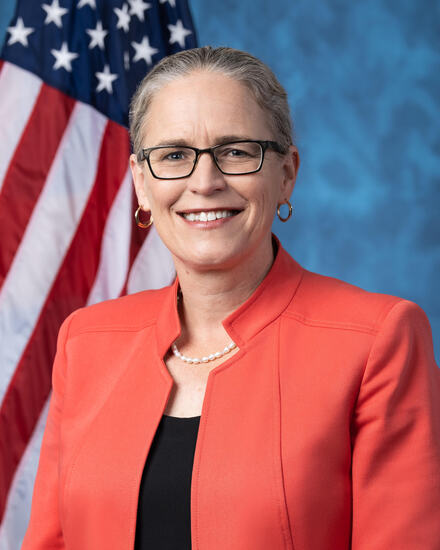
Rep. Carolyn Bourdeaux
Sponsored bills
Protecting Access to Post-COVID-19 Telehealth Act of 2021 This bill makes permanent several telehealth flexibilities that were initially authorized during the public health emergency relating to COVID-19 (i.e., coronavirus disease 2019), particularly with respect to Medicare coverage of telehealth services. For example, the bill permanently allows federally qualified health centers and rural health clinics to serve as the distant site (i.e., the location of the health care practitioner) for telehealth services under Medicare. Payment must be made in the same manner as for non-telehealth services, rather than in accordance with a separate methodology determined by the Centers for Medicare & Medicaid Services (CMS). The bill also permanently allows beneficiaries to receive Medicare telehealth services at any site, regardless of type or location, and grants the CMS general authority to waive any other requirements during any emergency period.
This concurrent resolution recognizes the difficult challenges Black veterans faced when returning home after serving in the Armed Forces, their heroic military sacrifices, and their patriotism in fighting for equal rights and for the dignity of a people and a nation. The concurrent resolution also recognizes the need for the Department of Veterans Affairs to continue to work to eliminate any health and benefit disparities for minority veterans.
This resolution censures Representative Marjorie Taylor Greene and calls on her to resign from office.
This resolution honors the life and legacy of Henry Louis Aaron for his accomplishments on and off the baseball field and for defying racism and breaking down racial barriers in the fight for equality.
Safe from the Start Act of 2021 This bill directs the Department of State to direct U.S. foreign assistance to address humanitarian crises in a manner that aims to prevent and respond to gender-based violence at the onset of an emergency. The State Department shall focus on (1) preventing gender-based violence, (2) protecting survivors of humanitarian crises from the onset of the emergency, (3) promoting standards and activities to prevent and respond to gender-based violence, and (4) advancing and empowering survivors and at-risk individuals. Activities shall include improving access to post-sexual-assault medical and mental health services and ensuring such services are available to hard-to-reach populations. The State Department may provide support to local and international organizations to achieve its goals.

Global Health, Empowerment and Rights Act This bill establishes that a foreign nongovernmental organization shall not be disqualified from receiving certain U.S. international development assistance solely because the organization provides medical services using non-U.S. government funds if the medical services are legal in both the United States and the country in which they are being provided. Such foreign organizations shall not be subject to requirements relating to their use of non-U.S. funds for advocacy or lobbying activities, other than those that apply to U.S. nongovernmental organizations. Current U.S. policy prohibits various foreign assistance from going to a foreign nongovernmental organization unless it agrees to not perform or actively promote abortions.
Health Care Fairness for Military Families Act of 2021 This bill modifies the extension of dependent coverage under TRICARE by allowing a dependent under the age of 26 to be covered without an additional premium. Additionally, the bill authorizes such coverage of dependents without a premium regardless of whether they are eligible to enroll in an employer sponsored plan.
Access Technology Affordability Act of 2021 This bill allows a refundable tax credit equal to the amounts paid for qualified access technology for use by a blind individual who is the taxpayer, the taxpayer's spouse, or a dependent of the taxpayer. Qualified access technology is hardware, software, or other information technology with the primary function of converting or adapting information that is visually represented into forms or formats useable by blind individuals. The credit is limited to (1) costs that are not compensated by insurance or otherwise, and (2) an aggregate amount of $2,000 per blind individual in any period of three consecutive taxable years. The credit must be adjusted for inflation after 2021 and terminates after 2026.
This resolution expresses support for the goals and ideals of Korean American Day and honors the 118th anniversary of the arrival of the first Korean immigrants to the United States.