

Michael Lecik Military Firefighters Protection Act This bill establishes a presumption of service-connection for specified diseases becoming manifest in certain veterans to a degree of disability of 10% or more within 15 years of the veteran's separation from active military, naval, or air service. Under a presumption of service-connection, specific diseases or disabilities diagnosed in certain veterans are presumed to have been caused by the circumstances of their military service. Health care benefits and disability compensation may then be awarded. Veterans addressed by this bill are those who (1) are trained in fire suppression, and (2) served on active duty in a military occupational specialty or career field with a primary responsibility of firefighting or damage control for at least five years in the aggregate.
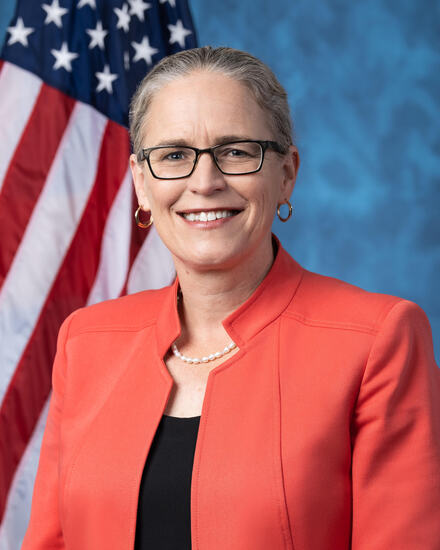
Rep. Carolyn Bourdeaux
Sponsored bills
Every Vote Counts Act This bill requires states to take certain actions to facilitate absentee voting for federal elections. First, the bill requires each state to establish an absentee ballot tracking program to track and confirm receipt of absentee ballots for federal elections. The Election Assistance Commission must make payments to states for establishing these programs. Next, the bill requires each state to provide in each county secured drop boxes at which individuals may drop off their completed absentee ballots for federal elections. These drop boxes must be (1) available beginning 45 days before the election; (2) accessible to individuals with disabilities and individuals with limited proficiency in the English language; (3) accessible by public transit; (4) available during all hours of the day; and (5) located in all communities within the county, including rural communities and on tribal lands. States must also post the requirements for absentee ballots to be counted and tabulated in the election. Further, the bill outlines additional requirements that a state must meet in determining the number and location of drop boxes. The bill also requires the National Institute of Standards and Technology to develop alternatives to signature matching for verifying the identity of an individual who is voting by absentee ballot.
American Dream and Promise Act of 2021 This bill provides certain aliens with a path to receive permanent resident status and contains other immigration-related provisions. The Department of Homeland Security (DHS) or the Department of Justice (DOJ) shall provide conditional permanent resident status for 10 years to a qualifying alien who entered the United States as a minor and (1) is deportable or inadmissible, (2) has deferred enforced departure (DED) status or temporary protected status (TPS), or (3) is the child of certain classes of nonimmigrants. The bill imposes various qualifying requirements, such as the alien being continuously physically present in the United States since January 1, 2021, passing a background check, and being enrolled in or having completed certain educational programs. DHS shall remove the conditions placed on permanent resident status granted under this bill if the alien applies and meets certain requirements, such as completing certain programs at an educational institution, serving in the military, or being employed. Furthermore, DHS and DOJ shall cancel the removal of certain aliens who had TPS, were eligible for TPS, or were eligible for DED status on certain dates. Such an alien shall receive permanent resident status upon meeting certain requirements and applying for such status within three years of this bill's enactment. For an alien seeking permanent resident status under this bill, DHS may (1) waive certain grounds of inadmissibility, or (2) provisionally deny the application if the alien poses a danger to public safety or has knowingly participated in certain offenses involving a criminal street gang. An alien shall have the right to administrative and judicial review of a denial or revocation of permanent resident status granted under this bill. An alien seeking judicial review of a provisional denial shall be appointed counsel upon request. An alien who appears to be prima facie eligible for relief under this bill shall receive a reasonable chance to apply for such relief and may not be removed until there is a final decision on that application for relief. DHS may not use information from applications filed under this bill or for Deferred Action for Childhood Arrivals status for immigration enforcement purposes. DHS shall establish a grant program for nonprofit organizations that assist individuals with certain immigration-related issues. This bill also repeals a restriction that bars a state from providing higher education benefits to undocumented aliens unless those benefits are available to all U.S. nationals without regard to residency in the state.
Paycheck Fairness Act This bill addresses wage discrimination on the basis of sex, which is defined to include pregnancy, sexual orientation, gender identity, and sex characteristics. Specifically, it limits an employer's defense that a pay differential is based on a factor other than sex to only bona fide job-related factors in wage discrimination claims, enhances nonretaliation prohibitions, and makes it unlawful to require an employee to sign a contract or waiver prohibiting the employee from disclosing information about the employee's wages. The bill also increases civil penalties for violations of equal pay provisions. Additionally, the Equal Employment Opportunity Commission (EEOC) and the Office of Federal Contract Compliance Programs must train EEOC employees and other affected parties on wage discrimination. The bill directs the Department of Labor to (1) establish and carry out a grant program to provide training in negotiation skills related to compensation and equitable working conditions, (2) conduct studies to eliminate pay disparities between men and women, and (3) make available information on wage discrimination to assist the public in understanding and addressing such discrimination. The bill establishes the National Award for Pay Equity in the Workplace for an employer who has made a substantial effort to eliminate pay disparities between men and women. It also establishes the National Equal Pay Enforcement Task Force to address compliance, public education, and enforcement of equal pay laws. Finally, the bill requires the EEOC to issue regulations for collecting from employers compensation and other employment data according to the sex, race, and national origin of employees for use in enforcing laws prohibiting pay discrimination.
Solar Use Network Act or the SUN Act This bill allows states to accommodate electric vehicle charging infrastructure, renewable energy generation facilities, electrical transmission and distribution infrastructure, and broadband infrastructure and conduit within the right-of-way of highways.
Wastewater Infrastructure Modernization Act This bill requires the Environmental Protection Agency to establish a program to award grants to municipalities for projects at publicly owned treatment works concerning (1) intelligent sewage or stormwater collection systems, or (2) innovative and alternative combined storm and sanitary sewer projects.
Hamas International Financing Prevention Act This bill imposes sanctions targeting Hamas, the Palestinian Islamic Jihad, and any affiliate or successor groups. The President shall periodically report to Congress a list of each foreign person or instrumentality that knowingly assists, provides significant support or services to, or is involved in a significant transaction with a senior member or supporter of any of the targeted groups. The President shall impose two or more sanctions on the named persons. Specifically, the person may be (1) denied credit and services from the Export-Import Bank, (2) barred from purchasing certain controlled defense articles, (3) denied exports of items on the U.S. Munitions List, (4) prevented from receiving exports of certain goods or technology controlled for national security reasons, (5) prohibited from receiving financing of more than $10 million from any U.S. financial institution, or (6) subject to property-blocking restrictions. The President shall periodically report to Congress a list of foreign governments that have repeatedly provided material support for the targeted groups' terrorist activities. The President shall bar these governments from receiving for one year (1) U.S. assistance, or (2) exports of controlled munitions. The Department of Treasury shall instruct U.S. leadership of international financial institutions to oppose the provision of assistance to an identified government for one year. The bill provides for certain exceptions and waivers, such as for transactions that would serve U.S. national interests. The President shall report to Congress and periodically provide briefings on other specified topics related to the targeted groups, such as where these groups secure financing and surveillance equipment.
Made in America Emergency Preparedness Act This bill establishes in the legislative branch the National Commission on United States Preparedness for National Emergencies and requires any medical, pharmaceutical, or emergency preparedness product deemed integral to a response to a national emergency to be manufactured and procured in the United States beginning on and after January 1, 2026. The commission must, among other things, examine and report on the COVID-19 pandemic in the United States in 2020 and the private sector response, investigate the origin of the COVID-19 virus and measures for mitigating the impacts of future physical and medical national disasters, determine what medical, pharmaceutical, and emergency preparedness products are deemed to be essential to emergency preparedness, and report on infrastructure or capability deficiencies in hospitals and medical centers. States must implement the commission's findings or lose access to federal emergency preparedness funds. The bill allows 100% tax expensing for qualified pharmaceutical and medical device manufacturing property (e.g., personal protective equipment) placed in service after 2020 and before 2027.
Clean Water Standards for PFAS Act of 2021 This bill directs the Environmental Protection Agency (EPA) to develop requirements and incentives to limit the discharge of perfluoroalkyl and polyfluoroalkyl substances (PFAS) into certain waters of the United States. PFAS are man-made and may have adverse human health effects. A variety of products contain the compounds, such as nonstick cookware or weatherproof clothing. Within two years, the EPA must publish water quality criteria for each measurable perfluoroalkyl substance, polyfluoroalkyl substance, and class of PFAS. The water quality criteria must determine how much of these substances can be present in water before it is likely to harm human health. Within four years, the EPA must publish a final rule that establishes, for each priority industry category specified in the bill, effluent limitations guidelines and standards for the discharge of each measurable perfluoroalkyl substance, polyfluoroalkyl substance, and class of PFAS. Under the Clean Water Act, effluent limitations restrict the quantities, rates, and concentrations of chemical, physical, biological, and other constituents which are discharged from point sources (e.g., a discernible source such as a pipe) into navigable waters, the ocean, or other specified waters. In addition, the EPA must award grants to owners and operators of publicly owned treatment works for implementing the effluent limitations guidelines and standards.
National and Regional Greenways Act This bill requires the Department of Transportation (DOT) to establish a grant program for states, localities, and tribes to support community greenway paths for walking, bicycling, and other motor vehicle alternatives. DOT must designate eligible greenway paths that are considered regionally or nationally significant through a national greenway paths network; paths must cross multiple localities or states, reduce congestion, improve safety, benefit the environment, support communities, or meet other specified criteria. Eligible projects must support access to public parks, transportation, and other community needs.