

Maddy summaryThis bill reauthorizes the Debbie Smith DNA Backlog Grant Program, which provides federal funding to state and local law enforcement agencies to reduce backlogs in processing DNA evidence from crime scenes. It extends the program's funding period from fiscal years 2024 through 2029 (previously ending in 2024). The bill also updates audit requirements to ensure grant funds are used properly through 2029. This directly affects law enforcement agencies that receive these grants to accelerate DNA analysis for criminal investigations.
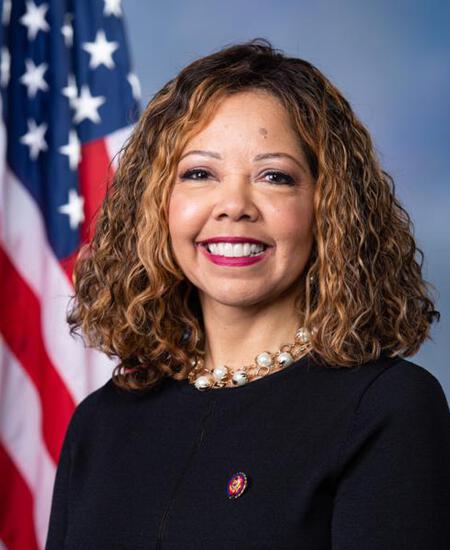
Rep. Lucy McBath
Sponsored bills
Maddy summaryThe Federal Prison Oversight Act establishes a new inspections regime for federal prisons, requiring the Justice Department's Inspector General to conduct regular assessments of Bureau of Prisons facilities. These inspections will evaluate conditions of confinement, medical care, staffing levels, safety protocols, and policies related to visitation and programming. The bill also creates a new Ombudsman position within the Department of Justice to receive and address complaints from incarcerated people, their families, and staff about health, safety, and rights concerns. The Inspector General must submit public reports with recommendations, and the Bureau must respond with corrective action plans within 60 days. The law includes protections against retaliation for those filing complaints and requires the Bureau to provide multiple confidential channels for submitting complaints.
Maddy summaryThis bill directs the Secretary of Agriculture to conduct a feasibility study on designating the Benton MacKaye Trail as a national scenic trail. The study, to be completed within one year of the bill's enactment, will assess whether the 287-mile trail - which traverses Georgia, Tennessee, and North Carolina through federal lands, wilderness areas, and national forests - should receive this designation. The study must be developed in consultation with the Benton MacKaye Trail Association and other interested organizations. It does not change current trail management or funding but evaluates the potential for formal national scenic trail status.
Maddy summaryHRES 1355 is a non-binding resolution supporting the designation of July 10 as Journeyman Lineworkers Recognition Day. It honors lineworkers who maintain electrical infrastructure under hazardous conditions, including during disasters, and commemorates Henry Miller, the first president of the International Brotherhood of Electrical Workers, who died on July 10, 1896, while troubleshooting an electrical outage. The resolution encourages public recognition of these workers' contributions but does not create new laws or policies.
Maddy summaryHCONRES 118 is a symbolic congressional resolution recognizing the wage disparity faced by Black women in the U.S. It specifically highlights that Black women earn 69 cents for every dollar earned by White, non-Hispanic men, as noted in Census Bureau data. The resolution marks July 9, 2024, as Black Women’s Equal Pay Day to symbolize how long into 2024 Black women must work to earn what White men earned in 2023. It does not create new laws or policies but formally acknowledges this disparity and reaffirms congressional support for equal pay for equal work.
Maddy summaryThis bill creates a new grant program to fund high-quality workforce development programs at community colleges, directly affecting community colleges, their students, and employers in targeted industries. It requires community colleges to partner with employers in high-demand sectors to develop evidence-based programs leading to nationally recognized credentials in high-skill, high-wage occupations. The program authorizes $65 million annually from 2025-2030, with grants lasting up to 4 years, and requires transparent reporting on program outcomes including completion rates, job placement, and credential value. Community colleges must demonstrate performance on metrics like employer engagement, program completion, and participant advancement, with annual evaluations to ensure accountability.
Maddy summaryThis bill bans developers and deployers of AI algorithms from using them to deceive voters about election procedures (like voting locations or registration rules) or intimidate people from voting. It requires clear disclaimers - such as "AI Disclaimer: This output was generated by artificial intelligence" - on AI-generated election content, including fake candidate videos or altered voting information. The law sets safety standards for election-related AI, requiring developers to ensure algorithms are "safe and effective" before use. The Federal Trade Commission enforces these rules, with violations potentially leading to fines or up to one year in prison.
Maddy summaryThis bill creates a federal framework for "extreme risk protection orders" (ERPOs) that temporarily remove firearms from individuals who pose a risk of harming themselves or others. Family members or law enforcement officers can petition a federal court for a temporary order (up to 14 days) based on probable cause, followed by a hearing within 72 hours to determine if a longer-term order (up to 180 days) is warranted. The bill requires clear and convincing evidence of risk at the hearing and mandates respondents to surrender firearms to law enforcement within 48 hours. It also includes provisions for reporting, training law enforcement on ERPOs, and a federal grant program to support state ERPO implementation, without preempting state laws.
Maddy summaryHRES 901 is a U.S. House resolution expressing support for democracy and human rights in Pakistan. It calls on the U.S. President and Secretary of State to collaborate with Pakistan to uphold democratic processes, human rights, and the rule of law. The resolution urges Pakistan to protect freedoms of speech, assembly, and press, and to avoid arbitrary detention or suppression of political participation. It also condemns efforts to undermine Pakistan's electoral or judicial systems, including harassment of citizens during protests or interference with elections.
Maddy summaryThis resolution recognizes June 19, 2024, as Juneteenth Independence Day, acknowledging its historical significance as the anniversary of the end of slavery in the U.S. (specifically referencing Union soldiers' announcement in Galveston, Texas, on June 19, 1865). It does not create new policy but formally encourages all Americans to observe the day through ceremonies and educational activities. The resolution emphasizes Juneteenth's role in honoring African American freedom and its importance to U.S. history and cultural heritage. It follows the 2022 law that established Juneteenth as a federal holiday, focusing solely on symbolic recognition and annual observance.