

Maddy summaryThis bill provides housing loans and education assistance to Black World War II veterans who were denied GI Bill benefits due to racial discrimination, or to their surviving spouses, children, or direct descendants. To qualify, applicants must certify they were denied benefits on racial grounds under the original 1944 GI Bill and apply within five years of the law's enactment. The Department of Veterans Affairs must implement these provisions within 90 days and report to Congress on participation and program costs. It specifically addresses documented historical discrimination where Black veterans were steered toward vocational training instead of college, with only 6% earning degrees compared to 19% of White veterans.
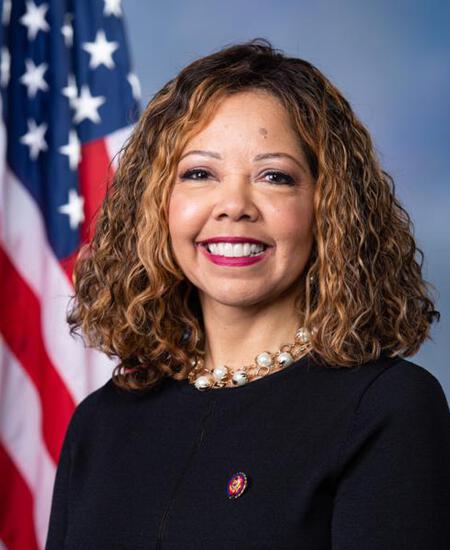
Rep. Lucy McBath
Sponsored bills
Maddy summaryHRES 257 is a symbolic resolution expressing support for designating March 2025 as "Music in Our Schools Month." It does not create new laws or allocate funding but formally recognizes music education's value in schools. The resolution highlights music's role in cultural heritage, student development (including cognitive and social benefits), and existing disparities in access - particularly for students in underserved urban, rural, or high-poverty schools. It calls for greater support for music programs but does not mandate any policy changes or require action from schools or the government.
Maddy summaryThis bill amends the tax code to allow charitable organizations (501(c)(3) nonprofits) to provide grants for college student housing without losing their tax-exempt status. It specifically permits grants to improve or maintain "collegiate housing property" (where most residents are full-time students at a nearby college) but excludes grants for fitness facilities. The change affects charities seeking to fund student housing infrastructure, clarifying that such grants qualify as charitable under existing tax rules. The policy change applies to grants made after the bill's enactment date.
Maddy summaryHR 2381, the SCREENS for Cancer Act of 2025, reauthorizes and updates the National Breast and Cervical Cancer Early Detection Program (NBCCEDP). It directly affects low-income, uninsured, or underinsured women across all 50 states, territories, and tribal communities by expanding access to breast and cervical cancer screenings, diagnostic services, and patient navigation support. Key provisions include updating program language to emphasize prevention alongside detection and control, adding specific strategies to reduce disparities, and appropriating $235 million annually for fiscal years 2026-2030. The bill also requires a GAO study by 2027 to assess program eligibility, service trends, and barriers to screening access.
Maddy summaryThe Safer Skies Act of 2025 requires specific smaller airlines to adopt enhanced security screening protocols currently used by larger carriers. It mandates that "covered air carrier operations" - defined as airlines operating under certain FAA rules, offering individual seats with public schedules, using planes with more than nine passenger seats, and not using TSA checkpoints - to follow the Aircraft Operator Standard Security Program (49 CFR §1544.101(a)) within 360 days of the bill's enactment. The Transportation Security Administration must revise its rules to enforce this requirement. This directly affects regional and private charter airlines that currently skip TSA checkpoint screening but serve the public with scheduled passenger flights.
Maddy summaryHR 2366, the American Families United Act, amends immigration law to expand discretion for the Attorney General and Secretary of Homeland Security regarding family-related cases. It allows them to halt removal proceedings or grant relief for spouses and children of U.S. citizens if removal would cause "hardship" (with family separation presumed to constitute hardship), including special provisions for widows/orphans of deceased citizens. The bill also permits waiving certain inadmissibility grounds and excludes cases involving serious violations like terrorism or criminal offenses. This policy change directly affects noncitizens facing removal proceedings who have U.S. citizen family members, without creating new benefits but modifying existing discretionary authority.
Protecting Students with Disabilities Act This bill prohibits the use of appropriated funds to eliminate the Department of Education's (ED's) oversight of the Individuals with Disabilities Education Act (IDEA). (The IDEA authorizes grant programs that support special education and early intervention services for children with disabilities. Currently, the IDEA is administered by the Office of Special Education Programs in the Office of Special Education and Rehabilitative Services in ED.) Specifically, the bill prohibits the use of appropriated funds to eliminate, consolidate, or otherwise restructure any office within ED that administers or enforces programs under the IDEA. Further, appropriated funds may not be used to (1) terminate, reassign, or alter the responsibilities of any personnel of any such office; or (2) contract with, or delegate to, any entity outside of ED to administer or enforce IDEA programs. (On March 20, 2025, President Donald Trump signed an executive order titled Improving Education Outcomes by Empowering Parents, States, and Communities , calling for the closure of ED and giving authority over education to the states. Further, the Trump Administration has announced plans to transfer ED's oversight of services for students with disabilities to the Department of Health and Human Services.)
Maddy summaryThis bill redesignates the existing Ocmulgee Mounds National Historical Park as Ocmulgee Mounds National Park and establishes a separate Ocmulgee Mounds National Preserve in Georgia. It allows voluntary land acquisition (via purchase, donation, or exchange) for both areas without eminent domain, and requires the Secretary of the Interior to develop a management plan prioritizing cultural resource preservation for the Muscogee (Creek) Nation. The bill mandates tribal consultation, provides hiring preferences for tribal members, and ensures protection of sacred sites. It also places 126 acres of tribal land into federal trust for the Muscogee (Creek) Nation.
Maddy summaryThe Paycheck Fairness Act strengthens equal pay protections by expanding the definition of "sex" to include pregnancy, childbirth, sexual orientation, gender identity, and sex characteristics. It modifies employer defenses for pay disparities to require proof that any pay difference is job-related, not based on sex, and accounts for the entire pay gap. The bill prohibits employers from asking about salary history, enhances penalties for violations, and requires employers with 100+ employees to collect and report detailed pay data by race, sex, and job category. It also establishes training programs for employers on eliminating pay bias and creates a National Equal Pay Enforcement Task Force to coordinate enforcement efforts. This legislation directly affects employers, particularly those with 100+ employees, and aims to address pay disparities impacting women, people of color, and other underrepresented groups.
Maddy summaryH.J. Res. 80 would declare the Equal Rights Amendment (ERA) part of the U.S. Constitution, asserting it has been ratified by 38 states (three-fourths of the states) despite the original 1972 deadline. If passed, this resolution would formally establish the ERA as a constitutional amendment, requiring all federal and state laws to align with its gender equality protections. The bill does not create new laws but confirms the ERA's status as part of the Constitution, affecting how laws are interpreted and enforced. It is a procedural step to resolve the legal dispute over the ERA's validity after decades of debate.