

Maddy summaryThis resolution (HRES 969) expresses support for designating the week beginning September 8, 2025, as "National Hispanic-Serving Institutions Week." It recognizes colleges and universities with at least 25% Hispanic undergraduate enrollment (known as Hispanic-Serving Institutions or HSIs) and their role in serving diverse, low-income students. The resolution does not create new policies or funding but encourages public observance through ceremonies and activities to honor HSIs’ contributions to higher education access and economic mobility. It applies symbolically to all 615+ HSIs across the U.S. and Puerto Rico.
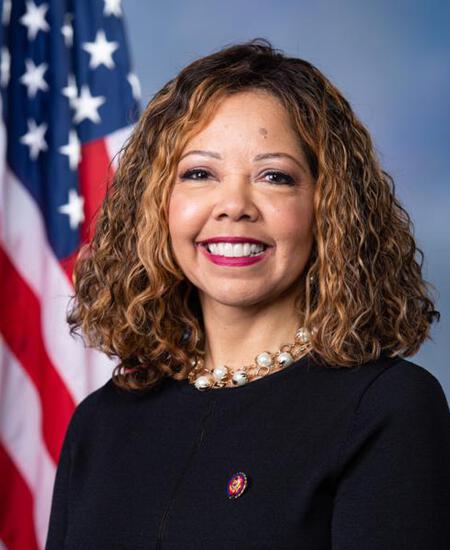
Rep. Lucy McBath
Sponsored bills
Maddy summaryHRES 972 is a non-binding resolution recognizing Atlanta, Georgia, as the cradle of the civil rights movement by highlighting its historical role in pivotal events and figures. It specifically acknowledges Atlanta's contributions to milestones like the founding of the NAACP, Dr. Martin Luther King Jr.'s leadership, the desegregation of public transit, and Atlanta's instrumental advocacy for the Civil Rights Act of 1964 and Voting Rights Act of 1965. The resolution honors Atlanta's ongoing status as a global leader in diversity, inclusivity, and opportunity, though it has no legal effect or policy changes.
Maddy summaryHR 4611 (EACH Act of 2025) requires all federally funded health programs - including Medicaid, Medicare, military health plans, and the Indian Health Service - to cover abortion services without restrictions, repealing the Hyde Amendment's long-standing ban on federal funding for most abortions. This directly affects millions of people enrolled in these programs, particularly low-income women, women of color (including 25% of Black women and 22% of Hispanic women on Medicaid), and young people. The bill mandates coverage in all federally administered health plans and prohibits state or private insurers from restricting abortion coverage in health insurance. It aims to eliminate current federal and state barriers that deny abortion access to people who rely on government health programs.
Maddy summaryHR 6857 requires all colleges and universities receiving federal funds to prominently display a link to the Department of Education’s civil rights complaint portal on their website homepage and to post annual Title VI awareness materials in high-traffic campus locations (like student centers) and on campus websites. The bill mandates these institutions to annually report discrimination complaints (based on race, color, or national origin) to the Department of Education’s Inspector General. It also requires the Department to provide monthly congressional briefings on complaint volumes and resolution timelines, while the Inspector General must audit institutions with the highest complaint rates and study why some complaints go to schools versus the federal office. This directly affects every federally funded higher education institution in the U.S. by changing how they handle and report civil rights complaints.
Maddy summaryAlyssa's Act of 2025 expands the Federal Clearinghouse on School Safety Evidence-based Practices to collect and analyze school safety data, including information on school shootings and emergency response effectiveness. The bill creates a National School Safety Data Center to track incidents, injuries, and response methods, while requiring emergency response maps for schools to meet specific digital standards for accessibility and real-time updates. It also establishes a program to develop and test panic alarm technology for schools, and mandates annual reports on school safety master plans developed by states and local educational agencies. The legislation requires coordination with the U.S. Secret Service's National Threat Assessment Center to align school safety practices with evidence-based approaches.
Maddy summaryHR 6789, the Federal Prisons Naloxone Access Act of 2025, requires federal prisons to maintain naloxone kits in all correctional facilities, including medical units, staff areas, and common spaces where incarcerated people gather. The bill mandates annual training for staff and incarcerated individuals on opioid overdose recognition and kit use, ensures proper storage and expiration checks, and requires detailed documentation of each kit administration. It also prohibits holding incarcerated people liable for good-faith naloxone use during an overdose and requires annual reports to Congress on kit availability, overdose incidents, training, and expired kits. The law authorizes $6 million for 2026 and $2 million annually through 2028 for implementation, including kit purchases and training.
Maddy summaryThe Shadow Docket Sunlight Act of 2025 requires the U.S. Supreme Court to publish written explanations and disclose individual justice votes when issuing orders related to preliminary injunctions or stays of such injunctions. It mandates that these explanations evaluate specific legal criteria, such as the likelihood of success on the merits and public interest, for both granting/denying injunctions and granting/denying stays. The law applies to cases within the Court’s appellate jurisdiction (excluding purely administrative orders) and directs the Federal Judicial Center to report annually on compliance. This bill directly affects the Supreme Court’s decision-making process for emergency relief cases, aiming to increase transparency without altering legal standards or jurisdiction.
Maddy summaryThe Protect America's Workforce Act cancels an executive order issued on March 27, 2025, that excluded certain groups from federal labor-management relations programs, making it legally unenforceable. It also ensures that all collective bargaining agreements between federal agencies and labor unions, which were active as of March 26, 2025, remain fully effective until their agreed terms expire. This directly affects federal agencies, labor unions, and the employees covered by these agreements. The bill prevents federal funds from being used to implement the canceled executive order while preserving existing labor agreements.
Maddy summaryThe Keeping All Students Safe Act prohibits the use of unlawful seclusion and restraint in schools receiving federal funding, including physical restraint that restricts breathing or blood flow, chemical restraint not prescribed for medical treatment, and mechanical restraint. The bill requires schools to use less restrictive interventions first, mandates that staff using physical restraint be trained and certified through State-approved programs, and requires immediate parent notification after any restraint incident. States must develop plans to monitor compliance, collect and report data on restraint incidents (disaggregated by race, disability status, and school type), and implement positive behavioral interventions. The bill provides $40 million annually for five years to support states in implementing these requirements and improving school climate through evidence-based approaches.
Maddy summaryThis concurrent resolution (HCONRES 65) is a symbolic congressional commendment of state and local governments that have affirmed reproductive rights as human rights. It recognizes efforts by jurisdictions like Carrboro, North Carolina; Austin, Texas; and Fulton County, Georgia, which passed resolutions or proclamations declaring abortion access a human right and condemning criminalization of pregnancy outcomes. The resolution urges states to repeal restrictive abortion laws and protect access to reproductive care, but it does not create new legal requirements or fund programs. As a procedural resolution, it has no binding effect on federal or state law.