

Maddy summaryThis resolution symbolically designates November 8, 2023, as "National First-Generation College Celebration Day" to honor first-generation college students (those whose parents didn't earn bachelor's degrees). It urges all U.S. residents to recognize these students' contributions to the workforce and celebrate the 1965 Higher Education Act, which established key support programs like TRIO and Pell Grants. The resolution has no legal force or funding provisions - it solely expresses support through symbolic recognition. It directly affects educational communities, institutions, and the public by encouraging annual observance of this day.
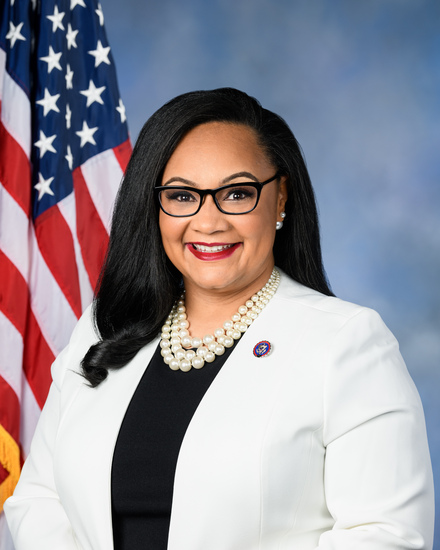
Rep. Nikema Williams
Sponsored bills
Maddy summaryThis bill codifies the Young African Leaders Initiative (YALI) as a formal U.S. government program. It authorizes annual fellowships for African leaders aged 25-35 to participate in U.S.-based leadership training (including the Mandela Washington Fellowship) and establishes at least four regional leadership centers across sub-Saharan Africa for ongoing professional development in business, civic engagement, and public administration. The program requires annual congressional reports on progress and impacts, with implementation ending after five years. Directly affecting young African leaders (ages 18-35 for regional centers) in business, civic leadership, and governance, it provides structured training, networking, and technical assistance to strengthen U.S.-Africa partnerships.
Maddy summaryHRES 806 is a symbolic resolution designating October 2023 as "World Menopause Awareness Month" and expressing the House's support for improved global awareness and access to care during menopause. It highlights that menopause affects millions of women, with symptoms like hot flashes (experienced by 75% of U.S. women) and potential impacts on work productivity and health risks like heart disease. The resolution encourages the Health and Human Services, Defense, and Veterans Affairs secretaries to share menopause information, fund research, and update treatment tools to support women's health. It does not create new laws or funding but aims to raise awareness and guide existing agency efforts.
This resolution expresses support for the designation of National Vitiligo Awareness Day. (Vitiligo is a chronic condition that results in the loss of pigment in patches on the skin, hair, eyes, and inside of the mouth; the condition may lead to discomfort, itching, and pain.)
Maddy summaryHR 6172, the AMMO Act, requires federal firearms licensees (dealers/manufacturers) to implement new rules for selling ammunition to non-licensed buyers. It prohibits transfers exceeding 100 rounds of .50 caliber or 1,000 rounds of other calibers within any 5-day period and mandates written certification from buyers confirming they haven’t exceeded these limits. Licensees must also conduct background checks through the National Instant Criminal Background Check System (NICS) before selling ammunition to non-licensed individuals, similar to firearm sales. The bill includes recordkeeping, signage, and reporting requirements for violations, with penalties including fines up to $250,000 for licensees and $50,000 for buyers making false statements.
Maddy summaryHR 5976, the Youth Mental Health Research Act, establishes a new NIH research initiative led by the National Institute of Mental Health. The bill directs collaboration between three NIH institutes to coordinate research on youth mental health, focusing specifically on building community resilience for at-risk youth and improving how mental health services reach young people in schools, communities, and other settings where they live and work. It authorizes $100 million annually for fiscal years 2024 through 2028 to fund this research. The bill does not create direct services but aims to generate evidence to inform future mental health support strategies for young people.
Maddy summaryThis resolution (HRES 839) condemns antisemitism at U.S. colleges and universities and urges campus leaders to publicly oppose hate speech targeting Jewish students, faculty, and staff. It encourages university presidents, administrators, and faculty to speak out against speech that promotes violence or discrimination based on religion, national origin, or ancestry. The resolution specifically calls on institutions to support Jewish student organizations and ensure Jewish members can study and work without fear. As a non-binding resolution, it does not create new laws but expresses congressional support for addressing antisemitism on campuses.
Maddy summaryHR 6173 establishes a pilot program to address technology-based abuse against victims of domestic violence, dating violence, sexual assault, and stalking. It authorizes up to 15 grants of $2 million each to partnerships between tech-focused schools, domestic violence centers, and local governments to provide victims with devices and tech safety support. The bill also creates a separate $20 million grant program over five years to fund training materials for organizations helping victims navigate tech abuse. These programs directly affect victims facing digital stalking or harassment by abusers, aiming to improve safety through targeted resources and education.
Maddy summaryThe Healthcare Workforce Resilience Act (HR 6205) reallocates unused employment-based immigrant visas from fiscal years 1992-2021 to directly support foreign nurses and physicians seeking permanent residency in the U.S. It creates 40,000 new visas - 25,000 for nurses and 15,000 for physicians - available only to those with petitions filed within three years of the bill’s enactment. The bill includes expedited processing without fees, exempts these visas from country limits, and requires employers to attest that hiring foreign workers won’t displace U.S. workers. This policy change specifically targets healthcare staffing shortages by streamlining pathways for qualified foreign healthcare professionals.
Maddy summaryHRES 831 is a symbolic congressional resolution supporting October as "National Domestic Violence Awareness Month." It does not create new laws or allocate funding, but formally expresses the House of Representatives' support for the goals of raising awareness about domestic violence. The resolution urges Congress to continue highlighting domestic violence's impact and backing programs that prevent and address it. It directly affects public awareness efforts and serves as a non-binding statement of congressional support for victims and advocacy organizations.