

Maddy summaryHR 9782, the Uterine Cancer Study Act of 2024, directs the U.S. Department of Health and Human Services (HHS) to study whether hair straighteners - specifically chemical products - may be linked to uterine cancer, with a focus on higher rates among women of color. The study will review existing research, examine impacts across racial and ethnic groups, and break down results by product type (e.g., dyed, bleached, or permed straighteners). HHS must submit a study methodology within 45 days of the bill’s enactment and complete the study, reporting findings to Congress within two years. The bill does not impose new regulations but may inform future FDA safety requirements for hair straightening products. This affects women of color disproportionately impacted by uterine cancer and the broader population using such products.
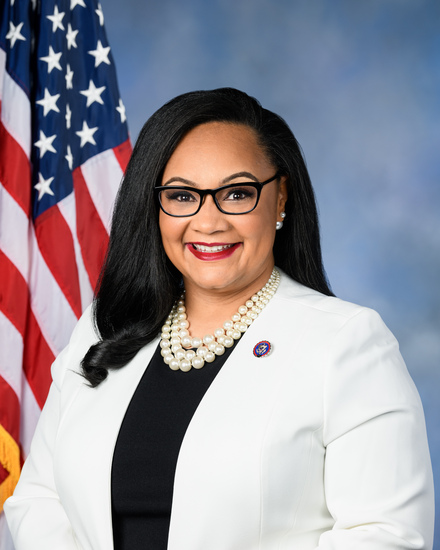
Rep. Nikema Williams
Sponsored bills
Maddy summaryHR 3433, the "Give Kids a Chance Act of 2024," requires pharmaceutical companies developing certain cancer drugs to conduct pediatric studies if the drugs target molecular pathways relevant to childhood cancers. It directly affects drug manufacturers submitting new applications for cancer treatments, particularly those combining previously approved adult cancer drugs or containing a single new active ingredient. The bill amends FDA regulations to mandate these pediatric investigations only when specific conditions are met, such as when a drug's molecular target is relevant to pediatric cancer growth. The FDA must issue implementing guidance within 12 months, and reports to Congress will track implementation and effectiveness starting 2 years after enactment.
Maddy summaryThis bill establishes a Diversity and Inclusion Administrator at the Department of Labor to increase African American participation in apprenticeship programs. It requires all new and renewing registered apprenticeship programs to submit plans for boosting African American enrollment, and authorizes competitive grants for programs targeting underrepresented groups in industries like construction, tech, and healthcare. Grant recipients must report on metrics including participant demographics, program completion rates, and job placement in related fields. The law directly affects African American youth and other underrepresented groups by mandating systemic changes to apprenticeship programs nationwide.
Maddy summaryThe SERVE Act expands eligibility for Veterans Affairs benefits to former service members discharged due to sexual orientation or gender identity (including gender dysphoria). It directly affects veterans who received entry-level separations, honorable discharges, or other-than-honorable discharges for these reasons, making them eligible for VA hospital care, mental health counseling at Vet Centers, national cemetery interment, education benefits, and housing loans. The bill amends existing VA benefit statutes to include this group by adding specific language to each relevant provision. It also requires the VA to conduct outreach to inform affected veterans and submit a report tracking benefit usage by demographic categories within 15 months of enactment.
Maddy summaryHRES 1473 is a non-binding resolution passed by the U.S. House of Representatives that condemns racism, bigotry, and misinformation targeting Haitian people and their descendants. It celebrates the historical contributions of Haitian Americans to U.S. society, including founding cities (like Chicago via Jean Baptiste Point du Sable), advancing civil rights (W.E.B. Du Bois), and enriching healthcare, education, and culture. The resolution specifically calls on all Americans to reject racist tropes and misinformation, and urges elected officials to promote inclusivity and responsible communication. It was introduced in response to recent false claims that fueled threats against Haitian communities, such as the bomb threats in Springfield, Ohio.
Maddy summaryHR 6319 (the 911 SAVES Act of 2023) requires the Office of Management and Budget to reclassify public safety telecommunicators as "Protective Service Occupations" within 30 days of enactment. This change corrects their current misclassification in the federal Standard Occupational Classification (SOC) system, which is used for statistical data on jobs. The bill directly affects how these professionals - critical in emergency calls involving missing children, active threats, and officer safety - are officially categorized in government workforce data. It does not create new benefits or funding but aims to better recognize their lifesaving role through accurate federal job classification.
Maddy summaryHR 9647, the President Jimmy Carter Congressional Gold Medal Act, authorizes Congress to award a single gold medal to former President Jimmy Carter in recognition of his service. The bill directs the Treasury Secretary to design and strike the medal, with bronze duplicates available for sale to cover costs. It does not create new policies or affect any government programs or individuals beyond this ceremonial honor. The medal is intended to commemorate Carter's presidency, humanitarian work through the Carter Center, and his Nobel Peace Prize. This is a procedural bill with no substantive legislative impact.
Maddy summaryHRES 1461 is a symbolic resolution designating September 2024 as "National Voting Rights Month" to raise awareness about voting access. It encourages all U.S. citizens to uphold voting rights, supports existing voting rights legislation like the Freedom to Vote Act, and recommends schools teach about voting history and current restrictions. The resolution specifically aims to highlight efforts to address historical and ongoing barriers affecting historically marginalized groups, including Black, Latino, and disabled voters. It does not create new laws but promotes educational initiatives and media campaigns about registration deadlines and election access.
Maddy summaryThis bill requires states to notify registered voters at least 7 days before federal elections if their polling place has changed from the previous federal election. If a polling place change occurs less than 7 days before an election, states must make reasonable efforts to allow voters to cast ballots at their previous polling location on election day. It applies to all voters affected by such changes for federal races (e.g., presidential, congressional), with requirements taking effect for elections on or after January 1, 2026. The bill amends the Help America Vote Act to establish these notification standards, directly impacting voters and state election administrators.
Maddy summaryHR 9639, the AI Ads Act, amends the Federal Election Campaign Act to prohibit using AI-generated content (like deepfakes or synthetic media) in campaign materials as fraudulent misrepresentation of campaign authority or fraudulent fund solicitation. It directly affects political campaigns, candidates, committees, and anyone creating campaign ads by requiring that AI-generated content cannot falsely claim to represent a candidate, party, or committee. The bill updates existing rules to explicitly include "content generated in whole or in part with artificial intelligence" within the definitions of fraud under Sections 322(a)(1) and 322(b)(1). This ensures that misleading AI-generated ads - such as those falsely attributing a statement to a candidate - would be treated as illegal fraud under current campaign finance law.