This resolution expresses support for the designation of National Prostate Cancer Awareness Month.
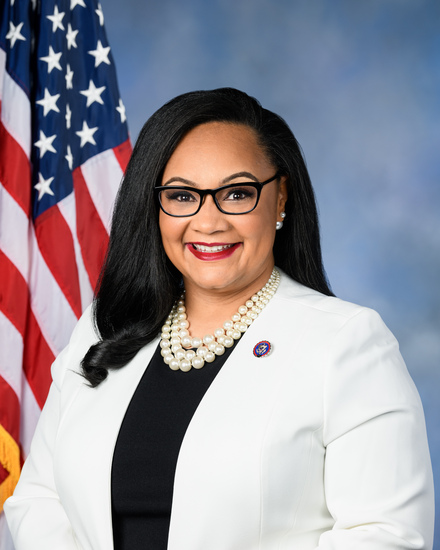
Rep. Nikema Williams
Sponsored bills
Public Transportation Expansion Act This bill authorizes the Department of Housing and Urban Development and the Federal Transit Administration to support access to affordable housing and enhanced mobility for residents in certain disadvantaged communities or low-income riders through grants for construction of new fixed guideway capital projects, construction of zero-emission bus rapid transit projects, or other public transportation projects.
This resolution expresses the sense of the House of Representatives that the United States shall recognize kind actions in our country, encourage kindness, spread love, and foster a culture of being kind to one another.
This resolution celebrates the contributions of small businesses in every U.S. community and supports the designation of National Small Business Week. Further, it supports efforts to provide small businesses with aid and assistance through certain programs and initiatives.
This resolution calls on all Americans to observe the 20th anniversary of the September 11 attacks and honor those who lost their lives.
Working Dog Commemorative Coin Act This bill directs the Department of the Treasury to mint and issue 50,000 $5 gold coins, 500,000 $1 silver coins, and 750,000 half-dollar clad coins in commemoration of the service that working dogs provide to society. The designs of the coins minted under this bill shall be emblematic of the contributions of working dogs to society, including in detection, military service, therapy and assistance. Treasury may issue coins only during the one-year period beginning on January 1, 2023. All sales of coins shall include a surcharge, which shall be paid to America's VetDogs for general expenses associated with the fulfillment of its mission.

This resolution expresses support for robustly funding programs to increase access to affordable housing and address homelessness, including in any infrastructure package housing investments to serve families with the lowest incomes, and expanding renters' rights.
Creating Opportunities in Research for Environmental Justice Act of 2021 or the CORE Justice Act of 2021 This bill allows certain educational institutions a tax credit for up to 30% of amounts paid that are necessary for a qualified environmental justice program. The bill defines qualified environmental justice program as a program conducted by educational institutions that is designed to address, or improve data about, qualified environmental stressors (e.g., contaminations of air, water, soil, or food) for the primary purpose of improving health and economic outcomes of individuals residing in low-income areas or areas at risk of experiencing multiple exposures to environmental stressors. The bill requires (1) the allocation of credit amounts to educational institutions over a five-year period, and (2) public disclosure of the identity of educational institutions receiving allocations and the amount of each allocation.
Improving Medicare Coverage Act This bill temporarily expands eligibility for Medicare. It also temporarily establishes a premium and cost-sharing assistance program for low-income beneficiaries. Specifically, the bill lowers the age of eligibility for Medicare from 65 to 60. The Centers for Medicare & Medicaid Services must establish procedures to provide for automatic enrollment of qualifying individuals. Enrollment must be completed within 11 months of the bill's enactment. The bill also establishes a program under Medicare to assist low-income Medicare beneficiaries with premiums, coinsurance, deductibles, and other costs. Currently, such assistance is provided through Medicare Savings Programs, which are administered by state Medicaid programs. The bill also establishes a related special enrollment period under Medicare, expands eligibility for assistance to beneficiaries with income up to 200% of the federal poverty line, and provides for joint eligibility determinations with respect to the bill's program and the low-income subsidy program under the Medicare prescription drug benefit. The bill's provisions generally take effect six months after the bill's enactment and terminate five years later.
This resolution expresses support for historically Black colleges and universities (HBCUs) and recognizes National HBCU Conference Week.