This resolution recognizes domestic and global progress towards ending the HIV epidemic and calls for additional efforts, with a particular focus on reducing HIV-related vulnerabilities of women and girls.
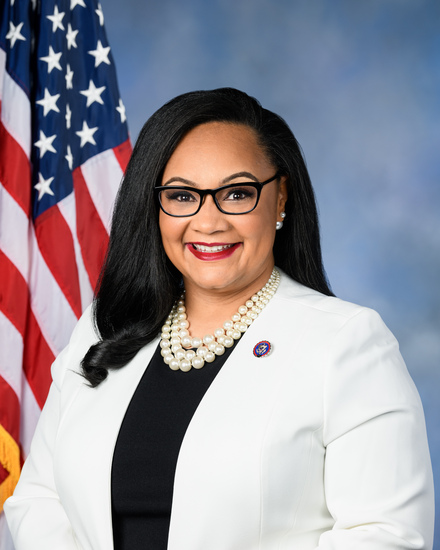
Rep. Nikema Williams
Sponsored bills
Maternal and Child Health Stillbirth Prevention Act of 2022 This bill expands the scope of the Maternal and Child Health Services Block Grant to include research and activities to prevent stillbirths.
Maddy summaryHCONRES 78 is a symbolic congressional resolution designating March 10, 2022, as "Abortion Provider Appreciation Day." It honors abortion providers and clinic staff for their work in delivering compassionate care amid rising threats, harassment, and clinic closures. The resolution recognizes their role in reproductive justice and calls for protecting their safety and patients' access to care. As a non-binding resolution, it does not create new laws but expresses congressional support for providers facing restrictive policies and violence.
This resolution condemns the terrorist attack on Congregation Beth Israel in Colleyville, Texas, on January 15, 2022. It also expresses support for the affected community, commends the actions of law enforcement and emergency responders, and reaffirms a commitment to combat hate, bigotry, anti-Semitism, and violence against Jewish Americans.
Clean Slate through Consolidation Act This bill provides for the removal of any adverse credit history related to a defaulted federal student loan from a borrower's credit history once the borrower has obtained a Federal Direct Consolidation Loan discharging the borrower's liability on the defaulted loan.
Job Protection Act This bill reduces from 12 months to 90 days the employment period required for employees (including federal employees) to become eligible for family and medical leave. Additionally, the bill makes the family and medical leave requirements applicable to all employers (currently, the requirements apply to employers with 50 or more employees).
Ending Forced Arbitration of Sexual Assault and Sexual Harassment Act of 2021 This bill invalidates arbitration agreements that preclude a party from filing a lawsuit in court involving sexual assault or sexual harassment, at the election of the party alleging such conduct.
Maddy summaryHRES 958 is a non-binding House resolution designating March 2022 as National Colorectal Cancer Awareness Month. It supports the goals of raising public awareness about colorectal cancer prevention and screening, encourages Americans to participate in educational activities during March, and aligns with the broader objective of reducing cancer deaths through the Cancer Moonshot initiative. The resolution highlights statistics on colorectal cancer incidence and mortality (e.g., 52,580 estimated deaths in 2022) and emphasizes the importance of early screening, but does not create new laws or alter existing policies. It directly affects the general public by promoting awareness, with no specific groups or entities mandated to take action.
Minorities in Aviation Education Act of 2022 This bill establishes grants for increasing the exposure of students who are underrepresented in aviation to that industry. The Department of Transportation must award the grants to state and local governments or educational agencies.
Women's Health Protection Act of 2021 This bill prohibits governmental restrictions on the provision of, and access to, abortion services. Specifically, governments may not limit a provider's ability to prescribe certain drugs, offer abortion services via telemedicine, or immediately provide abortion services when the provider determines a delay risks the patient's health. Furthermore, governments may not require a provider to perform unnecessary medical procedures, provide medically inaccurate information, comply with credentialing or other conditions that do not apply to providers whose services are medically comparable to abortions, or carry out all services connected to an abortion. In addition, governments may not (1) require patients to make medically unnecessary in-person visits before receiving abortion services or disclose their reasons for obtaining such services, or (2) prohibit abortion services before fetal viability or after fetal viability when a provider determines the pregnancy risks the patient's life or health. The bill also prohibits other governmental measures that are similar to the bill's specified restrictions or that otherwise single out and impede access to abortion services, unless a government demonstrates that the measure significantly advances the safety of abortion services or health of patients and cannot be achieved through less restrictive means. The Department of Justice, individuals, or providers may bring a lawsuit to enforce this bill, and states are not immune from suits for violations. The bill applies to restrictions imposed both prior and subsequent to the bill's enactment.