

Extreme Risk Protection Order Act of 2021 This bill establishes grants to support the implementation of extreme risk protection order laws at the state and local levels, extends federal firearms restrictions to individuals who are subject to extreme risk protection orders, and expands related data collection. Extreme risk protection order laws, or red flag laws, generally allow certain individuals (e.g., law enforcement officers or family members) to petition a court for a temporary order that prohibits an at-risk individual from purchasing and possessing firearms. Among its provisions, the bill directs the Office of Community Oriented Policing Services within the Department of Justice to establish a grant program to help states, local governments, Indian tribes, and other entities implement extreme risk protection order laws; extends federal restrictions on the receipt, possession, shipment, and transportation of firearms and ammunition to individuals who are subject to extreme risk protection orders; and requires the Federal Bureau of Investigation to compile (and later destroy) records from federal, tribal, and state courts and other agencies that identify individuals who are subject to extreme risk protection orders.
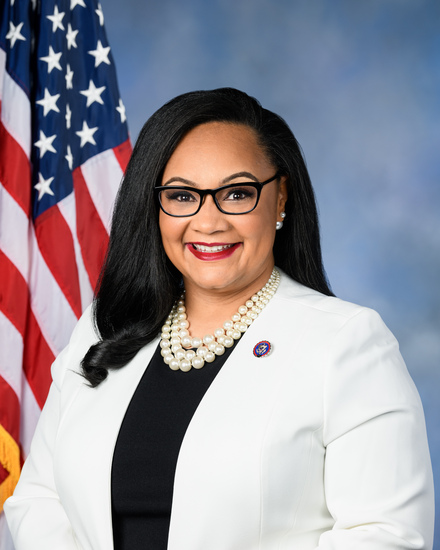
Rep. Nikema Williams
Sponsored bills
Tulsa-Greenwood Massacre Claims Accountability Act of 2021 This bill provides a cause of action for the victims of the 1921 race massacre that occurred in the Greenwood community of Tulsa, Oklahoma. Specifically, any person who acted under color of authority of the State of Oklahoma or the City of Tulsa to deprive a victim, on account of race, of any constitutional right secured to the victim at that time shall be liable to the victim or the victim's beneficiary or heir in a civil action for compensation.
HHS Reproductive and Sexual Health Ombuds Act of 2022 This bill creates a position within the Department of Health and Human Services to support access to reproductive and sexual health services (including services relating to pregnancy and the termination of a pregnancy) that are evidence-based and medically accurate.
Original National Domestic Violence Awareness Month Resolution of 2022 This resolution supports the goals and ideals of National Domestic Violence Awareness Month. Further, it expresses the sense of the House of Representatives that Congress should continue to raise awareness of and support programs to end domestic violence.
Major Richard Star Act This bill provides that combat-disabled uniformed services retirees with fewer than 20 years of creditable service may concurrently receive, without reduction, veterans' disability compensation and retired pay or combat-related special compensation.
This resolution supports the designation of National School Psychology Week and recognizes the contributions of school psychologists to the success of students in schools across the United States.
Reviewing the Effects of Programs, Orders, and Rules with Thorough Study Act or the REPORTS Act This bill requires federal agencies, when publishing notice of a proposed major rule, to include an analysis of the rule's potential impact on low-income individuals and racial inequity. The Government Accountability Office must annually report on the impact of certain programs on low-income individuals and racial inequity.
Global Malnutrition Prevention and Treatment Act of 2021 This act sets out programs and otherwise directs the U.S. Agency for International Development (USAID) to carry out activities to prevent and treat malnutrition globally. Specifically, USAID may leverage resources to address malnutrition through the Global Nutrition Coordination Plan (an interagency effort to strengthen the impact of U.S. investments in nutrition) and its role on the board of directors of the U.S. International Development Finance Corporation. USAID must also select countries based on specified malnutrition-related indicators for purposes of targeting malnutrition prevention and treatment programs and update the selection within five years. Additionally, USAID may establish the Nutrition Leadership Council to coordinate federal government activities to prevent and treat malnutrition; and target resources and nutrition interventions to the populations most susceptible to severe malnutrition and otherwise support efforts to prevent and treat malnutrition globally. The act also requires USAID to provide to Congress an implementation plan and annual reports concerning its programs for treating and preventing malnutrition. The act's provisions terminate seven years after its enactment.
Maddy summaryHRES 1438 is a non-binding House resolution expressing support for Lights On Afterschool, an annual event held on October 20, 2022. It recognizes the value of afterschool programs in providing safe, engaging learning opportunities for children, especially during the pandemic. The resolution highlights how such programs support working families, enhance academic and social development, and strengthen community partnerships. It does not create new policies or affect any specific groups, as it solely serves to publicly endorse this national celebration of afterschool initiatives.
Ralph David Abernathy, Sr. National Historic Site Act This bill establishes the Ralph David Abernathy, Sr. National Historic Site in Georgia as a unit of the National Park System. The site shall preserve, protect, and interpret the area where the Reverend Dr. Abernathy served as pastor during the height of the modern civil rights movement and his role as an internationally recognized civil rights leader.