

Maddy summaryHR 4390, the Housing Navigators Act of 2023, provides $50 million annually (2024-2029) to fund community-based organizations, local governments, or nonprofits to serve as housing navigators. These navigators will directly assist low-income individuals and communities by offering in-person and online education, distributing eligibility information, and helping people enroll in local, state, and federal housing assistance programs. Key provisions require navigators to provide culturally and linguistically appropriate support, avoid conflicts of interest, and ensure information is fair and accurate. The bill establishes federal standards for navigator qualifications and program information to improve access to housing resources.
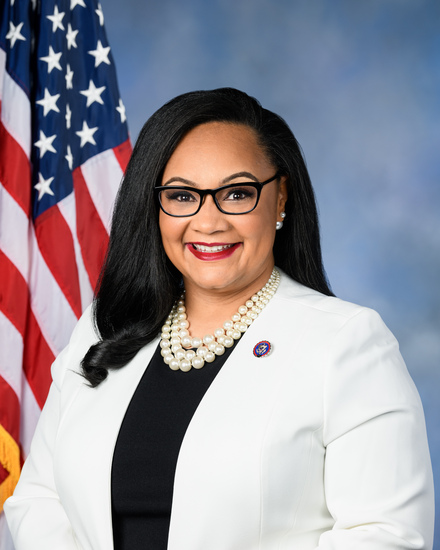
Rep. Nikema Williams
Sponsored bills
Customer Non-Discrimination Act This bill prohibits discrimination based on sex, sexual orientation, and gender identity with respect to public accommodations and facilities. Specifically, the bill defines and includes sex, sexual orientation, and gender identity among the prohibited categories of discrimination or segregation. The bill expands the definition of public accommodations to include places or establishments that provide (1) exhibitions, recreation, exercise, amusement, gatherings, or displays; (2) goods, services, or programs; and (3) transportation services. Protections against discrimination based on race, color, religion, sex, sexual orientation, gender identity, or national origin shall include protections against discrimination based on (1) an association with another person who is a member of such a protected class; or (2) a perception or belief, even if inaccurate, that an individual is a member of such a protected class. The bill prohibits the Religious Freedom Restoration Act of 1993 from providing a claim, defense, or basis for challenging such protections. The bill prohibits an individual from being denied access to a shared facility, including a restroom, a locker room, and a dressing room, that is in accordance with the individual's gender identity. The bill also prohibits the provision of less favorable treatment with respect to pregnancy, childbirth or related medical conditions as compared to other physical conditions.
Maddy summaryThe Project Safe Neighborhoods Reauthorization Act of 2023 extends federal funding for the Project Safe Neighborhoods (PSN) program through fiscal years 2024-2028, replacing its previous authorization period. The bill directly affects state, local, tribal, and federal law enforcement agencies, prosecutors, and community groups that receive PSN grants to reduce violent crime. Key provisions allow grantees to use funds for hiring crime analysts, covering overtime for officers and assistants, purchasing technology for crime reduction, and supporting multi-jurisdictional task forces. It also requires annual reports from the Attorney General detailing fund usage, community outreach, and violent crime statistics (including murder, robbery, and assault) in each program area. The program operates across all 94 U.S. federal judicial districts and territories.
Maddy summaryHRES 551 is a non-binding House resolution (not a bill) introduced in June 2023 that calls for action to address U.S. child poverty. It recommends making permanent the expanded Child Tax Credit (which lifted nearly 3 million children out of poverty in 2021), establishing a federal council to coordinate child-focused policies, and increasing federal investment in children’s programs like early education and nutrition assistance. The resolution highlights that child poverty rebounded sharply after the 2021 tax credit expansion expired, affecting over 4 million children, and emphasizes the need for equitable access to benefits for immigrant families, children in Puerto Rico, and children with disabilities. It does not create new laws but urges Congress and federal agencies to prioritize these policy changes.
Maddy summaryThis bill establishes an Office for Gender Equity within the Department of Education to support schools and institutions in fully implementing Title IX. It provides training, technical assistance, and grants to help educational entities address gender discrimination, with specific focus on students facing multiple forms of discrimination including race, ethnicity, disability, and sexual orientation. The bill authorizes $160 million annually for fiscal years 2024-2028, with at least $140 million dedicated to grant programs for schools to improve gender equity in athletics, academics, and campus safety. The Department must collect data on Title IX coordinators and develop best practices for reducing sex discrimination across all educational levels. The bill does not modify Title IX itself but aims to strengthen its implementation through coordinated support and resources.
Maddy summaryThe Equal Dignity for Married Taxpayers Act of 2023 updates the Internal Revenue Code to use gender-neutral language regarding married couples. It replaces terms like "husband and wife" with "married couple" and "his spouse" with "the individual's spouse" throughout tax code provisions. The bill makes these language changes to ensure the tax code applies equally to all married couples regardless of gender, without altering tax rates, deductions, or other substantive tax policies. This affects all married taxpayers and tax professionals who apply the tax code. The bill is a language update rather than a policy change, making the tax code more inclusive while maintaining existing tax treatment.
Maddy summaryHR 4335, the VA Loan Informed Disclosure Act of 2023, requires mortgage lenders to include specific information about VA home loan programs in standard mortgage disclosures. The bill amends the National Housing Act to mandate that lenders provide details on VA loans (guaranteed under Title 38) alongside other loan options, including assumptions about prevailing interest rates. This change directly affects lenders processing VA-guaranteed mortgages, ensuring borrowers receive clearer comparisons between VA loans and other financing. The law does not require lenders to verify borrower eligibility for VA loans, only to include the specified disclosure language.
Maddy summaryThe PRIDE Act of 2023 amends the Internal Revenue Code to replace gender-specific terms like "husband and wife" with gender-neutral language such as "married couple" or "spouses" across numerous tax code sections. This bill affects all legally married couples who file federal tax returns by updating language in over 30 sections of the tax code related to filing status, deductions, credits, and other tax matters. The bill is a language update that makes the tax code more inclusive without changing existing tax treatment for married couples. It does not alter tax rates, benefits, or policies, but ensures all provisions apply equally regardless of gender.
Maddy summaryHR 4272, the Stop Fentanyl Now Act of 2023, directly affects schools, public health systems, and law enforcement by expanding prevention and response efforts to the fentanyl crisis. The bill requires schools to train staff on carrying and administering naloxone (an opioid overdose reversal drug) and provides grants to states for school-based programs, treatment access, and harm reduction tools like fentanyl test strips. It also increases law enforcement resources to disrupt fentanyl trafficking, including targeting online sales, and removes legal barriers for possessing fentanyl test strips. These provisions aim to reduce overdose deaths by improving education, treatment access, and prevention strategies in communities most impacted by fentanyl-laced pills.
Maddy summaryThis bill reauthorizes the Virginia Graeme Baker Pool and Spa Safety Act by creating a federal grant program to improve swimming pool safety across the United States. The program provides funding to states, Indian Tribes, and qualified nonprofit organizations that have enacted swimming pool safety laws meeting federal standards. Grant recipients must use at least 25% of funds for hiring and training personnel to enforce safety standards and inspect pool drain covers, with the remainder for public education and swimming lessons (limited to 25% of that portion). The bill authorizes $5 million annually from 2024-2028 for these grants and a separate $5 million for public education campaigns, requiring annual reporting on program implementation and effectiveness.