

Maddy summaryThis resolution symbolically recognizes polycystic ovary syndrome (PCOS) as a serious health condition affecting millions of women and girls in the U.S., highlighting its impacts on reproductive, metabolic, and mental health. It designates September as "PCOS Awareness Month" to promote public education, improve diagnosis rates, and support better management of related health issues like diabetes and cardiovascular disease. The resolution urges increased awareness and research but does not create new laws, funding, or programs. It directly affects individuals with PCOS, healthcare providers, and public health efforts focused on the condition.
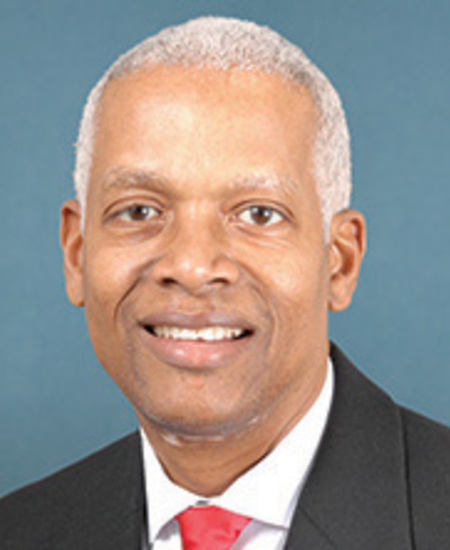
Rep. Henry C. "Hank" Johnson, Jr.
Sponsored bills
Maddy summaryThis symbolic resolution (HRES 172) calls for increased awareness and support for chordoma, a rare bone cancer affecting the skull and spine that impacts over 25,000 people globally and about 300 in the U.S. annually. It urges greater funding for accurate diagnosis, new treatments, faster research-to-treatment pathways, and patient-focused drug development. The resolution does not allocate funds or create new laws but formally expresses the House’s support for addressing chordoma’s challenges. It directly affects chordoma patients, families, and researchers seeking improved care options.
Maddy summaryThe Tribal Climate Health Assurance Act of 2025 establishes the "Climate Ready Tribes Initiative" to help tribal governments, health departments, and communities prepare for climate-related health threats. It requires the CDC, working with the National Indian Health Board, to translate climate science, create planning tools, and share resources for public health preparedness. The bill authorizes $110 million annually starting in fiscal year 2026 specifically for this initiative, with a strict rule that these funds cannot be redirected to other CDC programs. This funding directly supports tribal communities in building capacity to address health risks linked to climate change, such as extreme weather or disease spread.
Maddy summaryThe RESTORE Act establishes a National Freedom Settlements Preservation Program to identify, document, and support communities established by formerly enslaved African Americans after the Civil War, commonly known as Freedmen's Settlements, Freedom Colonies, or Black Towns. The program authorizes $3 million annually for fiscal years 2026-2031 to provide grants for preservation, research, cultural documentation, and educational programming related to these settlements, with projects requiring consent from private property owners. It creates a registry of identified settlements, including examples like Nicodemus, Kansas; Africatown, Alabama; and Freedmen's Town in Houston, and establishes an Advisory Committee composed of community members, descendants, and experts in African-American history. The program requires consultation with local communities, descendants, and experts before providing funding for preservation efforts. This legislation aims to recognize these historically significant communities and provide resources to preserve their history and support their development.
Maddy summaryHR 1715, the Public Health Funding Restoration Act, restores annual funding for the Prevention and Public Health Fund to $2 billion starting in fiscal year 2026. This bill directly affects federal public health programs, including the CDC’s immunization initiatives and state/local health departments, by reversing prior funding cuts. It amends the Affordable Care Act to set the annual funding level at $2 billion, enabling continued support for evidence-based prevention programs like childhood lead poisoning prevention, tobacco cessation, and immunizations. The restored funding aims to maintain existing programs proven to reduce healthcare costs and improve community health outcomes. This change specifically targets the Prevention and Public Health Fund (Section 4002 of the ACA) without creating new programs.
Maddy summaryHR 1718 would establish the Justice Thurgood Marshall National Historic Site at Public School 103 in Baltimore, Maryland - the elementary school attended by Justice Thurgood Marshall - making it an affiliated area of the National Park System. The bill specifies that the Beloved Community Services Corporation, which currently owns and operates the building, will continue as the site's management entity. It requires the National Park Service to provide technical assistance and enter cooperative agreements for interpretation and preservation, but explicitly prohibits federal acquisition of the property or assumption of operational costs. This designation preserves the site for public education about Marshall's early life and legacy without altering ownership or federal financial responsibility.
Maddy summaryThe Pell Grant Sustainability Act (HR 1666) requires the federal government to automatically adjust the maximum Pell Grant amount each year based on inflation, starting with $1,060 for the 2024-2025 academic year. This adjustment uses the Consumer Price Index (CPI) to ensure grants keep pace with rising college costs, directly affecting low-income students who rely on Pell Grants to afford higher education. The bill amends the Higher Education Act to mandate this annual inflation-based increase, rounding the final amount to the nearest $5. It aims to reverse the decades-long decline in grant purchasing power, which covered 80% of college costs in 1974-75 but only 31% by 2022-23.
Maddy summaryThe Keep Americans Safe Act (HR 1674) restricts the sale, transfer, and possession of large capacity ammunition feeding devices (LCFDs) - defined as magazines or similar devices holding more than 15 rounds of ammunition - for most individuals. Exceptions allow law enforcement officers (including campus law enforcement), retired officers, and nuclear security personnel to possess LCFDs under specific conditions. The bill requires new LCFDs to have serial numbers and manufacturing dates, permits federal seizure of violative devices, and authorizes federal grant programs to fund buy-back initiatives for LCFDs. It directly affects gun owners and manufacturers while preserving access for covered law enforcement and security personnel.
Maddy summaryThe BEST Act establishes a federal grant program to help states create or improve Seal of Biliteracy programs for K-12 students. It provides $10 million annually (2025-2029) for states to develop programs recognizing students who demonstrate speaking and writing proficiency in both English and a second language, including Native American languages and American Sign Language. States must ensure equitable access for English learners, students with disabilities, and heritage language learners, and provide free testing for low-income students. The program requires states to award permanent seals or documentation on diplomas/transcripts for qualifying students.
Maddy summaryHR 1699, the TOTAL Care Act, removes referral requirements for obstetrical and gynecological (OB/GYN) care under the TRICARE Prime health plan. It allows female TRICARE Prime beneficiaries to directly choose an OB/GYN provider as their primary care manager, eliminating the need for a prior referral from another provider. The bill establishes a 5-year pilot program to test this change, requiring the Secretary of Defense to report on enrollment shifts, cost impacts, and other outcomes after four years. This directly affects female military family members enrolled in TRICARE Prime who opt into the pilot.