

Maddy summaryThis bill requires U.S. Customs and Border Protection (CBP), U.S. Immigration and Customs Enforcement (ICE), and other deputized immigration officers to visibly identify themselves during enforcement actions. Specifically, it mandates that officers display a 12-inch by 6-inch agency identifier on their uniform front or back, ensuring it remains unobscured by armor or accessories. The requirement applies during all "time of action" activities, such as patrols, raids, arrests, or warrant service. The bill directly affects immigration enforcement personnel by standardizing their visible identification during interactions with the public.
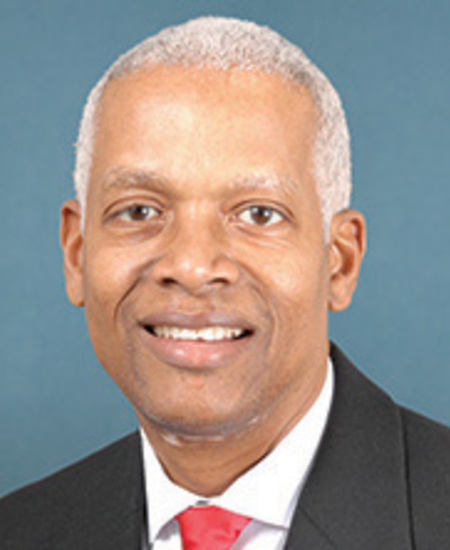
Rep. Henry C. "Hank" Johnson, Jr.
Sponsored bills
Maddy summaryThe TRUST Act prevents complaints against federal judges from being dismissed due to the judge's resignation, retirement, or death. It directly affects judges under investigation and the complaint process by ensuring investigations continue regardless of the judge's status. Key provisions amend Title 28 to require chief judges to maintain complaints (Section 352) and mandate special committees to complete investigations and file reports without interruption (Section 353), even if the judge involved leaves office. These changes apply specifically to complaints filed under Section 351 of the Judicial Code. The bill focuses on procedural continuity, not substantive judicial standards.
Maddy summaryThis bill amends the tax code to limit corporate tax deductions for certain executive compensation. It expands the definition of "covered individual" to include former top executives (like former CEOs or CFOs) who received high pay before 2021, as well as current executives whose compensation was reported to shareholders. The key change prevents companies from deducting excessive pay packages - such as multimillion-dollar bonuses - from taxable income for these covered individuals. The policy applies to publicly traded corporations and takes effect for tax years starting in 2025.
Maddy summaryHRES 366 is a non-binding resolution recognizing the 50th anniversary of the Fall of Saigon on April 30, 1975, known as Black April in Vietnamese history. It honors the Vietnamese American community - now over 2.3 million strong - who resettled in the U.S. after 1975 and have contributed to American society through diverse fields like public service and business. The resolution commemorates the service of U.S. and South Vietnamese military personnel during the Vietnam War and reaffirms U.S. support for democracy and human rights in Vietnam. As a symbolic gesture, it does not create new laws but encourages public observance of this historical event and the community's resilience.
Maddy summaryThis resolution expresses congressional support for designating April 30, 2025, as "National Adult Hepatitis B Vaccination Awareness Day." It highlights that only 30% of U.S. adults are vaccinated against hepatitis B despite the vaccine being 95% effective, and emphasizes the need to increase adult vaccination rates - particularly among high-risk groups like people who inject drugs and communities disproportionately affected by the virus. The resolution encourages adults to get tested and vaccinated, links diagnosed individuals to care, and promotes awareness to reduce hepatitis B-related liver cancer and death. It does not create new laws but aims to raise public and provider awareness about existing vaccination recommendations.
Maddy summaryHR 3112, the Better CARE for Animals Act of 2025, strengthens enforcement of the federal Animal Welfare Act by requiring dealers and exhibitors to hold valid licenses for animal sales or transport (Section 4). It expands enforcement authority by allowing the Attorney General to sue violators for up to $10,000 per day, seize animals, and seek injunctions (Section 20), while clarifying that courts can address violations of related rules and regulations. The bill directly affects animal dealers, exhibitors, the USDA, and the Department of Justice, creating clearer pathways for holding violators accountable. Key provisions include updating definitions, broadening inspection powers to cover all regulations, and directing penalty funds toward temporary animal care costs during legal proceedings.
Maddy summaryHR 3128, the Improving Diaper Affordability Act of 2025, makes diapers eligible as qualified medical expenses under tax-advantaged health accounts (like HSAs and health flexible spending arrangements) and prohibits states or localities from imposing sales taxes on diaper purchases. This directly affects families with young children - particularly low-income households, where 46% report struggling to afford diapers - who currently spend hundreds annually on diapers. The bill changes existing tax rules so families can use pre-tax dollars from health savings accounts to cover diaper costs, and bans sales taxes on diaper purchases starting in 2025. It does not create new government assistance programs but adjusts tax treatment to reduce out-of-pocket costs for diapers.
Assault Weapons Ban of 2025 This bill makes it a crime to knowingly import, sell, manufacture, transfer, or possess a semiautomatic assault weapon (SAW) or large capacity ammunition feeding device (LCAFD). The prohibition does not apply to a firearm that is (1) manually operated by bolt, pump, lever, or slide action, except for certain shotguns; (2) permanently inoperable; (3) an antique; (4) only capable of firing rimfire ammunition; or (5) a rifle or shotgun specifically identified by make and model. The bill also exempts from the prohibition the following, with respect to a SAW or LCAFD: importation, sale, manufacture, transfer, or possession related to certain law enforcement efforts, or authorized tests or experiments; importation, sale, transfer, or possession related to securing nuclear materials; and possession by a retired law enforcement officer. The bill permits continued possession, sale, or transfer of a grandfathered SAW, which must be securely stored. A licensed gun dealer must conduct a background check prior to the sale or transfer of a grandfathered SAW between private parties. The bill permits continued possession of, but prohibits sale or transfer of, a grandfathered LCAFD. Newly manufactured LCAFDs must display serial number identification. Newly manufactured SAWs and LCAFDs must display the date of manufacture. The bill also allows a state or local government to use Edward Byrne Memorial Justice Assistance Grant Program funds to compensate individuals who surrender a SAW or LCAFD under a buy-back program.
Fairness to Freedom Act of 2025 This bill establishes a right to legal representation in certain immigration proceedings (e.g., removal and immigration bond hearings) at the government's expense for individuals who cannot afford representation. The bill also establishes various entities to facilitate such legal representation. Currently, individuals in these immigration proceedings may be represented by counsel but not at government expense. The bill addresses various issues related to such legal representation, including (1) the scope of the representation, (2) criteria for determining whether the individual is financially unable to afford representation, and (3) requirements relating to allowing the individual to meet with their lawyer and receiving relevant documents. Immigration proceedings may not commence until counsel has been appointed. The bill also establishes the Office of Immigration Representation to ensure that qualified individuals who cannot afford legal representation receive the representation as required by this bill. The office's duties shall include establishing (1) administrative regions throughout the United States, and (2) a local immigration representation board for each region. The local boards must, subject to the office's approval, develop and implement plans for providing legal representation under this bill. To provide such legal representation, the local boards may (1) establish one or more immigrant public defender organizations, (2) contract with existing community defender organizations, and (3) establish a panel attorney system. The bill establishes minimum funding requirements for the office.
Maddy summaryHR 3124 establishes a National Science Foundation grant program to increase participation of women, underrepresented minorities (including Black, Hispanic, Native American, Pacific Islander, and Asian subgroups), LGBTQ+ individuals, and people with disabilities in STEM fields. The bill authorizes $15 million annually for grants to organizations that implement activities like mentoring programs, STEM internships, online workshops, and outreach to K-12 students. These grants specifically target efforts to improve recruitment, retention, and workforce representation for groups facing documented underrepresentation in STEM education and careers. The program directly affects educational institutions, nonprofits, and community organizations working to support these underrepresented groups through evidence-based initiatives.