

Maddy summaryThe Shadow Docket Sunlight Act of 2025 requires the U.S. Supreme Court to publish written explanations and disclose individual justice votes when issuing orders related to preliminary injunctions or stays of such injunctions. It mandates that these explanations evaluate specific legal criteria, such as the likelihood of success on the merits and public interest, for both granting/denying injunctions and granting/denying stays. The law applies to cases within the Court’s appellate jurisdiction (excluding purely administrative orders) and directs the Federal Judicial Center to report annually on compliance. This bill directly affects the Supreme Court’s decision-making process for emergency relief cases, aiming to increase transparency without altering legal standards or jurisdiction.
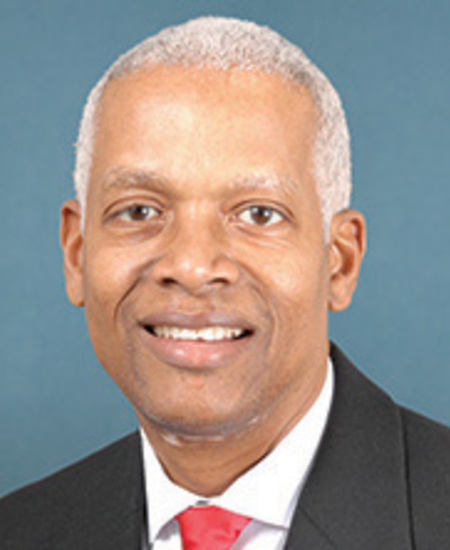
Rep. Henry C. "Hank" Johnson, Jr.
Sponsored bills
Maddy summaryThe Fair Competition for Small Business Act of 2025 amends the Clayton Act to allow legal claims for violations of the Sherman Antitrust Act or for violations of the bill's own section (section 2). This technical change would directly affect small businesses and other entities involved in antitrust litigation by expanding the grounds for lawsuits under the Clayton Act. The key mechanism is a modification to the Clayton Act that references the bill's provisions, creating a new basis for claims. The bill does not specify additional substantive rules beyond this amendment.
Maddy summaryHR 6767, the Health Equity and MENA Community Inclusion Act of 2025, amends federal health law to include Middle Eastern and North African (MENA) populations - such as Lebanese, Iranian, Egyptian, and Palestinian communities - within the definition of "racial and ethnic minority groups." This change directly affects approximately 3.5 million MENA individuals in the U.S., who have historically been excluded from federal health programs like the Office of Minority Health (OMH) due to data classification. The bill mandates the Department of Health and Human Services (HHS) to conduct a comprehensive health study, breaking down data by specific MENA subgroups to analyze disparities in areas like chronic disease, mental health, maternal outcomes, and access to care. HHS must also establish privacy safeguards for study participants and publish findings via a public online portal, enabling targeted health initiatives for MENA communities.
Maddy summaryThe ARMAS Act of 2025 transfers control of certain firearms export regulations from the Department of Commerce to the Department of State to better regulate exports to Mexico, Central America, and the Caribbean. It designates specific countries (including Mexico, Guatemala, Honduras, and El Salvador) as "covered countries" requiring stricter export oversight, including mandatory annual reports on firearms exports and end-use monitoring to prevent diversion to criminal groups. The bill requires the Department of State to develop a strategy to disrupt illegal firearm trafficking, including increased participation in the eTrace program for tracking U.S.-sourced firearms and improved data sharing with foreign governments. Based on findings that U.S.-sourced firearms are commonly used in crimes in these regions, the act aims to reduce the flow of weapons that fuel violence and crime.
Maddy summaryThis bill establishes a Diversity and Inclusion Administrator at the Department of Labor to increase African American participation in apprenticeships. It requires all new and renewing registered apprenticeship programs to submit plans boosting African American enrollment and creates competitive grants for programs targeting underserved communities in fields like construction, healthcare, and tech. The grants fund outreach, mentoring, and support services to help African American youth access and complete apprenticeships. The bill directly affects African American young people and apprenticeship programs nationwide, with $2 million authorized for fiscal year 2026.
Maddy summaryThe Protect America's Workforce Act cancels an executive order issued on March 27, 2025, that excluded certain groups from federal labor-management relations programs, making it legally unenforceable. It also ensures that all collective bargaining agreements between federal agencies and labor unions, which were active as of March 26, 2025, remain fully effective until their agreed terms expire. This directly affects federal agencies, labor unions, and the employees covered by these agreements. The bill prevents federal funds from being used to implement the canceled executive order while preserving existing labor agreements.
Miracle on Ice Congressional Gold Medal Act This act provides for the award of Congressional Gold Medals to the members of the 1980 U.S. Olympic men's ice hockey team in recognition of the team's achievement at the 1980 Winter Olympic Games.
Maddy summaryHRES 948 is a commemorative resolution honoring the 50th anniversary of Southeast Asian refugee resettlement in the United States, directly affecting over 3 million Southeast Asian Americans. It recognizes their contributions to U.S. society, including military service during the Vietnam War era and ongoing cultural, economic, and social impacts. The resolution specifically commemorates key historical milestones (like the fall of Saigon and Khmer Rouge genocide) and acknowledges challenges these communities continue to face, such as health disparities and language barriers. It does not create new policies but affirms the nation's commitment to supporting refugees and immigrants. The resolution was introduced by Representatives Tran, Meng, Barragán, and others in December 2025.
Maddy summaryThis bill amends the Higher Education Act to extend the loan limits for graduate and professional students indefinitely. It removes the previous expiration date (June 30, 2026) for these limits, meaning graduate and professional students will continue to have access to the same federal loan amounts without a set end date. The key change modifies Section 455(a) by eliminating the sunset provision and updating the effective date language in the law. This directly affects students pursuing advanced degrees who rely on federal loans for tuition and living expenses. The bill makes a technical adjustment to existing student loan policy without creating new benefits or altering eligibility criteria.
Maddy summaryHR 6678, the Senior Legal Hotline Act of 2025, authorizes $10 million annually (2027-2031) to fund competitive grants for nonprofits or government partnerships to establish or operate statewide legal hotlines serving older adults. The hotlines must provide free, phone-based legal counseling, referrals, and advocacy on civil issues to seniors with the greatest economic or social need, coordinating with existing legal aid providers across each state. Grantees must contribute 25% of costs from non-Federal funds and ensure staff/volunteers have no conflicts of interest. This bill directly affects older individuals facing legal barriers they cannot afford to resolve, expanding access to free legal assistance through a coordinated state network.