

Maddy summaryThis bill creates new funding eligibility for Historically Black Colleges and Universities (HBCUs) and Predominantly Black Institutions (PBIs) that offer approved master's degree programs. It amends existing law to add specific categories (subsections S for HBCUs and F for PBIs) allowing these institutions to access federal funds previously restricted to certain program types. The key mechanism expands funding access by adjusting how remaining funds are allocated after initial disbursements. Directly affects qualifying HBCUs and PBIs meeting both the institution type and master's program criteria.
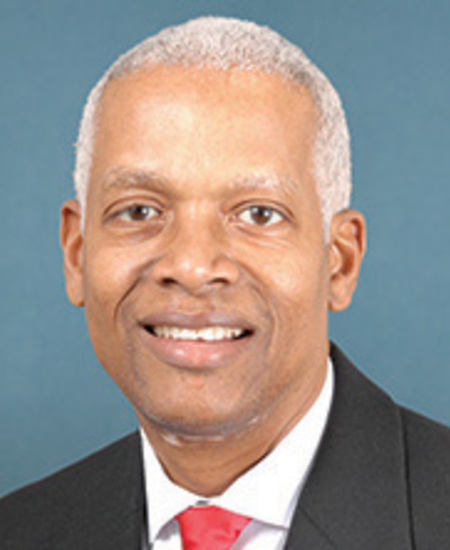
Rep. Henry C. "Hank" Johnson, Jr.
Sponsored bills
Maddy summaryHR 7345 directs the Congressional Budget Office (CBO) to study the long-term economic effects of immigration policies implemented beginning January 20, 2025. The CBO must assess impacts across specific sectors (like healthcare, agriculture, STEM fields), public safety concerns, demographic shifts, small business effects, and tax revenue at federal, state, and local levels. Federal agencies - including Homeland Security, the Bureau of Labor Statistics, and the IRS - must provide requested data to support this study. The report must be completed within 180 days of the bill’s enactment or by the end of the current congressional session, whichever comes first. This is a procedural study bill, not a policy change.
Maddy summaryThe Rebuild America's Schools Act of 2026 authorizes $20 billion annually from 2027 to 2031 to improve public school facilities nationwide. The bill provides grants to states to fund school construction, renovation, and modernization projects that focus on safety, energy efficiency, and accessibility, with priority given to schools serving high percentages of students eligible for free or reduced-price lunch. Funds cannot be used for routine maintenance, athletic facilities, or vehicles, and must meet specific environmental, safety, and energy efficiency standards. The bill also includes specific provisions for repairing school foundations affected by pyrrhotite, a mineral that causes concrete deterioration, and requires use of American-made materials for construction projects.
Maddy summaryHR 7346, the Drain ICE Act of 2026, repeals specific funding provisions (sections 90003 and 100052) from the "One Big Beautiful Bill Act" and cancels all unspent funds allocated under those sections. This bill directly affects ICE’s detention budget by removing existing financial authority for detention operations. It does not change immigration enforcement practices or directly impact individuals; it solely modifies budgetary allocations. The bill focuses on eliminating funding mechanisms, not on policy changes for migrants or enforcement. (Procedural bill; summary limited to 2 sentences as specified.)
Maddy summaryThis bill permanently authorizes a grant program under the U.S. Housing Act of 1937 to help public housing agencies improve safety and security in federally assisted housing for low-income residents. It provides funding for specific items like security cameras, fencing, carbon monoxide detectors, smoke alarms, and heating systems to address threats from crime, drug activity, and health hazards like extreme temperatures. Public housing agencies can apply for grants up to $250,000 per year (with higher limits for larger agencies), supported by $225 million annually in dedicated funding. The change replaces a temporary program, ensuring consistent resources for critical safety upgrades in public housing communities.
Maddy summaryHR 7335 establishes comprehensive humanitarian standards for individuals held in U.S. Immigration and Customs Enforcement (ICE) and U.S. Customs and Border Protection (CBP) custody. The bill requires facilities to provide immediate health screenings within 12 hours (6 hours for high-risk individuals like children, pregnant people, or those with medical conditions), ensure access to adequate water, sanitation, food (with 2,000+ calories daily for adults), and age-appropriate shelter. It mandates specific facility standards including separate housing for males and females, accessible accommodations for people with disabilities, daily outdoor access for those detained over 48 hours, and proper medical equipment and personnel on-site. The bill also requires regular inspections, staff training on humanitarian protocols, and public reporting of sexual abuse complaints. These standards directly affect all individuals detained by ICE or CBP, with special protections for vulnerable groups like children, pregnant people, and those with medical needs.
Maddy summaryHR 7265, the Vote by Mail Tracking Act, requires all government entities sending mail-in ballots for federal elections to use a standardized Postal Service barcode on ballot envelopes. This barcode enables tracking of each individual ballot, while also mandating specific envelope designs and machineability standards set by the Postal Service. The bill applies to all mail-in ballots for federal office elections starting in 2026, but excludes Federal write-in absentee ballots under the Uniformed and Overseas Citizens Absentee Voting Act. The Postmaster General must provide compliance guidance to government entities by June each year to implement the tracking system.
Maddy summaryThe Family Violence Prevention and Services Improvement Act of 2026 amends federal law to enhance support for victims of family violence, domestic violence, and dating violence. The bill authorizes $270 million annually for fiscal years 2027-2031 to fund state, tribal, and community programs, with specific funding reserved for tribal programs (12.5%), national hotlines ($20.5 million for general hotline, $4 million for Indian hotline), and services for underserved populations. It requires grantees to provide trauma-informed, culturally appropriate services while prohibiting discrimination and protecting victim confidentiality, and mandates accessibility for people with disabilities and limited English proficiency. The bill also establishes new technical assistance centers, Tribal resource centers, and community-based prevention programs to address the needs of underserved populations including Native Hawaiians, Alaska Natives, and racial and ethnic minorities.
Maddy summaryHR 658 amends veterans' healthcare law to set specific qualifications for marriage and family therapists working in the Veterans Health Administration who provide clinical supervision. It requires therapists to meet existing qualifications (subparagraph A) and either hold state authorization for clinical supervision in their state or be designated as an approved supervisor by the American Association for Marriage and Family Therapy (AAMFT). This directly affects therapists seeking VA appointments who wish to supervise other clinicians. The bill creates two clear pathways for eligibility, replacing previous unspecified requirements. The change applies only to VA healthcare settings, not private practice.
Maddy summaryHR 7281, the Justice for Shireen Act, requires the FBI and State Department to submit a public report within 30 days of enactment. The report must identify those responsible for journalist Shireen Abu Akleh’s death, detail any U.S. defense materials, funds, or services involved, and include relevant unredacted documents. It mandates the report be unclassified and published online simultaneously for public access. This bill directly affects federal agencies by imposing specific reporting obligations, with no direct impact on citizens or changes to existing laws. The focus is solely on documenting the circumstances of Abu Akleh’s death through a mandated government review.