

Housing is a Human Right Act of 2021 This bill establishes and expands programs to assist homeless and housing-unstable individuals and establishes new real property-related taxes to fund specified Department of Housing and Urban Development (HUD) programs. HUD must establish the Community Development Block Grant Plus Program for state and local governments to assist homeless and housing-unstable individuals as well as cost-burdened households. These funds may be used only for certain activities that assist these populations, including the construction of new affordable housing. The bill also establishes other grant programs to assist these individuals, such as by facilitating access to voting and libraries. Governmental entities may not receive assistance under the bill unless they have, or are working to implement, policies that (1) do not criminally punish homeless individuals for sleeping outside or on public property, and (2) comply with constitutional protections for these individuals' property. In addition, the bill establishes taxes on (1) the sale or exchange of real property of at least $10 million, (2) the sale or exchange of real property involving an anonymous entity, and (3) rent received by landlords that own large amounts of dwelling units. The revenue from these taxes must be credited to various HUD programs in specified percentages. The Government Accountability Office must study (1) the allocation formula for Emergency Food and Shelter grants, (2) recipient compliance with various grant program guidelines, and (3) barriers related to access to essential documents that homeless and housing-unstable individuals face.
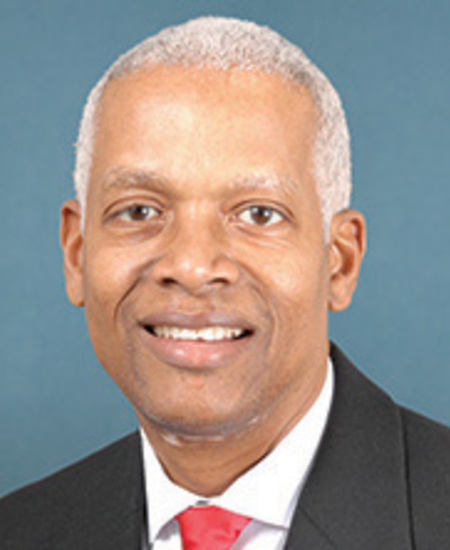
Rep. Henry C. "Hank" Johnson, Jr.
Sponsored bills
Neighbors Not Enemies Act of 2021 This bill repeals provisions authorizing the President to apprehend and remove from the United States the citizens of a particular nation, if the United States has declared war against that nation or that nation has threatened an invasion against the United States.
Keeping Our Promise Act This bill authorizes issuing visas to certain individuals who were previously refused a diversity immigrant visa or admission into the United States because of certain executive orders or the COVID-19 public health emergency. (Diversity immigrant visas are available to eligible immigrants from countries with relatively low rates of immigration to the United States.) Specifically, this bill applies to individuals who were refused such a visa solely due to certain executive orders from 2017 to 2020, including orders which suspended the entry of individuals from certain countries. The bill also applies to diversity visa applicants who, because of the COVID-19 emergency, were (1) unable to receive a visa interview despite requesting one, or (2) unable to be admitted into the United States despite being approved for a visa. The Department of State must notify each individual covered under this bill of the individual's visa eligibility. To retain eligibility, an individual must respond to the State Department's notice within one year of the notice. An individual may also lose eligibility if the State Department determines that the applicant fails to meet certain requirements. The bill also relaxes certain annual numerical limits for individuals obtaining a visa under this bill. An individual who was a child when initially selected for a visa shall be treated as a child for the purposes of a visa application under this bill.
Afghan Allies Protection Act of 2021 This bill provides for 4,000 additional special immigrant visas to qualified nationals of Afghanistan who were employed by or on behalf of the United States or the International Security Assistance Force after October 6, 2001. The visa allotment, in addition to any unused allocations of such special immigrant visas since FY2015, shall be available beginning FY2021, and unused visas shall carry over to subsequent fiscal years until exhausted.
Conrad State 30 and Physician Access Reauthorization Act This bill modifies the Conrad 30 Waiver program, which incentivizes qualified foreign physicians to serve in underserved communities. It also extends statutory authority for the program for three years from this bill's enactment. Aliens coming to the United States under a J-1 nonimmigrant visa to receive medical training typically must leave the country and reside for two years abroad before being eligible to apply for an immigrant visa or permanent residence. The Conrad program waives this requirement for individuals who meet certain qualifications, including serving for a number of years at a health care facility in an underserved area. The bill increases the number of waivers that a state may obtain each fiscal year from 30 to 35 if a certain number of waivers were used the previous year, and provides for further adjustments depending on demand. An alien physician may be employed at an academic medical center to meet the Conrad program's employment requirements if the alien's work is in the public interest, even if the medical center is not in an underserved area. Employment contracts for alien physicians under the Conrad program shall contain certain information, such as the maximum number of on-call hours per week the physician shall have to work. Certain alien physicians (along with the physician's spouse and children) shall be exempt from the direct annual numerical limits on immigration, including those physicians that have met certain requirements related to visas for physicians to serve in underserved areas.
Extreme Risk Protection Order Act of 2021 This bill establishes grants to support the implementation of extreme risk protection order laws at the state and local levels, extends federal firearms restrictions to individuals who are subject to extreme risk protection orders, and expands related data collection. Extreme risk protection order laws, or red flag laws, generally allow certain individuals (e.g., law enforcement officers or family members) to petition a court for a temporary order that prohibits an at-risk individual from purchasing and possessing firearms. Among its provisions, the bill directs the Office of Community Oriented Policing Services within the Department of Justice to establish a grant program to help states, local governments, Indian tribes, and other entities implement extreme risk protection order laws; extends federal restrictions on the receipt, possession, shipment, and transportation of firearms and ammunition to individuals who are subject to extreme risk protection orders; and requires the Federal Bureau of Investigation to compile (and later destroy) records from federal, tribal, and state courts and other agencies that identify individuals who are subject to extreme risk protection orders.
Tulsa-Greenwood Massacre Claims Accountability Act of 2021 This bill provides a cause of action for the victims of the 1921 race massacre that occurred in the Greenwood community of Tulsa, Oklahoma. Specifically, any person who acted under color of authority of the State of Oklahoma or the City of Tulsa to deprive a victim, on account of race, of any constitutional right secured to the victim at that time shall be liable to the victim or the victim's beneficiary or heir in a civil action for compensation.
Stopping Harmful Offers on Platforms by Screening Against Fakes in E-commerce Act of 2021 or SHOP SAFE Act of 2021 This bill makes an electronic commerce platform liable for infringement of a registered trademark by a third-party seller of goods that implicate health and safety unless the platform takes certain actions. Specifically, the platform may be contributorily liable if the seller uses a counterfeit mark in connection with selling, offering, or advertising such goods on the platform. The platform may avoid such liability by taking certain actions before the infringing act, including (1) requiring the seller to have a registered agent or a verified address for service of process in the United States, (2) verifying the seller's identity and contact information, (3) requiring the seller to agree to not use counterfeit marks with goods sold on the platform, (4) implementing technical measures to prescreen listings on the platform and remove listings for goods being sold with a counterfeit mark, and (5) implementing policies to remove and ban repeat offenders.
Original National Domestic Violence Awareness Month Resolution of 2022 This resolution supports the goals and ideals of National Domestic Violence Awareness Month. Further, it expresses the sense of the House of Representatives that Congress should continue to raise awareness of and support programs to end domestic violence.
Major Richard Star Act This bill provides that combat-disabled uniformed services retirees with fewer than 20 years of creditable service may concurrently receive, without reduction, veterans' disability compensation and retired pay or combat-related special compensation.