Election Mail Act This bill addresses the delivery and processing of election mail. Among other provisions, the bill requires same-day processing of mail-in ballots by the U.S. Postal Service, establishes certain standards for mail-in ballots, and requires states to count mail-in ballots that are postmarked by election day and arrive within seven days after the election.
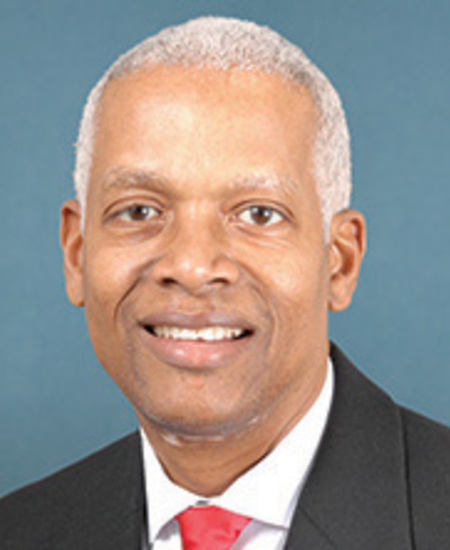
Rep. Henry C. "Hank" Johnson, Jr.
Sponsored bills
This resolution recognizes the anniversaries of the International Day of Peace, Human Solidarity Day, the International Day of Living Together in Peace, and other specified international days. The resolution also expresses that Congress commits to (1) encouraging the people of the United States to continue commemorating international days of peace, coexistence, and cooperation; and (2) supporting activities on such days that promote thoughtful, deliberative, and cooperative actions to achieve peace.
READ Act Reauthorization Act of 2022 This bill reauthorizes a law that requires the implementation of a strategy to promote quality basic education in partner countries by (1) expanding access to basic education for all children, particularly marginalized children and vulnerable groups; and (2) improving the quality of basic education and learning outcomes.
Truth and Healing Commission on Indian Boarding School Policies Act This bill establishes the Truth and Healing Commission on Indian Boarding School Policies in the United States and sets forth its powers, duties, and membership. Among other duties, the commission must investigate the impacts and ongoing effects of the Indian Boarding School Policies (federal policies under which American Indian, Alaska Native, and Native Hawaiian children were forcibly removed from their family homes and placed in boarding schools). Further, the commission must develop recommendations on ways to (1) protect unmarked graves and accompanying land protections; (2) support repatriation and identify the tribal nations from which children were taken; and (3) discontinue the removal of American Indian, Alaska Native, and Native Hawaiian children from their families and tribal communities by state social service departments, foster care agencies, and adoption agencies.
Pregnant Women in Custody Act This bill establishes requirements to address the health needs of incarcerated women related to pregnancy and childbirth. The bill requires the Bureau of Justice Statistics to collect data on the health needs of incarcerated pregnant women at the federal, state, tribal, and local levels. With respect to incarcerated women at the federal level, the bill requires the Bureau of Prisons (BOP) to provide appropriate services and programs to address the health and safety needs related to pregnancy and childbirth, as well as appropriate health care to a woman with a high-risk pregnancy; limits the use of restrictive housing for prisoners who are pregnant or in postpartum recovery; and requires the BOP to report annually on the number of administrative claims and appeals filed by pregnant inmates. With respect to incarcerated women at the state and local levels, the bill requires the Government Accountability Office to study the services and protections for pregnant incarcerated women in state and local correctional settings.
Stop Corporate Capture Act This bill modifies the process for federal agency rulemaking. Specifically, it (1) requires interested parties who submit a study or research as part of a comment to a proposed rule to disclose the source of the funding for the study or research, (2) limits the use of the negotiated rulemaking process to government agencies, (3) provides statutory authority for the judicial principle that requires courts to defer to an agency's reasonable or permissible interpretation of a federal law when the law is silent or ambiguous (i.e., the Chevron doctrine), and (4) establishes an Office of the Public Advocate to support public participation in the rulemaking process.
Designates the facility of the United States Postal Service located at 151 Highway 74 South in Peachtree City, Georgia, as the "SFC Shawn McCloskey Post Office."
Food Deserts Act This bill establishes a Department of Agriculture program to provide grants to states for revolving funds to support the establishment and operation of grocery stores in underserved communities. An underserved community is a community that has (1) limited access to affordable, healthy foods, including fresh fruits and vegetables, in grocery retail stores or farmer-to-consumer direct markets; and (2) a high rate of hunger or food insecurity or a high poverty rate. States must use the funds to make loans to support grocery stores in underserved communities, including for opening a store (excluding new construction), or supporting or purchasing an existing store. States may only make loans for grocery stores that meet requirements related to emphasizing unprocessed, healthful foods; providing staple foods and a variety of raw fruits and vegetables; having a plan to keep the foods in stock; charging affordable prices at or below market averages; meeting specified matching requirements using nonfederal funds; and being qualified to operate a store or having partnerships with organizations that provide technical assistance. States must prioritize loan applications from entities that meet criteria related to hiring workers from the underserved community, providing classes or educational information about a healthful diet, sourcing food from local urban farms and gardens, or demonstrating existing supply chain relationships or expertise in the grocery industry.

This bill modifies requirements relating to opportunity zone investment (i.e., investment in economically distressed areas) to require its funds to meet specified investment advisory board, diversity, and affordable housing requirements. It also requires that at least 5% of a fund's qualified opportunity zone property is controlled-environment agriculture property.
Lymphedema Treatment Act This bill provides for Medicare coverage of lymphedema compression treatment items. Specifically, the bill provides for coverage of standard and custom fitted gradient compression garments and other approved items that are prescribed by a physician or other specified health care professional to treat lymphedema.