

Minorities in Aviation Education Act of 2023 This bill establishes grants for increasing the exposure and access of students to the aviation industry, with a particular focus on women and minorities. Specifically, the Department of Transportation (DOT) must establish the Bessie Coleman Aviation Education Program to award the grants to state and local governments or educational agencies for activities that increase exposure and access to aviation-related education and jobs, such as programs to increase the recruitment and retention of underrepresented minorities in aviation degree programs. DOT must prioritize grant applicants that propose to use the funds to encourage the participation of women, minorities, and individuals in rural and urban areas in the aviation industry.
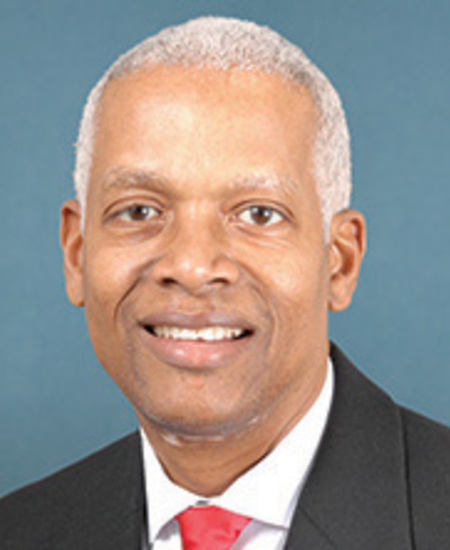
Rep. Henry C. "Hank" Johnson, Jr.
Sponsored bills
Maddy summaryHCONRES 31 is a congressional resolution that commends environmental defenders worldwide and condemns violence against them. It directs U.S. agencies to create a dedicated State Department position on environmental defenders, integrate their protection into climate programs, and use diplomatic pressure on countries targeting activists. The resolution also urges U.S. companies and financial institutions to respect defenders' rights in sectors like mining and energy. As a symbolic policy directive - not a new law - it focuses on shifting U.S. government actions to support global environmental defenders.
Maddy summaryHCONRES 32 is a symbolic resolution supporting International Transgender Day of Visibility, introduced in the U.S. House of Representatives on March 30, 2023. It encourages Americans to observe the day through ceremonies and activities, celebrates transgender achievements, and recognizes the community's fight for dignity amid ongoing discrimination and anti-trans legislation. The resolution does not create new laws or policies - it is a non-binding statement of support, referencing over 700 anti-trans bills introduced in 2021-2023 that target education, healthcare, and identity documents. It directly acknowledges transgender individuals and their contributions without altering any legal rights or obligations.
Maddy summaryHR 2403, the Enhanced Background Checks Act of 2023, modifies federal firearm background check procedures to address delays. It requires firearm licensees to wait at least 10 business days after a prospective buyer submits a petition verifying they are not prohibited from owning firearms before completing a sale, if the background check system hasn't cleared the transaction. The bill also mandates the Attorney General to create an electronic petition form, provide timely responses to petitions, and track delays. Additionally, it requires multiple reports analyzing implementation, transaction delays, denial reasons by state, and potential impacts on domestic violence victim safety, with the first report due within 150 days of enactment.
Maddy summaryThe International Human Rights Defense Act of 2023 creates a permanent Special Envoy at the State Department to coordinate U.S. efforts against discrimination and violence targeting LGBTQI+ people globally. The bill requires the development of an annual global strategy to address criminalization, discrimination, and violence based on sexual orientation, gender identity, or sex characteristics. It also mandates that U.S. country reports on human rights practices include detailed information about laws and practices affecting LGBTQI+ communities. The legislation authorizes U.S. foreign assistance programs to support LGBTQI+ rights through health services, legal protections, and community capacity building. This bill aims to strengthen U.S. diplomatic engagement on LGBTQI+ rights as part of broader human rights policy.
New Way Forward Act This bill makes changes to immigration enforcement, including ending mandatory detention in certain cases. The Department of Homeland Security (DHS) may not enter into or extend any contract with any for-profit entity to own or operate a detention facility. The bill provides for various protections related to detaining non-U.S. nationals ( aliens under federal law), such as (1) requiring DHS to make an initial custody determination and establish probable cause within 48 hours of taking an individual into custody, (2) establishing in hearings related to such determinations a presumption that the individual be released, and (3) requiring immigration judges to impose the least restrictive detention conditions necessary. A DHS officer may not interrogate an individual as to immigration status based on factors such as the individual's race, religion, or spoken language. The bill removes mandatory detention requirements for certain individuals, such as asylum seekers with a credible fear of persecution. Certain individuals who were previously admitted into the United States may be removed only if removal proceedings commenced within five years of the individual becoming deportable or inadmissible. The bill also removes certain crime-related grounds of inadmissibility and deportability. The bill gives immigration judges discretion to provide relief from removal if the removal is not based on certain crime-related grounds. State or local officers are prohibited from performing certain immigration enforcement functions. The National Crime Information Center database may not contain an individual's immigration information. The bill repeals criminal penalties for improper entry or reentry into the United States.
This resolution encourages the African Union (AU) and its member countries to prioritize economic and political reforms that uphold human rights, combat corruption, create an enabling climate for private sector investment, and promote transparent and accountable governance. The resolution also calls on the U.S. President and Secretary of State to carry out initiatives that bolster trade, elevate diplomatic engagement, combat food insecurity, and promote peace in Africa. (AU is a multilateral organization consisting of 55 member states of the African continent.)
Protect Our Workers from Exploitation and Retaliation Act or the POWER Act This bill expands protections for non-U.S. nationals ( aliens under federal law) who are victims of crimes or serious workplace violations. U visas (nonimmigrant visas for certain crime victims) shall be available to individuals who have suffered substantial harm related to workplace claims. The Department of Homeland Security (DHS) may allow a non-U.S. national to work and temporarily remain in the United States if the individual (1) has filed for a U visa or T visa (nonimmigrant visas for victims of human trafficking), or (2) has filed or is a material witness to a workplace claim or civil claim arising from criminal activity and is helpful to authorities investigating the claim. The bill removes direct numerical limitations on U visas. A notice to an individual to appear at removal proceedings must contain specified certifications, if the individual was taken (1) at a facility where a workplace claim has been filed, or (2) as a result of information provided in retaliation against individuals exercising their legal rights. Specifically, the notice must state that (1) an adverse immigration determination may not be based solely on information furnished by the party engaged in the unlawful activity, and (2) the individual's information may not be disclosed. Such an individual may not be removed until law enforcement has had a chance to interview the individual. Removal proceedings against an individual who has filed or is a witness to a workplace claim must be stayed until the resolution of the claim, with limited exceptions.
Maddy summaryHR 1818, the Aviation Workforce Development Act, expands tax-advantaged savings plans (529 plans) to cover costs for specific aviation training programs. It allows funds from these plans to pay for tuition, fees, and required materials at FAA-certified aviation maintenance technician schools (Part 147) or commercial pilot training programs (Part 61 or 141). This directly affects students pursuing careers as aircraft maintenance technicians or commercial pilots by making these training costs more affordable through existing tax-advantaged savings. The bill amends the tax code to include these programs under "qualified higher education expenses" for 529 plan distributions.
Maddy summaryHR 1831 would award Billie Jean King a Congressional Gold Medal to honor her lifelong advocacy for equal rights in sports and society. The bill directs the Secretary of the Treasury to strike the medal and have it presented by congressional leaders, recognizing her pivotal role in advancing women's equality through tennis (including founding the Women’s Tennis Association and securing equal prize money) and her broader impact on society through initiatives like Title IX advocacy.