

Maddy summaryHR 3953, the Debt Ceiling Reform Act, changes how Congress can block the Treasury from borrowing more money. It requires the Treasury to notify Congress when debt approaches a $1 trillion increment, giving Congress 30 days to pass a resolution disapproving further borrowing. The bill mandates strict timelines: the House must act within 6 days of introduction (with committees required to report bills within 5 days), and the Senate must consider the resolution within 6 days with limited debate. This process directly affects the Treasury’s ability to issue debt and Congress’s procedural control over debt ceiling decisions. The bill does not eliminate the debt ceiling but streamlines the disapproval process.
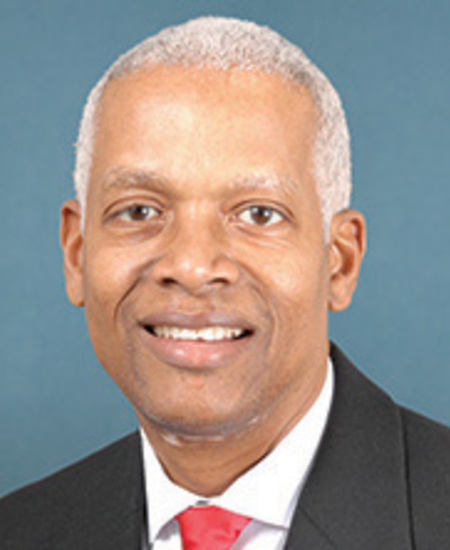
Rep. Henry C. "Hank" Johnson, Jr.
Sponsored bills
Maddy summaryHRES 483 is a symbolic resolution recognizing June 2023 as "Immigrant Heritage Month" to celebrate immigrants and their children for their contributions to U.S. health, safety, diversity, and prosperity. It highlights immigrants' roles in critical sectors like healthcare (including 27% of physicians) and the economy (e.g., 44% of Fortune 500 companies founded by immigrants or their descendants). The resolution urges the House to celebrate immigrant contributions, welcome immigrants, and work toward "smart and just immigration policy." As a non-binding resolution, it does not change laws but formally acknowledges immigrants' historical and ongoing impact on U.S. society.
Maddy summaryThe American Family Act establishes a monthly child tax credit of $250 per month for each child under age 6 and $300 per month for each child aged 6-18, with income limits of $150,000 for joint filers and $112,500 for other filers. The credit is refundable, meaning it can be paid even if the taxpayer owes no income tax, and will be adjusted annually for inflation. The bill includes detailed rules for determining eligibility, including requirements that the child resides with the taxpayer for more than half the month and provisions to prevent fraud through recapture of improperly received payments. The credit will be paid monthly in advance rather than as a single annual payment, with specific mechanisms for calculating and distributing the payments.
Maddy summaryThe TRACE Act requires the National Missing and Unidentified Persons System (NamUs) to add a data field tracking whether a missing person’s last known location was on federal land (e.g., national parks, military bases). It mandates an annual report to Congress starting in 2025, detailing how many cases involved federal land locations. The bill specifically defines "federal land" as areas under the jurisdiction of the Agriculture, Interior, or Defense departments (excluding tribal trust land), focusing on locations like national forests or Army Corps projects. This policy change directly affects cases involving missing persons near federal properties by improving data collection and transparency for federal agencies.
Maddy summaryHR 698, the Assault Weapons Ban of 2023, prohibits the sale, manufacture, transfer, and possession of specific firearms and ammunition devices commonly referred to as "assault weapons" and "large capacity magazines" in interstate commerce. The bill defines "semiautomatic assault weapons" to include rifles like AR-15s and AK-47s, as well as firearms with specific features such as folding stocks, pistol grips, threaded barrels, and detachable magazines holding more than 15 rounds. It exempts law enforcement, military, antique firearms, and weapons already lawfully owned before the law's enactment (known as "grandfathered" weapons). The bill also requires new identification markings on these weapons and large capacity magazines, and adds background check requirements for transfers of grandfathered weapons.
Maddy summaryH.Res. 460 is a non-binding resolution expressing the House of Representatives' support for Congress to enact the Older Americans Bill of Rights. This resolution does not create new laws but calls for a proposed bill that would establish specific rights for older Americans, including access to affordable health care, financial security, and community participation. It highlights challenges like high prescription drug costs, retirement insecurity, and barriers to care, urging Congress to address these through legislative action. The resolution directly affects older Americans (ages 65+) and their families by advocating for policy changes to ensure dignity and independence.
This bill establishes a student loan deferment and forgiveness program for physicians who provide mental and behavioral health services (including substance abuse prevention and treatment services) to racial and ethnic minority groups and low-income individuals. To carry out the program, the Department of Health and Human Services must pay the outstanding principal and interest (up to a maximum limit) on specified federal student loans for eligible physicians who work in qualifying employment. While participating in the program, physicians do not need to pay the principal of their loans but must pay any interest that accrues. To be eligible, physicians must complete a mental or behavioral health professions degree or certificate at a minority-serving institution of higher education. Physicians must also provide mental and behavioral health services for five consecutive years while working either (1) as solo practitioners where at least 30% of patients receive Medicaid and at least 50% of patients are members of racial and ethnic minority groups; or (2) at institutions that accept Medicaid and where at least 50% of patients served by the institution are members of racial and ethnic minority groups.
Maddy summaryThis bill prohibits the Department of Veterans Affairs from changing its anesthesia care policies to allow nurse anesthetists (CRNAs) to provide anesthesia independently without a physician anesthesiologist. It specifically blocks implementation of a 2016 proposed rule that would have expanded CRNAs' authority in VA facilities. The law maintains current requirements that physician anesthesiologists must oversee or provide anesthesia care for veterans during surgical procedures. Emergency orders for veteran safety during surgery remain permitted under the bill's exception clause.
Maddy summaryThis House resolution symbolically recognizes May as Jewish American Heritage Month, celebrating Jewish Americans' historical contributions to U.S. society and culture. It references rising antisemitism in 2022 (including ADL data showing a 36% increase in incidents) and includes a non-binding call for leaders to combat antisemitism. As a purely symbolic resolution, it does not create new policies or legal requirements.
Maddy summaryThis bill removes a barrier for college students seeking food assistance by amending the SNAP program rules. It directly affects students enrolled at least half-time in recognized colleges or training programs, who were previously automatically ineligible unless they met separate requirements. The key change eliminates the prior restriction (in section 6(e)) that barred most higher education students from SNAP, allowing them to qualify under the new provision in section 3(m)(5)(F). The changes take effect January 2, 2024.