

Maddy summaryThis symbolic House Resolution (HRES 526) reaffirms U.S. commitment to refugee safety and well-being, introduced around World Refugee Day (June 20, 2023). It cites UNHCR data showing over 108 million displaced people globally and highlights historically low U.S. refugee admissions (11,411 in FY2021, 25,465 in FY2022). The resolution calls on U.S. officials to restore asylum protections, meet robust refugee admissions goals, support host countries, and advance refugee rights through international partnerships. It does not create new law but expresses bipartisan support for strengthening U.S. leadership in refugee protection.
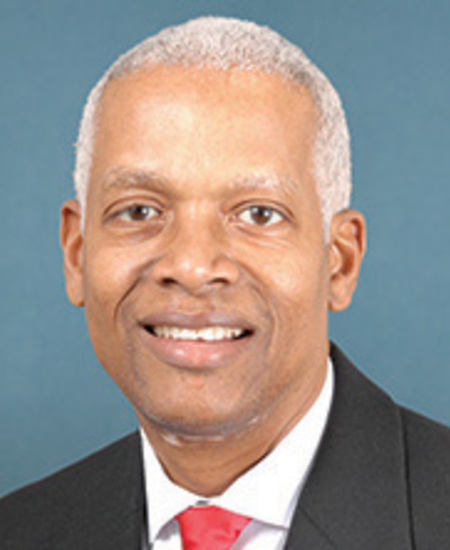
Rep. Henry C. "Hank" Johnson, Jr.
Sponsored bills
Multiple Firearm Sales Reporting Modernization Act of 2023 This bill expands reporting requirements with respect to sales or dispositions of multiple firearms. Currently, a federal firearms licensee (e.g., a gun dealer) must report multiple sales or dispositions of pistols or revolvers to the same person within five business days. This bill requires a federal firearms licensee to report multiple sales or dispositions of any firearms to the same person within five business days.
Men's Health Awareness and Improvement Act This bill establishes the Office of Men's Health within the Department of Health and Human Services (HHS) and requires other activities to improve men's health in the United States. The office must support and promote men's health programs and initiatives, including by working with relevant federal agencies (e.g., the Department of Defense and the Department of Veterans Affairs) and consulting with other HHS offices and agencies on activities related to men's health. HHS must issue associated guidance and recommendations on improving men's health outcomes that include short-term and long-term objectives for disease prevention, health promotion, and other areas of concern. The bill also requires studies and reports on men's health topics. The Office of the Assistant Secretary for Health must study men's use of health screenings and services, and the Government Accountability Office must report on the effectiveness of federal outreach related to men's health initiatives.
Maddy summaryHR 4121, the Right to Contraception Act, establishes a federal statutory right for individuals to access contraceptives and contraception services without government restriction or coercion, directly affecting all people seeking reproductive care and health care providers. The bill prohibits state or federal laws that limit access to contraceptives (defined broadly to include devices, drugs, and fertility methods), prevent individuals from obtaining or using them, or allow providers to refuse services based on personal beliefs. It preempts conflicting state laws, requires any restrictions to be justified by "clear and convincing evidence" of advancing access with no less restrictive alternative, and allows private lawsuits to challenge violations. The Act applies nationwide to all health care providers and individuals, protecting access regardless of factors like race, income, or location.
Maddy summaryHR 4052, the National Infrastructure Bank Act of 2023, would establish a federally chartered National Infrastructure Bank to address the estimated $2.6 trillion infrastructure financing gap identified by the American Society of Civil Engineers. The bank would provide loans, loan guarantees, and blended financing for infrastructure projects in transportation, energy, environmental systems, broadband, and community development, with a total loan limit of $5 trillion. Projects must demonstrate public benefits including economic growth, job creation, environmental improvements, and community development, with priority given to disadvantaged communities and projects meeting specific criteria. The bank would be capitalized with up to $500 billion through the purchase of Treasury securities and other means, operating under a 25-member Board of Directors with oversight mechanisms to ensure accountability.
Maddy summaryHR 3946, the FASD Respect Act, establishes a new federal program within the Department of Health and Human Services (HHS) to address fetal alcohol spectrum disorders (FASD). The bill creates FASD Centers for Excellence to build state, tribal, and national capacity for prevention, identification, and support services - directly affecting individuals with FASD, their families, and healthcare providers. Key provisions include developing standardized diagnostic guidelines, expanding screening and training for medical professionals, creating a national resource directory for FASD services, and promoting culturally informed interventions. The program requires HHS to report to Congress on progress within four years. This legislation restructures existing HHS authority to focus comprehensively on FASD across the lifespan, replacing older terminology with consistent "FASD" references.
This resolution expresses the sense of the House of Representatives that the federal government should begin a large-scale effort to reduce incarceration rates and reshape the American legal system by consulting with communities and individuals directly impacted by the justice system; decriminalizing certain behaviors, increasing diversion opportunities, revising sentencing laws, and reducing practices that contribute to recidivism; ending practices that advantage the wealthy and prohibiting private companies from profiting from the criminal justice system; and ending militarized policing practices, investing in other safety services, and implementing policies that address the needs of communities most affected by high rates of incarceration.
Maddy summaryThis bill expands funding eligibility for graduate programs at Historically Black Colleges and Universities (HBCUs) and Predominantly Black Institutions (PBIs) under the Higher Education Act. It adds new criteria allowing HBCUs and PBIs offering qualified master's degree programs (that weren't previously covered) to access existing funding streams. Specifically, it modifies funding formulas to direct unused funds toward these institutions after other allocations, adjusting the wording for how leftover funds are distributed. The change directly affects qualifying HBCUs and PBIs seeking to strengthen their graduate education programs.
Maddy summaryHR 4183, the Economic Inclusion Civil Rights Act of 2023, amends federal civil rights law to expand protections against economic discrimination. It defines "economic activity" broadly to include everyday actions like shopping, housing, hiring, and accessing loans, and requires that all people have "full and equal benefit and enjoyment" of these activities compared to white citizens. Key mechanisms include shifting the burden to businesses to justify practices that disproportionately harm protected groups (e.g., requiring proof of "substantial business necessity" without pretext), expanding who can sue (including non-contract parties), and ensuring jury trials for violations. This bill directly affects individuals facing discrimination in economic opportunities, making it easier to challenge practices in courts under a new standard of equal access.
Lady Liberty Act of 2023 This bill sets a floor of 125,000 for the maximum number of refugees who may be admitted into the United States each fiscal year. Under current law, the President sets the annual cap on refugee admissions at the beginning of each fiscal year. (The cap for FY2023 was 125,000, but in some years it had been lower. For example, the cap for FY2021 was 15,000.)