

Maddy summaryThe Humane Cosmetics Act of 2023 bans cosmetic animal testing in the United States, prohibiting companies from conducting or contracting such testing after its enactment (effective 1 year later). It also bans selling or transporting cosmetics developed using animal testing conducted after that date within U.S. interstate commerce. The law directly affects cosmetic manufacturers, retailers, and suppliers operating in the U.S. market, requiring them to use non-animal testing methods for safety evaluations. Exceptions exist for foreign regulatory requirements or when no alternative testing methods are available for specific ingredients.
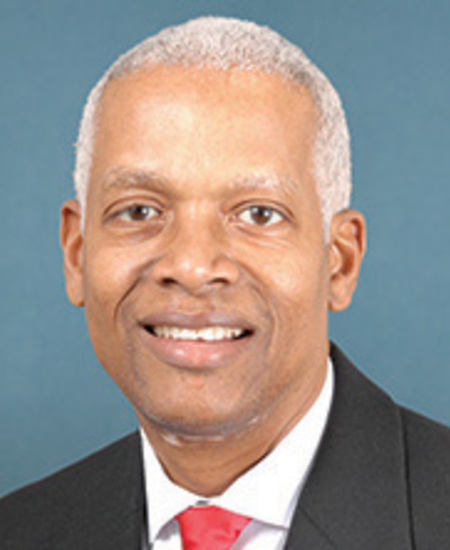
Rep. Henry C. "Hank" Johnson, Jr.
Sponsored bills
Maddy summaryThe Green Ribbon Act of 2023 establishes a voluntary program to recognize schools and institutions meeting three environmental goals: graduating environmentally literate students, reducing emissions from buildings/operations, and achieving a net positive environmental impact on students and staff. It creates a federal award program where schools can earn recognition through State nominations, with $10 million authorized for fiscal years 2024-2029 to fund grants, honorariums ($10,000 per award), and technical assistance. The program directly affects K-12 schools, tribal schools, and institutions of higher education, requiring States to allocate at least 40% of grant funds to underresourced schools. Key provisions include updated criteria aligning with EPA and CDC health standards, annual reporting requirements, and a new Office of School Infrastructure within the Department of Education.
Maddy summaryHR 5449, the "Stopping the Fraudulent Sales of Firearms Act," amends federal law to specifically prohibit fraudulent firearm transactions. It adds a new provision (922(a)(10)) making it illegal to import, manufacture, or sell firearms using false claims or promises, and also bans transmitting communications about such fraudulent deals via wire, radio, or TV. This directly affects firearm dealers, sellers, and others involved in transactions who use deceptive practices. The bill increases penalties for these specific fraudulent acts by adding them to the list of violations under existing enforcement provisions (924(a)(1)(B)).
Maddy summaryHR 5322, the Time Off to Vote Act, requires most private employers (with 25+ employees) to provide two consecutive hours of paid leave for employees to vote in federal elections. Employers must grant this leave upon request, can schedule it during early voting periods if permitted by state law, and cannot include lunch breaks in the leave period. The bill prohibits retaliation against employees who take this leave and ensures it does not affect accrued employment benefits. Violations could result in civil penalties up to $10,000 per offense, enforced by the Department of Labor.
Voters on the Move Registration Act of 2023 This bill requires the Consumer Financial Protection Bureau to develop, and specified agencies to distribute, a statement providing individuals with information on how to register to vote and their voting rights. This information must be provided to individuals upon their participation in certain rental assistance programs or application for certain residential mortgages.
Maddy summaryThe People Over Long Lines Act (POLL Act) requires states to develop public plans ensuring voting wait times don't exceed 30 minutes at polling places for federal elections, particularly addressing documented disparities where voters in communities of color wait significantly longer than others. It establishes standards for minimum voting systems, poll workers, and resources based on factors like population demographics, voter turnout, and needs of disabled or limited English proficiency voters. The bill provides $500 million annually in federal funding to help states implement these changes, creates a private right of action allowing voters to sue states for violations with penalties including $50 per hour of wait time, and mandates remedial plans for states with excessive wait times. The law applies to federal elections starting in 2025, with states required to comply by January 1, 2025.
Maddy summaryHR 5293, the Youth Voting Rights Act, would improve voting access for young people aged 18-29 through several concrete changes. The bill requires public colleges and universities to serve as voter registration agencies, establishes pre-registration for 16-year-olds, mandates on-campus polling locations for all institutions of higher education, and prohibits age-based restrictions on voting by mail. It also requires states to accept student ID cards as valid voter identification and provides grants to states for youth voter engagement programs. The bill would collect data on voting trends by age to help identify barriers to youth participation. These changes aim to address systemic barriers that have led to lower youth voter turnout and higher ballot rejection rates among young voters.
Maddy summaryThis bill amends two sections of federal law to strengthen penalties for election interference by government officials. It expands the scope of criminal provisions to explicitly include the President, Vice President, and other executive branch employees (previously limited to lower-level staff), and increases the maximum prison sentence for violations from one year to three years. The changes specifically target actions like coercing political activity or interfering with elections through official authority. These amendments directly affect federal employees, particularly high-level officials in the executive branch, by making certain election-related misconduct criminal offenses with steeper penalties. The bill focuses on clarifying and broadening existing legal protections against election interference by government actors.
Maddy summaryThe Sustaining Our Democracy Act creates a federal program to provide states with annual funding to improve election administration and increase voting access. It allocates $2 billion each year from 2024-2033 through the State Election Assistance and Innovation Trust Fund to support activities like upgrading voting equipment, training election workers, and expanding voting access for underserved communities, people with disabilities, and voters on Indian lands. States must submit detailed plans for using funds, which cannot be used for activities that restrict voting access or target election officials. The Act establishes an Office of Democracy Advancement and Innovation to administer the program, monitor fund usage, and oversee compliance with its requirements.
Maddy summaryThe Unhoused Voter Opportunity Through Elections Act (HR 5294) protects voting rights for people experiencing homelessness by prohibiting states from denying voting access based on living in a "nontraditional abode" like shelters, public spaces, or locations where someone is considered homeless under federal law. Key provisions require election officials to make ballot drop boxes accessible to unhoused individuals, accept written attestations of residence instead of traditional proof, allow homeless shelters to be used as voting addresses, and mandate outreach to shelters about registration deadlines and election dates. The bill also creates a grant program to fund mobile voting centers and direct outreach services specifically for unhoused individuals. These changes would directly affect homeless individuals and election officials across all states, implementing concrete policy changes to improve voting access for a population often excluded from the electoral process.