Maddy summaryHRES 997 is a symbolic resolution expressing the House of Representatives' recognition of Bob Marley's cultural and social impact. It honors Marley's legacy as a reggae artist who promoted peace, unity, and social justice through music like "One Love" and "Redemption Song," while highlighting his role in advancing Jamaican culture globally. The resolution does not create legal obligations or affect any specific group - it serves solely as a ceremonial tribute to Marley's influence on music, human experiences, and his advocacy for ending oppression.
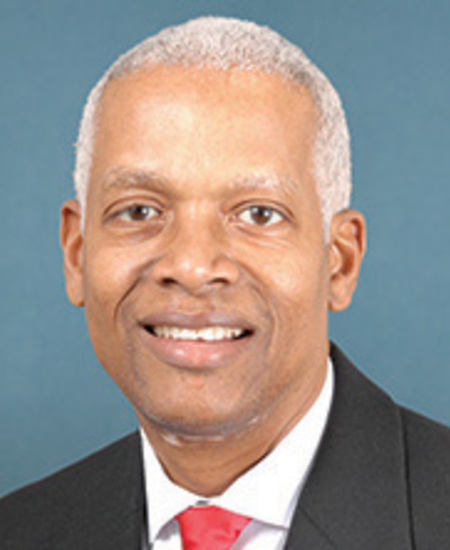
Rep. Henry C. "Hank" Johnson, Jr.
Sponsored bills
Maddy summaryThis symbolic resolution (HRES 989) urges the U.S. House of Representatives to recognize January as "Muslim-American Heritage Month" to honor the contributions of Muslim Americans. It highlights their historical and contemporary roles in U.S. society across fields like business, science, sports, and public service. The resolution calls for public observance through ceremonies and programs but has no legal effect or policy changes. It does not allocate funding, alter laws, or directly affect any specific group beyond raising awareness of Muslim-American heritage.
Maddy summaryHRES 988 is a non-binding resolution supporting the "Equity or Else" quality-of-life platform, which focuses on racial and economic equity across areas like education, health care, housing, and economic development. It urges the House of Representatives to adopt this framework as a guide for drafting and implementing policy that addresses systemic inequities. The resolution emphasizes the need for the House to change its practices to prioritize input from impacted communities in policy-making. This resolution does not create new laws but expresses the House’s commitment to using the Equity or Else framework as a reference for future legislative efforts.
Maddy summaryHR 7170, the Victims' VOICES Act, amends federal restitution law to require courts to reimburse specific expenses for individuals who assume a victim's legal rights (such as family members or advocates). It mandates that defendants pay for lost income, childcare, transportation, and related costs directly tied to attending court proceedings, participating in investigations, or accompanying victims to necessary medical care, therapy, or rehabilitation. The bill focuses on concrete reimbursement for out-of-pocket expenses incurred during legal and medical processes, rather than creating new programs. This change directly affects those stepping into a victim's role during criminal cases, ensuring they are financially supported for essential participation.
Maddy summaryHR 7179 amends the National Voter Registration Act to allow U.S. Citizenship and Immigration Services (USCIS) field offices to serve as official voter registration agencies for new citizens. It requires USCIS offices to facilitate voter registration applications during naturalization ceremonies, and mandates that courts administering oaths of allegiance must permit this service without charging fees. The bill uses existing immigration fees and grant funds to cover costs for these new registration services. This directly affects new U.S. citizens completing naturalization, making it easier to register to vote at the same time they become citizens.
Maddy summaryThe ACCESS Act of 2024 creates a federal grant program to help clinics and health care providers expand abortion and reproductive health services in states where abortion is legal (outside of life or health exceptions). It authorizes $200 million annually for fiscal years 2024-2028 to fund specific capacity-building activities, including facility expansions, hiring clinical staff, telehealth services, and culturally appropriate patient resources. Priority is given to providers in states experiencing the highest increases in out-of-state patients seeking abortion care. The bill directly supports health care entities serving patients who travel across state lines for services, aiming to reduce wait times and improve access for vulnerable communities.
Maddy summaryThe PRESS Act protects journalists' sources and unpublished materials from government subpoenas. It requires courts to approve any request for a journalist's protected information (like source identities or notes) only if the government proves it is necessary to prevent terrorism or imminent violence threatening life or safety. Service providers (like phone companies or social media platforms) must also obtain court approval before handing over journalists' personal accounts or devices. The law explicitly excludes civil defamation cases and does not shield journalists who are suspects in criminal investigations or terrorism-related cases.
Maddy summaryHR 6884, the Fair Compensation for Truck Crash Victims Act, increases the minimum insurance requirement for trucking companies transporting property from $750,000 to $5,000,000. It directly affects motor carriers (truck companies) by raising their financial responsibility threshold and ensures crash victims receive higher compensation. The bill mandates that the minimum insurance level be adjusted every five years for medical cost inflation using data from the Bureau of Labor Statistics. This change updates the 1980 standard to reflect current economic conditions, with the new requirement taking effect one year after the bill's enactment.
Maddy summaryThe Stronger Communities through Better Transit Act establishes a new federal grant program to improve public transportation service. It provides funding to urban areas, states, and Indian tribes to cover up to 50% of public transit operating costs (up to 80% in persistent poverty areas and 100% for Indian tribes), with requirements to report on service frequency, access to jobs, and conduct community surveys. The program mandates that a majority of funds must benefit underserved communities and areas of persistent poverty, defined as census tracts with high poverty rates or minority populations. Recipients must maintain their transit funding levels and report on improvements in access to essential services. The bill authorizes $20 billion annually for fiscal years 2024-2027.
Maddy summary# Summary of "Protecting Communities from Plastics Act" (Title II) This comprehensive legislation addresses the environmental, health, and environmental justice impacts of plastics production and use. Key provisions include: ## Environmental Justice Protections - Requires environmental justice assessments for permits of "covered facilities" (plastics manufacturing facilities) - Mandates consultation with "fenceline communities" (communities near facilities) including: * Prompt notification in multiple languages * Public hearings with translation services * Community benefit agreements - Establishes a 45-day waiting period before approving permits after public hearings ## Regulatory Requirements - Amends Clean Air Act to establish new source performance standards for plastics facilities - Requires continuous monitoring of air emissions (benzene, nitrogen oxides, etc.) - Amends Clean Water Act to prohibit discharge of plastic pellets in wastewater - Requires financial assurance for facility closure and emergency response - Prohibits new facility permits within 5 miles of community buildings (schools, hospitals, etc.) ## Research and Monitoring - Requires study of microplastics in food (including fish, meat, fruits, vegetables) - Mandates research on microplastics in human bodies (urine, breastmilk, stool) - Establishes a pilot program to test technologies for microplastic removal - Requires inventory of plastics manufacturing and distribution ## Additional Provisions - Temporary permitting moratorium on new plastics facilities (during "temporary pause period") - Requires listing of discarded polyvinyl chloride as hazardous waste - Limits National Recycling Strategy to exclude chemical recycling technologies - Creates grants to reduce single-use plastics in agricultural packaging - Requires biodegradable alternatives to plastic weed barriers The legislation aims to address the disproportionate environmental and health impacts of plastics production on vulnerable communities while establishing comprehensive regulatory frameworks for plastics manufacturing and disposal.