

Maddy summaryHR 8911, the Worker Rights and Support Act, requires most employers to provide specific breaks to employees under the Fair Labor Standards Act. It mandates 30-minute meal breaks after 6 hours of work (unpaid unless work continues), 10-minute rest breaks every 4 hours (paid), and medical breaks (up to 20 minutes per need, paid) for documented health conditions. The bill ensures breaks are paid if employees aren't fully relieved of work duties or can't leave the premises. It does not override collective bargaining agreements or stricter state laws, and adds enforcement penalties for violations of these break requirements.
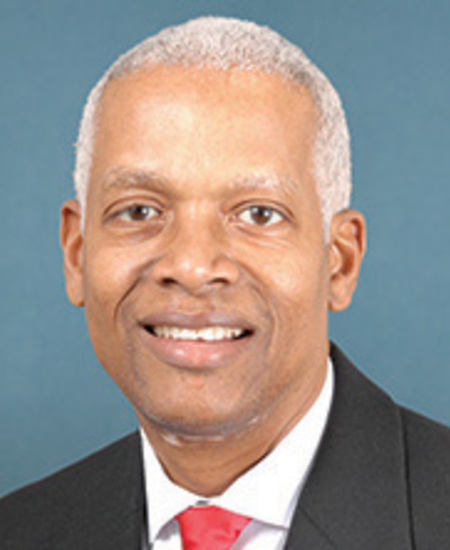
Rep. Henry C. "Hank" Johnson, Jr.
Sponsored bills
Maddy summaryThis resolution condemns Uganda's Anti-Homosexuality Act, which criminalizes consensual same-sex relationships with penalties including life imprisonment and the death penalty for certain acts. It directly affects LGBTQI+ Ugandans, who face increased violence, evictions, job loss, and barriers to healthcare due to the law's enforcement. The resolution calls on Uganda to repeal the law and supports maintaining U.S. sanctions like visa restrictions for officials involved in human rights abuses and reduced aid. It reflects U.S. government opposition to the law, which has been linked to severe human rights violations against marginalized communities.
Maddy summaryHR 8856, the Right to Trial Act, amends federal sentencing guidelines to protect defendants' constitutional right to a trial. It requires judges to consider whether a statutory minimum sentence would punish a defendant for choosing trial over a plea deal, and prohibits threatening harsher sentences for exercising this right. The bill adds specific factors for sentencing, including comparing sentences for similar cases where defendants accepted plea offers, and allows judges to impose sentences below statutory minimums to safeguard trial rights. This directly affects criminal defendants facing sentencing decisions in federal court who might otherwise be pressured into pleading guilty.
Maddy summaryThe SAFES Act creates a federal tax credit for individuals who purchase gun safes, allowing them to deduct 90% of the cost, up to $500 per person or $1,000 for joint returns. For purchases made before 2030, any qualifying gun safe qualifies; after 2029, only safes meeting standards set by the Secretary of Health and Human Services (HHS) will be eligible, based on an HHS report required within five years of enactment. The bill prohibits requiring taxpayers to disclose firearm ownership details to claim the credit. This policy directly affects individual firearm owners seeking to reduce tax liability through safe storage purchases.
Maddy summaryHR 8859, the Deafblind DATA Act, requires the Census Bureau to create and publish a new annual table starting in 2026 showing the number of people in the U.S. who reported both hearing and vision loss in the American Community Survey. This table will display data by state, including sex, race, age, and economic factors like employment and income, without revealing personal details. The bill directly addresses the lack of a centralized count for deafblind individuals, who currently aren't accurately represented in census data. By cross-referencing existing survey responses, the Act aims to provide a clearer national picture to better understand and serve this population's needs.
Maddy summaryThe Texture Positive Act of 2024 provides federal grants to states to fund subgrants for eligible entities (such as minority- or women-owned businesses with 5+ years of experience) to integrate textured hair training into cosmetology school curricula. It requires these entities to offer students hands-on education in shampooing, deep conditioning, braiding, twisting, and styling naturally coiled, curly, or wavy hair, including developing training materials and hiring specialized instructors. States must report annually on participation numbers, instructor training, and cosmetology schools served. The program runs for 4 years for state grants (renewable) and 6 months for subgrants (renewable based on performance reports).
Maddy summaryThis bill creates a federal framework for "extreme risk protection orders" (ERPOs) that temporarily remove firearms from individuals who pose a risk of harming themselves or others. Family members or law enforcement officers can petition a federal court for a temporary order (up to 14 days) based on probable cause, followed by a hearing within 72 hours to determine if a longer-term order (up to 180 days) is warranted. The bill requires clear and convincing evidence of risk at the hearing and mandates respondents to surrender firearms to law enforcement within 48 hours. It also includes provisions for reporting, training law enforcement on ERPOs, and a federal grant program to support state ERPO implementation, without preempting state laws.
Maddy summaryHRES 901 is a U.S. House resolution expressing support for democracy and human rights in Pakistan. It calls on the U.S. President and Secretary of State to collaborate with Pakistan to uphold democratic processes, human rights, and the rule of law. The resolution urges Pakistan to protect freedoms of speech, assembly, and press, and to avoid arbitrary detention or suppression of political participation. It also condemns efforts to undermine Pakistan's electoral or judicial systems, including harassment of citizens during protests or interference with elections.
Maddy summaryThe Gun Theft Prevention Act requires licensed firearm dealers to implement specific security measures, including locked cabinets, security systems, and site hardening, to prevent gun thefts. It mandates annual security plan certifications with inventory reconciliation, employee background checks before firearm possession, and 30-day reporting of stolen firearms to authorities. The bill increases inspections (annual for high-risk dealers, triennial for others) and establishes civil penalties of up to $20,000 for violations. These requirements apply to all federally licensed gun dealers nationwide, with a one-year transition period for implementation, while maintaining state law authority over firearm dealing.
Maddy summaryHR 8830, the High Court Gift Ban Act, sets strict limits on gifts federal judges may accept. It prohibits judges from receiving gifts valued over $50 from a single source in a year, unless the total from that source stays under $100 annually. Key exceptions include gifts paid for by the judge, gifts from relatives, honorary degrees from educational institutions, and public opportunities available to all federal employees. The bill also outlines enforcement mechanisms, requiring the Judicial Conference to refer violations to the Attorney General for civil or criminal penalties. This directly affects all federal judges, including Supreme Court justices and lower court judges, by restricting gifts from sources that may have business before them.