

Maddy summaryHR 10090, the "Keeping Guns from High-Risk Individuals Act," expands existing federal firearm prohibitions. It bars individuals convicted of a crime of violence (as defined in Section 16 of Title 18) within the last five years, or convicted of stalking, from purchasing or possessing firearms. This directly affects people with these specific recent convictions, adding them to the list of those prohibited under Section 922(d) (sales) and Section 922(g) (possession) of the U.S. Code. The bill makes concrete policy changes by broadening the categories of individuals barred from gun access based on certain criminal histories.
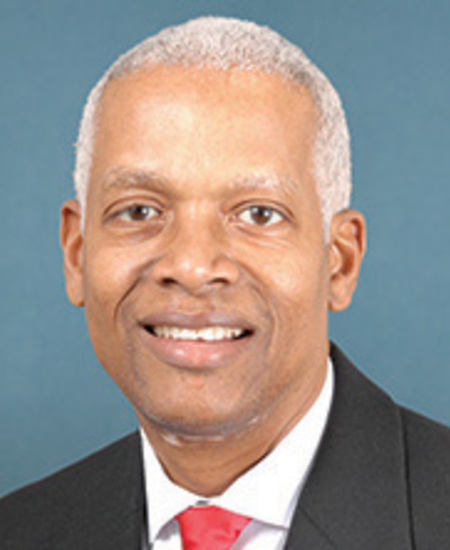
Rep. Henry C. "Hank" Johnson, Jr.
Sponsored bills
Maddy summaryThis bill modifies how disability benefits are treated for homeless disabled veterans seeking housing assistance. It excludes certain disability payments (under Chapter 11 or 15 of Title 38, U.S. Code) from income calculations when determining eligibility for HUD-assisted housing programs, including the supported housing program under Section 8(o)(19) and housing on Department property. Specifically, it ensures these benefits are not counted toward income for housing eligibility, though they still count for "adjusted income" definitions. The bill directly affects disabled veterans applying for HUD housing assistance who receive these specific disability benefits. It makes a concrete change to income calculation rules without altering benefit amounts or creating new funding.
Maddy summaryHRES 1555 is a symbolic House resolution condemning the spread of false claims and malicious rumors about disaster response efforts, which have led to credible threats against FEMA personnel and disrupted aid for survivors. It specifically references incidents after Hurricanes Helene and Milton, including a pause in North Carolina door-to-door assistance due to safety threats and antisemitic targeting of officials. The resolution formally condemns those spreading disinformation for political gain and commits Congress to supporting FEMA’s efforts to combat misinformation and promote accurate recovery information. As a non-binding resolution, it does not create new laws but expresses congressional support for protecting disaster response workers and ensuring survivors receive timely aid.
Maddy summaryThis bill establishes the Advisory Council on African Diaspora Engagement within the U.S. Department of State. The council, composed of up to 12 members representing diverse African American and African immigrant communities, advises the Secretary of State on strengthening U.S. government connections with the African diaspora in the United States. Key functions include recommending strategies to advance equity, support UN initiatives, expand cultural and economic programs (like the Young African Leaders Initiative), and foster diaspora engagement in trade and development. The council meets quarterly, reports to relevant congressional committees, and operates using existing Department of State funding.
Maddy summaryThis bill expands Medicaid coverage for low-income individuals diagnosed with breast or cervical cancer. It requires Medicaid programs to cover breast reconstruction surgery after a medically necessary mastectomy, adding this as a mandatory benefit under existing Medicaid rules. The bill also modifies eligibility criteria to ensure coverage for these specific cancer patients, aligning with prior Medicaid provisions. These changes apply to all states administering Medicaid, directly affecting eligible patients seeking cancer treatment and recovery services.
Maddy summaryHR 10029, the National Human Trafficking Database Act, requires covered state law enforcement agencies (like state bureaus of investigation) to collect and report anonymized human trafficking data to the Office for Victims of Crime. The bill mandates annual reporting of county-level data on trafficking prosecutions, survivor services, and anti-trafficking organizations, with the data published online by the Department of Justice starting in 2026. It includes strict confidentiality protections for survivors and allocates $51 million annually (2025-2028) for implementation. The database will provide public, aggregated data to inform anti-trafficking efforts without enabling funding decisions based on the collected information.
Maddy summaryThe VA Employee Fairness Act of 2024 modifies collective bargaining rules for employees of the Veterans Health Administration (VHA). It removes existing subsections (b), (c), and (d) from the law governing VHA employee bargaining and renumbers the remaining provision. This change streamlines the collective bargaining framework but does not alter the Secretary of Veterans Affairs' existing authorities over incentive pay and expedited hiring. The bill directly affects VHA employees by changing how their collective bargaining rights are structured under federal law. The law remains neutral, focusing solely on procedural adjustments to the existing bargaining framework.
Maddy summaryThis bill establishes minimum safety standards for railroad bridges and requires railroad carriers to provide detailed inspection reports classifying bridges as poor, fair, or good condition, including repair timelines and costs for bridges in poor condition. It mandates railroad carriers to post visible signs identifying bridge ownership and a contact number for public safety concerns, and creates a public database showing basic bridge condition information without detailed technical specifications. The bill also establishes a safety concern reporting system for the public and authorities, and requires the Department of Transportation to conduct randomized bridge inspections to verify reported conditions. Railroad carriers that fail to meet safety requirements face civil penalties, including weekly fines for continued operation of unsafe bridges.
Maddy summaryHRES 1539 is a symbolic resolution recognizing certified nurse-midwives (CNMs) and certified midwives (CMs) for their role in providing maternal and women’s health care. It acknowledges their contributions during National Midwifery Week (October 6-12, 2024), highlighting their work in rural and underserved communities where they attend over 30% of rural births. The resolution does not create new laws or alter funding; it simply formally recognizes CNMs/CMs as essential providers of evidence-based care for women and childbearing families. It encourages broader awareness of their credential and profession through National Midwifery Week activities.
Maddy summaryHR 9950, the "Miracle on Ice Congressional Gold Medal Act," authorizes three gold medals to be awarded to the members of the 1980 U.S. Olympic men's ice hockey team for their historic victory over the Soviet Union during the Winter Olympics. The medals, designed by the Treasury Secretary, will be presented by Congress to honor the team's achievement, which revitalized American morale during the Cold War. One medal will be displayed at the Lake Placid Olympic Center, one at the USA Hockey Hall of Fame in Eveleth, Minnesota, and one at the U.S. Olympic Museum in Colorado Springs. The bill also permits the sale of bronze duplicates to cover production costs. This is a ceremonial honor, not a policy change, directly recognizing the team members and their legacy.