

Maddy summaryThe NO FAKES Act of 2024 establishes legal rights for individuals (living or deceased) to control how their voice and visual likeness are used in digital replicas (highly realistic computer-generated representations that are readily identifiable as the individual). It requires authorization from the individual or their designated right holder for any digital replica, with specific rules for licenses (including 10-year limits for living individuals, 5-year limits for minors, and post-mortem rights for 10 years with possible 5-year renewals). The bill creates civil liability for unauthorized production or distribution of digital replicas, with exceptions for news, documentaries, commentary, and other protected uses. Online services are provided safe harbors if they follow notice-and-takedown procedures for unauthorized digital replicas after receiving proper notifications. The law preempts some state laws but leaves others in place, and applies to conduct occurring after the bill's enactment date.
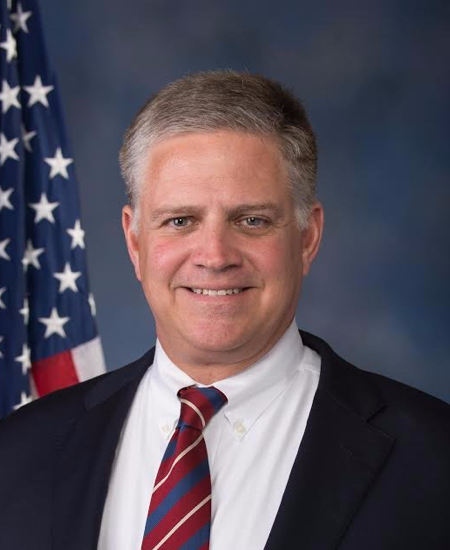
Rep. A. Drew Ferguson IV
Sponsored bills
Maddy summaryHRES 1438 is a symbolic resolution passed by the U.S. House of Representatives on September 11, 2024, condemning the September 4, 2024, shooting at Apalachee High School in Winder, Georgia. It honors the four victims - Christian Angulo, Richard Aspinwall II, Cristina Irimie, and Mason Schermerhorn - expresses condolences to their families and the Winder community, and acknowledges the trauma experienced by students, staff, and the broader community. The resolution has no policy changes or funding provisions; it serves solely as a formal expression of grief and support following the tragedy.
This resolution supports the designation of National FFA Week. It also (1) recognizes the important role of the National FFA Organization (Future Farmers of America) in developing the next generation of globally conscious leaders who will change the world; and (2) celebrates the 10th anniversary of the Give the Gift of Blue program, which has donated more than 17,000 FFA blue jackets to FFA members in need.
Maddy summaryThis bill (HR 9242) renames a U.S. Department of Agriculture facility in Athens, Georgia, as the "Abit Massey Poultry Research Center." It directly affects the U.S. National Poultry Research Center and all federal documents referencing it, requiring updates to official records, maps, and publications. The bill makes no policy changes; it solely updates the facility's name and all related government references to honor Abit Massey.
Maddy summaryThe SAVE Act (HR 8281) requires U.S. citizens to provide documentary proof of citizenship when registering to vote in federal elections. It defines acceptable proof as documents like passports, REAL ID-compliant IDs, military IDs, or birth certificates, and mandates that states verify citizenship using information from government agencies like DHS and Social Security. States must establish processes for voters without required documentation to provide an attestation under penalty of perjury. The law also requires states to remove noncitizens from voter rolls when verified evidence shows they're not citizens. This bill directly affects all applicants registering to vote in federal elections and state election officials who must implement these requirements.
Maddy summaryThis bill delays a Medicare policy that would have restricted coverage to only intravenous drugs for managing phosphate levels in kidney failure patients. It specifically postpones the implementation of the "oral-only" policy under Medicare's ESRD payment system until January 1, 2033, or until an intravenous drug for phosphate control receives FDA approval - whichever comes first. The bill directly affects Medicare beneficiaries with end-stage renal disease (ESRD) who rely on oral medications for phosphate management. It ensures continued Medicare coverage for these oral drugs during the extended timeline, without changing the underlying payment structure.
Maddy summaryHR 5403, the CBDC Anti-Surveillance State Act, prohibits the Federal Reserve from issuing or facilitating central bank digital currency (CBDC) directly or indirectly to individuals through financial institutions. It specifically bans Federal Reserve banks from offering digital products to individuals, maintaining individual accounts, or using CBDC for monetary policy implementation. The bill also clarifies that its restrictions do not apply to existing physical cash or private, permissionless digital payment systems. This bill directly affects the Federal Reserve's ability to develop or deploy a government-run digital dollar. The law aims to prevent the Federal Reserve from creating a digital currency that could enable transaction tracking or government oversight of personal financial activity.
Maddy summaryHR 895, the Combating Organized Retail Crime Act of 2023, expands federal law to better prosecute organized retail theft by amending sections 2314 and 2315 of Title 18. It clarifies that crimes involving stolen goods valued at $5,000 or more over 12 months - including retail theft - can be prosecuted under existing federal statutes, and broadens definitions to include goods taken via "any facility of interstate or foreign commerce." The bill also creates a new Organized Retail Crime Coordination Center within Homeland Security, requiring it to coordinate federal, state, and local law enforcement efforts, share threat information with retailers, and produce annual public reports on trends. This directly affects law enforcement agencies, retailers, and criminal justice systems by standardizing prosecution thresholds and enhancing interagency collaboration.
Maddy summaryThis bill strengthens oversight of administrative spending actions by requiring the Director to submit detailed waiver explanations and budgetary impact estimates to congressional Budget Committees for any executive branch action exempting spending from budget neutrality rules. It modifies the threshold for such exemptions to apply only to actions increasing direct spending by $1 billion over 10 years or $100 million in any single year. The bill also clarifies that the purpose of the administrative PAYGO rules is to maintain budget neutrality for discretionary spending decisions. These changes apply directly to federal agencies making administrative spending decisions that exceed the new thresholds. The bill repeals a sunset provision and adds new reporting requirements for budget submissions.
Maddy summaryThis bill requires Medicare to pay separately for certain high-cost diagnostic drugs used in nuclear imaging (like those for cancer detection) starting in 2024. It applies to drugs with a daily cost of $500 or more (adjusted annually), ensuring they are not bundled with other services. Payments will be based on either the drug's average sales price or wholesale cost, with adjustments to keep overall Medicare spending unchanged. This directly affects Medicare Part B providers (hospitals, clinics) and beneficiaries receiving these specific diagnostic treatments.