This bill prohibits the Securities and Exchange Commission from finalizing the rule proposed on April 11, 2022, and titled The Enhancement and Standardization of Climate-Related Disclosures for Investors . The proposed rule requires registrants to disclose their climate-related risks.
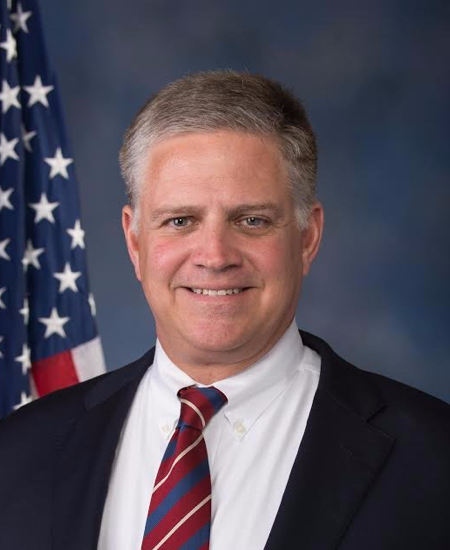
Rep. A. Drew Ferguson IV
Sponsored bills
Restore Protections for Dialysis Patients Act This bill specifies that private health insurers may not limit, restrict, or condition benefits for renal dialysis services for individuals with end-stage renal disease as compared to other types of benefits for other medical conditions under Medicare secondary payer rules.
Global Catastrophic Risk Management Act of 2022 This bill directs the President to establish an interagency committee on global catastrophic risk. Global catastrophic risk is defined as the risk of events or incidents consequential enough to significantly harm, set back, or destroy human civilization at the global scale. The President must (1) conduct and submit to Congress a detailed assessment of global catastrophic and existential risk; and (2) produce a report on the adequacy of continuity of operations and continuity of government plans based on the assessed risk. The President, with support from the committee, shall develop and submit a strategy to provide for the basic needs of the civilian population that is impacted by catastrophic incidents in the United States; coordinate response efforts with state and local governments, the private sector, and nonprofit organizations; promote personal and local readiness and non-reliance on government relief during periods of heightened tension or after catastrophic incidents; and develop international partnerships with allied nations for the provision of relief services and goods. The President must issue a plan to implement and operationalize the strategy. The Department of Homeland Security shall lead a national exercise to test and enhance the operationalization of the implementation plan. The President must provide recommendations to Congress for (1) actions that should be taken to prepare the United States to implement the strategy, increase readiness, and address preparedness gaps; and (2) additional authorities that should be considered to more effectively implement the strategy.

Travel Nursing Agency Transparency Study Act This bill requires the Government Accountability Office to study the effects of travel nurse agencies during the COVID-19 pandemic. The study must consider matters that include agency business and payment practices, the effects of travel nurse agency practices on workforce shortages, and the acquisition of travel nurse agencies by private equity firms.
Preserving Access to Home Health Act of 2022 This bill restricts the Centers for Medicare & Medicaid Services (CMS) from decreasing payments for Medicare home health services based on certain adjustments until 2026. Current law requires the CMS to make certain permanent and temporary payment adjustments under the Medicare prospective payment system for home health services based on behavioral assumptions for 2020 through 2026. The bill restricts the CMS from making adjustments that decrease payments until 2026; the CMS must also ensure that any such necessary decreases are made before 2032.
Arms Exports Delivery Solutions Act This bill requires the Department of State and the Department of Defense to report to Congress on certain transfers of defense articles or defense services since October 1, 2017. The report must include a list of approved transfers to Taiwan, Japan, South Korea, Australia, or New Zealand that are above a certain value threshold and that have not been fully delivered by the start of the fiscal year in which the report is being submitted.
INvestor Democracy is EXpected Act or the INDEX Act This bill establishes guidelines for passively managed funds (e.g., index funds) that vote shares on behalf of fund investors in proxy shareholder votes. Under the bill, these funds generally must vote shares on a proportional basis according to instructions from fund investors. The bill establishes an exemption for routine matters and matters requiring approval of a majority of outstanding securities. Additionally, the bill establishes a safe harbor from these requirements for investment advisers.
This bill permanently allows federally qualified health centers and rural health clinics to serve as the distant site (i.e., the location of the health care practitioner) for purposes of Medicare telehealth services.
INARA Reforms Act This bill increases the amount of time Congress has to review U.S. agreements with Iran relating to the Iranian nuclear program. The bill also requires the Department of the Treasury to report to Congress on how an agreement impacts the Iranian economy and Iran's frozen currency reserves.
Protecting Endowments from Our Adversaries Act This bill imposes an excise tax equal to 50% of the fair market values of certain investments made by private colleges and universities with assets or endowments exceeding $1 billion. It also taxes 100% of the net income of such investments held during a one-year period. These investments are in certain foreign persons or entities (e.g., Chinese or Russian companies) that are included on lists maintained by the Department of Commerce and the Federal Communications Commission that identify persons or entities engaged in human rights abuses or that pose a threat to U.S. national security.