Maddy summaryHJRES 27 is a congressional resolution seeking to block a federal rule that redefined which waterways fall under the Clean Water Act's protections. It targets a rule submitted by the Army Corps of Engineers, Department of Defense, and Environmental Protection Agency (EPA) on January 18, 2023, which aimed to revise the "Waters of the United States" definition. The resolution would formally disapprove this rule under a specific federal procedure (Chapter 8 of Title 5), preventing it from taking effect. This would directly affect how federal agencies regulate pollution and development near water bodies, including wetlands and smaller streams.
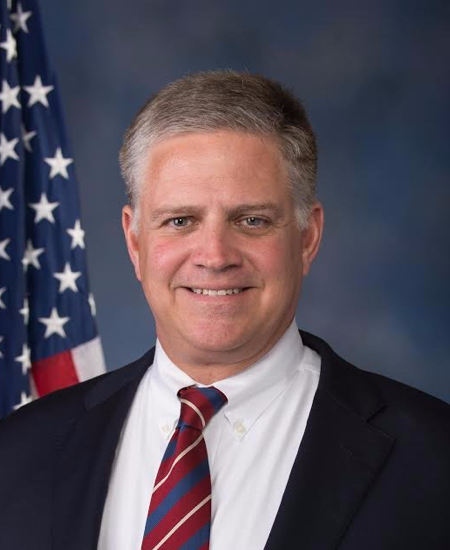
Rep. A. Drew Ferguson IV
Sponsored bills
Maddy summaryHR 2696 permanently extends a 7-year depreciation period for motorsports entertainment complexes under tax law. It amends the Internal Revenue Code by removing a temporary provision (subparagraph D), making the 7-year recovery period permanent for these facilities. This change directly affects businesses that own or operate motorsports venues when calculating tax deductions for facility investments. The bill is a technical tax code adjustment with no new regulations or direct impact on individuals.
Maddy summaryThis bill establishes a four-year pilot program providing free dental care to 1,500 veterans with type 2 diabetes who are enrolled in VA care but lack access to VA dental coverage, are aged 40-70, and have gum disease (periodontitis). It requires enrollment at five VA facilities, with one-third of participants having mild gum disease and two-thirds having moderate to severe cases, and mandates annual dental evaluations and health outcome tracking. The program aims to determine if timely dental treatment correlates with reduced complications from chronic conditions, collecting data for a congressional report. It does not change existing VA dental benefits but tests whether improved periodontal care lowers long-term healthcare costs for this specific veteran group.
Maddy summaryHR 2630, the Safe Step Act, requires group health plans and health insurance issuers to establish a clear, transparent process for patients or their doctors to request exceptions to medication step therapy protocols. These protocols typically force patients to try cheaper drugs first before covering more expensive alternatives. The bill mandates that plans must approve exceptions when prior treatments failed, delay would cause serious harm, a treatment is unsafe, or a patient is stable on a previously approved drug, with strict 72-hour (or 24-hour in emergencies) decision timelines. It also requires plans to publish the exception process online and limit documentation requests to only necessary medical information. This law directly affects health insurers, employers offering health plans, and patients using step therapy for prescription drugs.
Maddy summaryThis bill terminates the national emergency declared by the President on March 13, 2020, under the National Emergencies Act. It ends the executive branch's authority to use emergency powers related to that specific declaration. The resolution passed both chambers in early 2023 and took effect April 10, 2023, without creating new policies or affecting specific groups.
Maddy summaryHR 2539 permanently extends the New Markets Tax Credit (NMTC) program, which incentivizes private investment in low-income communities. The bill directly affects community development financial institutions (CDFIs) and investors who fund projects in designated low-income areas by ensuring the credit remains available beyond 2025. Key provisions include automatically adjusting the credit amount annually for inflation starting in 2024 and clarifying that the credit can be used to offset alternative minimum tax liability. This maintains the program’s effectiveness in channeling capital to underserved neighborhoods without changing eligibility or funding levels.
Making Advances Kinetic Education, Research, and Skills Act or the MAKERS Act This bill requires the National Science Foundation (NSF) to award competitive grants to institutions of higher education for researching and developing makerspaces to grow the science, technology, engineering, and mathematics (STEM) workforce. Makerspaces are community spaces that provide learners and entrepreneurs with tools, technology, and knowledge for prototyping or creating physical goods and support educational opportunities for personal growth, workforce training, and early-stage business ventures. When awarding the grants, the NSF must prioritize certain recipients, including (1) community colleges and minority-serving institutions; and (2) those that partner with workforce development entities, high-need local educational agencies, or independent nonprofit or academic makerspaces.
Maddy summaryThe ALIGN Act (HR 2406) permanently allows businesses to deduct the full cost of qualified equipment and machinery in the year of purchase, rather than spreading the deduction over multiple years. This applies to property placed in service after September 27, 2017, directly affecting businesses that make capital investments in eligible assets like manufacturing equipment or commercial facilities. The bill eliminates the previous requirement to depreciate these costs over time, reducing taxable income in the purchase year. It makes a temporary 2017 tax provision permanent, impacting businesses across various industries that purchase qualifying property.
Maddy summary# Summary of the TAPP American Resources Act This comprehensive legislation, titled the "TAPP American Resources Act" (or "Transparency, Accountability, and Permitting Process for American Resources Act"), is a major overhaul of federal energy and natural resource permitting processes. The key provisions include: 1. **Streamlined Permitting Processes**: - Creates a 50-year term limit for pipeline rights-of-way - Allows oil and gas exploration on non-Federal surface estate without Federal permits - Reduces royalty rates for oil and gas leases from 16.67% to 12.5% - Limits judicial review of permits to cases involving "imminent and substantial environmental harm" 2. **NEPA Reforms**: - Expands categorical exclusions for certain energy projects - Allows use of previously completed environmental assessments for similar projects - Limits environmental reviews to areas directly affected by the proposed action - Reduces consideration of downstream effects of oil and gas consumption 3. **Mining and Mineral Development**: - Designates mining as a "covered sector" for permitting improvement - Creates a memorandum of agreement process for mining projects - Requires mineral resource assessments before land withdrawals - Ensures uranium is considered a critical mineral 4. **Revenue Sharing**: - Changes distribution of Gulf of Mexico revenue to states (37.5% to Gulf states, 62.5% to general fund) - Creates parity in offshore wind revenue sharing with offshore oil and gas - Eliminates administrative fees under the Mineral Leasing Act 5. **Water Quality Certification**: - Limits certification requirements to specific provisions of Clean Water Act sections - Requires states to publish certification requirements within 30 days - Sets 90-day timeline for states to identify additional materials needed The legislation represents a significant shift toward expediting domestic energy production while reducing regulatory burdens, with a focus on oil, gas, and mineral development on federal lands. It includes numerous amendments to existing laws including the National Environmental Policy Act, Mineral Leasing Act, Outer Continental Shelf Lands Act, and Clean Water Act.

Maddy summaryHR 1818, the Aviation Workforce Development Act, expands tax-advantaged savings plans (529 plans) to cover costs for specific aviation training programs. It allows funds from these plans to pay for tuition, fees, and required materials at FAA-certified aviation maintenance technician schools (Part 147) or commercial pilot training programs (Part 61 or 141). This directly affects students pursuing careers as aircraft maintenance technicians or commercial pilots by making these training costs more affordable through existing tax-advantaged savings. The bill amends the tax code to include these programs under "qualified higher education expenses" for 529 plan distributions.