

Respect, Advancement, and Increasing Support for Educators Act of 2022 or the RAISE Act of 2022 This bill allows eligible educators (i.e., any elementary or secondary teacher and any early childhood educator) a refundable tax credit of $1,000 plus an additional amount (based upon a specified student poverty ratio) for eligible educators employed at a qualifying school (i.e., a public elementary or secondary school that is eligible for certain federal assistance or is funded by the Bureau of Indian Education), or an early childhood education program for children receiving certain federal assistance. The bill also increases the amount of the tax deduction for the expenses of elementary and secondary school teachers and expands such credit to include early childhood educators. The bill provides additional funding to local educational agencies that maintain or increase the salaries of their teachers.
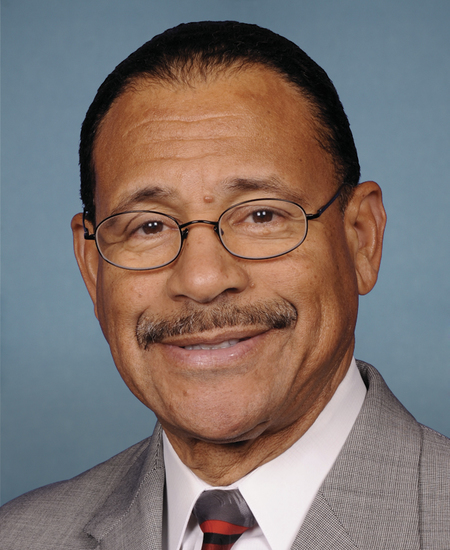
Rep. Sanford D. Bishop, Jr.
Sponsored bills
Maddy summaryThis resolution (HRES 1074) is a formal House of Representatives commemoration of the Weather Channel's 40th anniversary, marking its launch on May 2, 1982. It recognizes the channel's history of innovations like the STAR weather system, early online weather services (weather.com), Emmy-winning technology, and coverage of major storms (e.g., Hurricanes Katrina and Harvey). The resolution does not create new policy or affect any specific group; it simply honors the Weather Channel's contributions to public safety through weather reporting. As a procedural resolution, it has no legal effect beyond the symbolic recognition described.
This resolution thanks the teachers of the United States and promotes the teaching profession by encouraging students, parents, school administrators, and public officials to recognize National Teacher Appreciation Week.
This resolution celebrates the contributions of small businesses in every U.S. community and supports the designation of National Small Business Week. Further, it supports efforts to provide small businesses with aid and assistance through certain programs and initiatives.
Historic Preservation Enhancement Act This bill provides increased funding for and makes permanent the Historic Preservation Fund. This fund supports grants for states, tribes, localities, and nonprofits to carry out historic preservation activities. Any amounts deposited in the fund shall be made available for expenditure without further congressional appropriation. The President shall submit to Congress program allocations made available from the fund as part of the President's annual budget.
Increasing Homeownership for Servicemembers Act This bill requires the Department of Defense to seek to enter into an agreement with a federally funded research and development center or nonprofit entity to study and report on the barriers to home ownership for members of the Armed Forces.
BAH Calculation Improvement Act This bill requires the Department of Defense to submit to Congress a report on the basic allowance for housing for members of the uniformed services that includes elements related to the calculation of such allowance.
BAH Restoration Act This bill increases the monthly amount of the basic housing allowance for members of the uniformed services inside the United States. Specifically, the monthly amount of allowance for a member must be the amount of the monthly cost of adequate housing in the area, as determined by the Department of Defense, for members of the uniformed services serving in the same pay grade and same dependency status as the member.
Feed Hungry Veterans Act of 2022 This bill expands eligibility for the Supplemental Nutrition Assistance Program (SNAP) for certain disabled veterans, including those determined to be catastrophically disabled.
New Era of Preventing End-Stage Kidney Disease Act This bill addresses rare kidney diseases through research, training for health professionals, and other means. It also modifies requirements for Medicare drug plan formularies that include drugs for rare diseases or conditions. The Department of Health and Human Services (HHS) must convene a conference focused on diagnosis and treatment of rare kidney diseases; study risk factors, access to care (including to genetic and genomic testing), and other matters related to rare kidney diseases; and establish grants for supporting kidney disease education and referrals in communities of color. HHS may award grants to educate and train health professionals about kidney disease and nephrology. Additionally, health professional schools that receive certain HHS funding for educating underrepresented minority individuals must support postgraduate nephrology training. The National Institutes of Health (NIH) must report on diversity in its kidney disease research. The NIH may also (1) support research on rare kidney diseases that, among other requirements, includes persons of color in study populations; and (2) establish regional centers of excellence for rare kidney diseases. The Centers for Medicare & Medicaid Services must evaluate methods for (1) treating rare kidney diseases, with a focus on delaying dialysis and transplant; and (2) raising awareness about rare kidney diseases, including in communities of color. Furthermore, if a Medicare drug plan formulary includes a drug to treat a rare disease or condition, at least two members of the committee that develops or reviews the formulary must have expertise in the field of medicine related to that drug.