

Maddy summaryHR 582, the Credit Union Board Modernization Act, changes the required meeting frequency for boards of directors at federal credit unions. It replaces a simple "monthly" requirement with tiered schedules based on each credit union's performance rating under the Uniform Financial Institutions Rating System. Top-rated credit unions (ratings 1 or 2) must meet at least six times yearly, with one meeting per fiscal quarter. Lower-rated credit unions (ratings 3, 4, or 5) must meet monthly, and new credit unions must meet monthly for their first five years. This directly affects all federal credit unions by adjusting their board meeting obligations based on their regulatory rating.
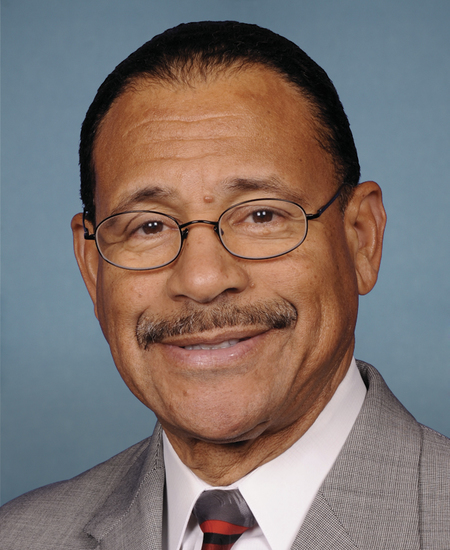
Rep. Sanford D. Bishop, Jr.
Sponsored bills
Maddy summaryHR 590, the Ensuring Kids Have Access to Medically Necessary Dental Care Act, prohibits states from imposing lifetime or annual dollar limits on dental benefits for low-income children and pregnant women covered by the Children's Health Insurance Program (CHIP). It requires states to provide dental-only supplemental coverage for eligible children (rather than allowing states to opt out) and removes restrictions on coverage for pregnancy-related dental services. These changes apply to all states operating CHIP and cover targeted low-income children (and pregnant women in states that offer pregnancy-related assistance under CHIP). The bill takes effect six months after enactment to ensure continuous access to necessary dental care without coverage caps.
Maddy summaryHRES 59 is a non-binding resolution recognizing January 2023 as "National Mentoring Month." It formally acknowledges the value of mentoring relationships for youth development, highlighting how mentors support academic achievement, career exploration, and mental well-being. The resolution encourages expanding quality mentoring programs nationwide but does not create new laws or allocate funding. It directly affects all young people in the U.S. by raising public awareness of mentoring's benefits and urging collaboration among communities, schools, and organizations to address the "mentoring gap" where one in three youth lacks a supportive adult outside their home.
Maddy summaryThis bill expands foreign investment review to cover U.S. agriculture by requiring transactions involving foreign control of agricultural businesses to undergo scrutiny by the Committee on Foreign Investment (CFIUS). It classifies agricultural supply chains as both critical infrastructure and critical technologies, directly affecting foreign entities seeking to acquire or influence U.S. farms, food production, and supply chains. The bill mandates annual reports from the Secretary of Agriculture and the Government Accountability Office on foreign investments in agriculture, including risks to food security and intellectual property. These provisions aim to mitigate potential threats to U.S. food supply chains from foreign adversaries through enhanced oversight.
This resolution commends the role of the U.S. government in improving access to quality, inclusive education, and improved learning outcomes for the poorest and most marginalized children and adolescents around the world. It calls on the Department of State and the U.S. Agency for International Development to use all diplomatic, humanitarian, and developmental means to promote access to such quality education.
Maddy summaryHR 475 creates a federal grant program to help state, tribal, and local governments protect witnesses in serious criminal cases. It authorizes $30 million annually (2024-2028) for competitive grants to fund witness protection programs targeting cases involving homicide, serious violent felonies, drug offenses, gangs, or organized crime. Grants are awarded based on criteria like witness intimidation rates, unprosecuted cases due to intimidation, and local crime statistics. Recipients must report on their programs, leading to the development and nationwide sharing of best practices for witness safety, relocation, and financial/housing assistance.
Maddy summaryHR 286, the Health Care Providers Safety Act of 2023, provides federal grants to healthcare providers to improve security at their facilities. The bill authorizes the Secretary to fund security services and physical/cyber security enhancements, including video surveillance, data privacy measures, and structural improvements. These grants directly help healthcare facilities, personnel, and patients by addressing safety concerns. The law specifies that funds must be used for necessary security costs to ensure safe access to healthcare services. It does not create new mandates but offers financial support for security upgrades.
Maddy summaryThis bill prohibits the export or sale of petroleum products drawn from the U.S. Strategic Petroleum Reserve to specific countries and entities, including China, Russia, North Korea, Iran, and any nation under U.S. sanctions. It also bans exports to entities owned or controlled by these countries or the Chinese Communist Party. The Secretary of Energy must enforce this ban, though they may issue a national security waiver for specific exports. The bill requires the Secretary to issue implementing rules within 60 days of enactment. It directly affects the Secretary of Energy, oil exporters seeking to use the Strategic Petroleum Reserve, and the listed countries/entities.
This resolution urges all participants in the Good Friday agreement and subsequent agreements to honor their obligations. The resolution also supports efforts to (1) prevent a hard border within the island of Ireland and (2) promote peace and prosperity for all communities. (The island of Ireland is divided between Northern Ireland, which is part of the United Kingdom, and the Republic of Ireland, a European Union member state.)
Maddy summaryHRES 42 is a symbolic resolution expressing the House's desire for the U.S. Postal Service's Citizens' Stamp Advisory Committee to consider issuing a commemorative stamp honoring late Congressman Elijah E. Cummings (D-MD). It does not create new law or affect any specific people or policies - it only requests the USPS committee recommend a stamp to the Postmaster General. The resolution highlights Cummings' career, including his service as Oversight Committee Chair and advocacy for issues like drug pricing and postal service stability. As a non-binding resolution, it has no legal effect but aims to formally recognize his legacy through a commemorative stamp.