

Maddy summaryThis resolution expresses the sense of the House of Representatives that establishing a "Veterans Appreciation Month" would be a powerful way for the nation to recognize veterans. It suggests this recognition should occur as the United States marks its 250th anniversary of independence.
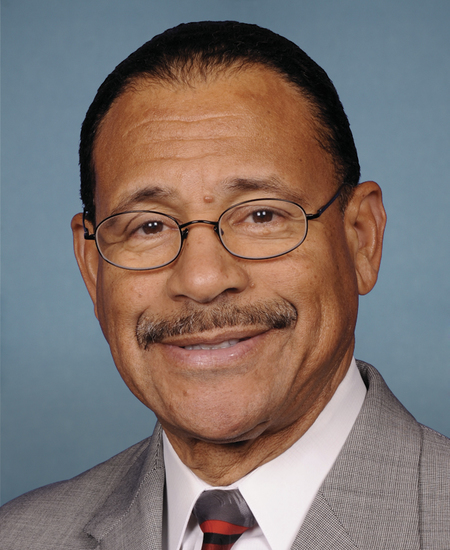
Rep. Sanford D. Bishop, Jr.
Sponsored bills
Maddy summaryThe Momnibus Act is a comprehensive legislative bill designed to improve maternal health outcomes across the United States by addressing social determinants of health, expanding access to care, and reducing disparities among pregnant and postpartum individuals. The bill establishes a federal task force to coordinate efforts between agencies and stakeholders to eliminate preventable maternal mortality and severe morbidity, while providing sustained funding to community-based organizations to address nonclinical factors like housing, nutrition, and transportation. Key provisions include extending WIC eligibility to 24 months postpartum, creating grants to grow and diversify the perinatal workforce, implementing respectful maternity care training for all healthcare employees, and establishing compliance programs to track and address bias in maternity care settings. The legislation also includes specific measures for incarcerated mothers, veterans, and vulnerable populations affected by climate change, alongside funding for maternal mental health services and technology-enabled care models to expand access in underserved areas.
Maddy summaryThis House Resolution supports designating the week of April 11 through April 17, 2026, as "Black Maternal Health Week." The resolution aims to bring national attention to the maternal and reproductive health crisis in the United States, specifically highlighting the importance of reducing maternal mortality and morbidity among Black women and birthing people.
Maddy summaryThe Supporting VA Families Act grants unpaid parental leave to Department of Veterans Affairs employees. This provision allows employees to take four weeks of unpaid leave within a 12-month period for the birth of a child or for adoption and foster care placements. The leave is designed to supplement existing leave policies rather than replace them, ensuring employees can balance family needs with their work responsibilities. The act defines eligible employees and children according to existing federal definitions found in Title 5 of the United States Code.
Maddy summaryThis bill seeks to block a specific rule issued by the Department of Education that affects the William D. Ford Federal Direct Loan Program. If passed, it would prevent the rule from taking effect, meaning the proposed changes to federal student loans would not be implemented. The measure uses a legislative process known as a joint resolution of disapproval to override agency regulations. It directly impacts students, families, and institutions that rely on federal student loans by stopping the Department of Education from enforcing the new policy.
Maddy summaryThis resolution formally acknowledges the American Chemical Society's 150th anniversary and recognizes its long-standing contributions to American science and innovation. It highlights the organization's role in advancing chemical research, supporting STEM education, and addressing global challenges through chemistry. The House of Representatives will send a copy of this resolution to the society's leadership to honor their work.
Maddy summaryThis bill, known as the Moral Injury Recognition and Restitution Act, changes how the Department of Veterans Affairs handles compensation claims for veterans affected by military sexual trauma. It allows veterans who receive approved claims for mental health conditions or physical injuries caused by such trauma to receive back pay starting from the day after their military discharge rather than from the date their claim was filed. The legislation defines military sexual trauma according to existing legal standards and includes both mental health conditions and physical disabilities resulting from or worsened by the trauma. This change applies retroactively to eligible veterans who have already been approved for compensation benefits.
Maddy summaryThis bill extends and expands a federal program that provides free legal and accounting services to help heirs resolve ownership disputes on farmland and forest land with multiple owners. It authorizes up to $60 million annually through 2031 to fund nonprofit organizations that offer these services at no cost to underserved heirs, who are defined as individuals with low income, members of socially disadvantaged groups, or veterans. The program requires participating organizations to report their progress annually and allows for limited expansion to heirs whose land is not currently farmland but could be used for agriculture, conservation, or forestry. Additionally, the bill updates the program's authorization period and requires annual reporting on the program's operations and outcomes to Congress.
Maddy summaryThis bill, known as the Protecting Our Produce Act, would require the Secretary of Agriculture to create a pilot program that provides financial payments to producers of specific seasonal and perishable crops when their prices drop due to imports. The program would cover asparagus, bell peppers, blueberries, cucumbers, and squash that must be harvested and sold within four weeks, making payments only when current market prices fall below a five-year average reference price. To qualify for assistance, producers must have an average adjusted gross income under $5 million and derive at least 75 percent of their income from farming, ranching, or forestry. The pilot program would be authorized for five years with up to $200 million in funding available each fiscal year, and it would end automatically after that period.
Maddy summaryThis bill requires the Social Security Administration to hire enough full-time employees to match the workforce level as of January 19, 2025, within six months of enactment. At least 75 percent of these new hires must fill direct service roles such as field offices, call centers, payment processing, and disability claim adjudication, while the remaining 25 percent will provide managerial or administrative support. The law directly affects Social Security beneficiaries by aiming to increase the number of staff available to handle their inquiries and benefit claims. This measure seeks to restore staffing levels to a specific historical benchmark to improve customer service capacity.